
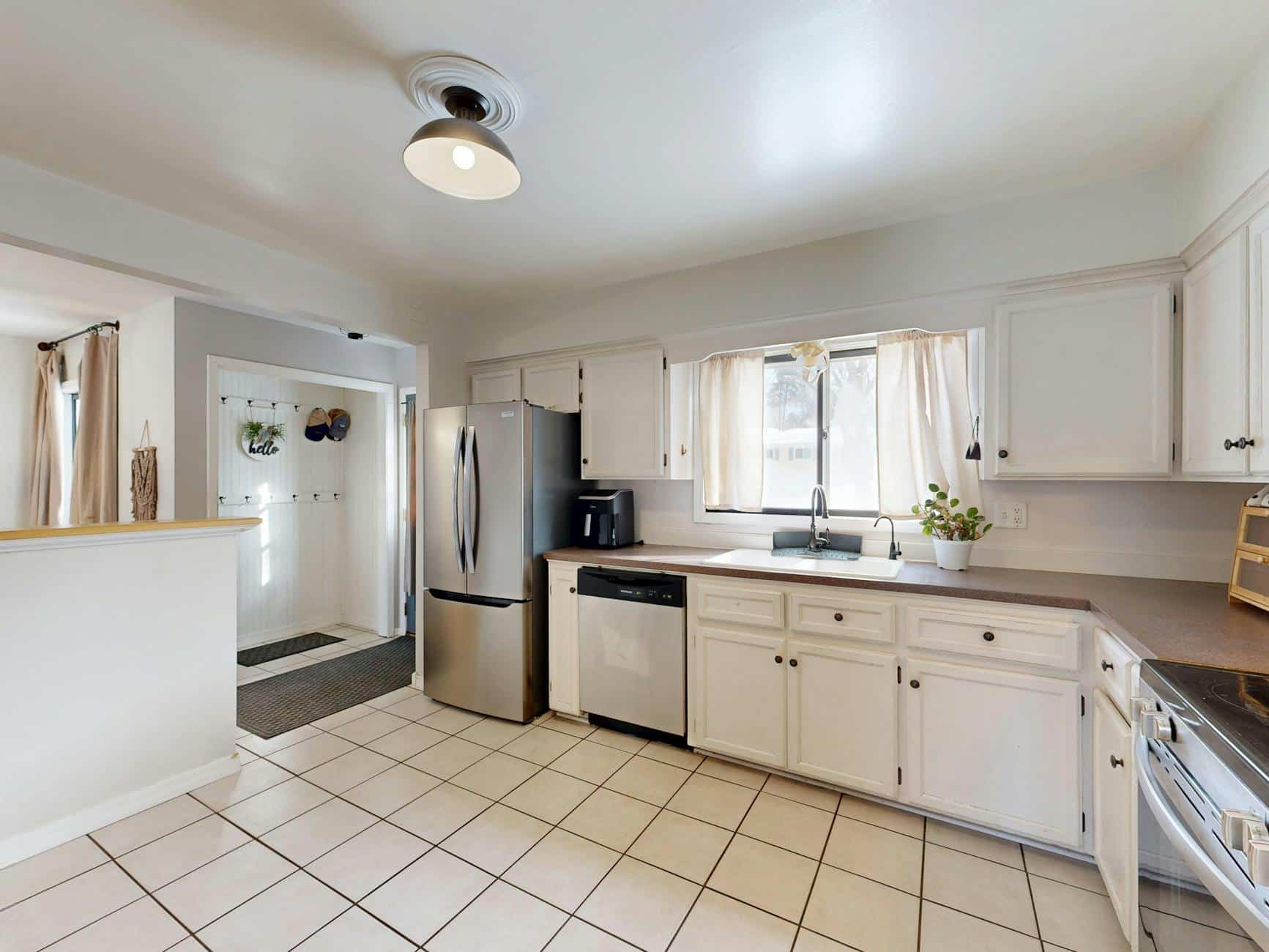
A deep clean is not a longer version of your weekly wipe-down. It is a different job entirely — one where you empty shelves you rarely touch, move appliances that haven’t moved in a year, and clean surfaces behind, under, and inside the things you use every day. Done right, it resets your kitchen to the condition you wish it was in between deep cleans. Done wrong, it drags into an all-day slog with half the job still undone because you started in the wrong place and ran out of steam.
This guide walks you through the full sequence: what order to clean in and why, how often to actually do this, which zones you can knock out yourself, and which ones are honestly better handed off to a professional. Along the way you’ll find links to our detailed guides for every major appliance, so the big-picture plan here connects directly to the step-by-step instructions when you need them.
About this guide: This article was compiled by the HomeNerdy Editorial Team based on official guidelines from appliance manufacturers and authoritative sources including the CDC, USDA, FDA, and EPA. It was last reviewed in April 2026 by our editorial team.
How we develop our guides: We compile our recommendations from manufacturer documentation, government food-safety agencies, cleaner-versus-disinfectant standards from the EPA, and established authorities in home care. Where a zone has its own dedicated guide on HomeNerdy, we link to it so you get the full procedure rather than a shortened version. Where a procedure specifies a ratio, temperature, or safety parameter, the source is referenced in the article.
Scope: This guide covers standard residential kitchens with common appliances. It does not cover commercial kitchens, specialty equipment (commercial-grade range hoods, walk-in refrigeration), or renovation-grade work like regrouting tile or refinishing cabinets. If your kitchen has active mold, standing water under the sink, or a pest issue, address those first — they’re outside the scope of a cleaning guide.
Quick Summary (TL;DR)
What this is: A full-kitchen deep clean typically takes 3-6 hours depending on size and how long since your last one. Most households do this once or twice a year, with smaller maintenance passes in between. The Frequency Matrix below shows what actually needs deep attention and what doesn’t.
The order that works: Top-down, dry-before-wet, appliances before surfaces, floor last. The Top-Down Order section explains why each step comes when it does — skipping this logic is the most common reason deep cleans feel like they’re going backwards.
Where to start if you’re short on time: Focus on the three zones that affect food safety first — refrigerator interior, sink and drain, and the inside of your oven and microwave. Everything else can wait a weekend if it has to.
Where the spoke guides come in: This pillar gives you the map. The detailed procedures for each major appliance live in dedicated guides — linked throughout, and gathered at the bottom in Related Guides.
60-Second Diagnostic: Deep Clean or Touch-Up?
Before you block out half a day, check whether you actually need a deep clean or whether a focused touch-up will do the job.
Question 1: When did you last deep clean?
- [ ] Within the last 3 months → Touch-up is likely enough. Hit the zones that bother you most and move on.
- [ ] 6-12 months ago → Time for a proper deep clean. Block out half a day.
- [ ] Can’t remember → Full deep clean. Expect 4-6 hours and possibly a second pass.
Question 2: What’s bothering you?
- [ ] One specific zone (sticky fridge shelf, greasy range hood) → Go directly to that zone or its dedicated guide. Don’t deep clean the whole kitchen for one problem.
- [ ] General dinginess, sticky surfaces in multiple spots → Full deep clean, start top-down.
- [ ] Post-event reset (party, holiday, sick household) → Targeted clean: counters, sink, dishwasher, trash area, floor. Skip deep appliance work unless it’s been a while.
Question 3: How much time and energy do you actually have?
- [ ] Full half-day, good energy → Full top-down sequence.
- [ ] 2-3 hours max → Zone 1 (appliance interiors) + Zone 2 (sink) + floor. Leave Zone 3 (cabinets) and Zone 5 (under-sink/vent) for next time.
- [ ] 1 hour → Touch-up: counters, sink, stovetop, trash, quick floor sweep. Not a deep clean — and that’s fine.
Before You Start
What You’ll Need
One of the small reasons deep cleans stall is running to the store mid-job. Before you start, pull these together:
- Microfiber cloths — at least 6-8, so you can swap out as they get loaded
- A spray bottle with warm water and mild dish soap — your workhorse for most surfaces
- White vinegar — for mineral deposits, inside the dishwasher, and the microwave
- Baking soda — for gentle scrubbing of baked-on food and oven interiors
- A non-scratch scrub sponge — for anything too stubborn for a cloth
- An EPA-registered disinfectant — optional, used only on food contact surfaces after raw meat handling or when someone in the household has been sick
- A bucket or large bowl — for mixing, soaking removable parts
- A vacuum with a brush attachment — for vents, fridge coils, crumbs in corners
- A broom and mop — floor comes last, but you’ll want these ready
- Rubber gloves — especially if you’re handling raw-meat-area cleanup or any acid-based cleaners
A note on products: For the vast majority of kitchen surfaces, warm water with a few drops of dish soap handles the job. Harsh chemical cleaners aren’t needed for everyday grime. Save the stronger stuff (EPA-registered disinfectants, heavy-duty degreasers) for food safety situations or stuck-on grease that soap won’t touch.
Safety Notes
Safety Note: Unplug every small appliance before cleaning around or inside it — toasters, blenders, stand mixers, coffee makers. Even the ones that “should” be fine when plugged in. If you are cleaning a gas stove, turn the gas supply valve off before removing grates or caps. Run exhaust fans or open a window when using any degreaser or acid-based cleaner. If you feel lightheaded or your eyes sting, stop, leave the room, and come back when it clears.
Chemical mixing — never combine:
- Bleach + vinegar → chlorine gas
- Bleach + ammonia (most glass cleaners contain ammonia) → chloramine gas
- Bleach + rubbing alcohol → chloroform
If you have used a commercial cleaner and want to switch to vinegar, rinse the surface thoroughly with plain water first and follow the specific directions on the cleaner’s label.
Planning Your Time
A realistic time budget for a full deep clean:
| Kitchen Size | Time (first time / overdue) | Time (regular maintenance) |
|---|---|---|
| Small (studio/galley) | 3-4 hours | 2 hours |
| Medium (standard) | 4-6 hours | 3 hours |
| Large / open-plan | 6-8 hours | 4 hours |
You don’t have to do it in one session. Splitting a deep clean across two half-days often produces better results than one exhausted marathon — the quality drops off sharply once you’re tired.
The Frequency Matrix: What to Clean, and When
Not every part of your kitchen needs the same attention on the same schedule. The biggest reason deep cleans feel overwhelming is that they get framed as “clean everything, everywhere, all at once.” In practice, different zones have different realistic frequencies. Here’s what typically makes sense:
| Zone / Task | Typical Frequency | Why |
|---|---|---|
| Counters, sink basin, stovetop, wipeable backsplash | Daily / after cooking | Food contact surfaces; bacteria risk and stain-setting are both highest here |
| Microwave interior, exterior of small appliances | Weekly | Splatter builds up fast; easier when it’s fresh |
| Fridge shelves (spot-clean spills), stovetop drip pans | Weekly or as needed | Spills that sit turn into stains |
| Dishwasher filter | Every 1-2 weeks | Food debris degrades wash quality and creates odor |
| Range hood filter | Monthly | Grease saturation reduces fan efficiency and becomes a fire risk over time |
| Garbage disposal | Monthly | Prevents odor and biofilm buildup |
| Oven interior | Quarterly, or when smoking | Baked-on food smokes and affects flavor |
| Fridge interior (full empty-and-wipe) | Quarterly | Spilled residue, expired items, shelf grime |
| Dishwasher full deep clean (vinegar cycle + gasket) | Quarterly | Mineral buildup and gasket mold |
| Cabinet fronts (full wipe-down, handles) | Quarterly | Hand oils and cooking splatter migrate further than you’d think |
| Under-sink area | Twice a year | Leak-check opportunity, dust, forgotten expired products |
| Cabinet interiors (pantry, cookware) | Once or twice a year | Crumbs, expired goods, spilled dry goods |
| Fridge coils | Once or twice a year | Dust on coils reduces efficiency by a meaningful amount |
| Freezer full defrost/clean (non-frost-free units) | Annually | Ice buildup reduces capacity and efficiency |
How to use this matrix: A “deep clean” in the way most people mean it is actually the quarterly + biannual + annual rows combined, ideally done in one or two sessions. Your weekly and monthly items should already be on autopilot — if they’re not, the deep clean becomes twice as hard because everything’s stacked up.
Adjust for your household: Busy cooks, large families, homes with pets, or households where anyone smokes indoors will need the higher end of these frequencies. A small household that cooks light meals can often stretch the quarterly items to every four or five months.
Top-Down Order: The Sequence That Actually Works
There’s a specific order that saves time, and an order that wastes it. Most quick-checklist guides ignore this — they’ll have you cleaning the floor before the counters, or wiping the fridge exterior before the interior. Both of those create more work by the end.
The logic is simple: dust and debris fall down. Grease migrates down. Water runs down. Clean in the direction that matches gravity, and every step catches the mess from the step before.
| Step | Zone | Why this order |
|---|---|---|
| 1 | Ceiling fixtures / range hood exterior / top of cabinets | Dust here falls onto counters and floor — do it first so you clean those surfaces once |
| 2 | Upper cabinet fronts, wall tile / backsplash | Grease splatter migrates down the wall onto counters |
| 3 | Range hood filter (remove and soak while you work elsewhere) | Soaking is passive — run it in parallel with the rest |
| 4 | Interior of appliances (oven, microwave, fridge, dishwasher) | Dry, contained work; do before you get water everywhere |
| 5 | Exterior of appliances (doors, handles, tops) | Splash from interior work lands here — wipe after |
| 6 | Lower cabinet fronts, drawer faces | Same reason as step 2, lower half |
| 7 | Counters, stovetop surface, backsplash (low section) | Now all the upstream surfaces are clean — counters only need one pass |
| 8 | Sink and faucet | You’ve been rinsing things in here all along; clean it after |
| 9 | Trash and recycling area, under-sink zone | Contained areas; do before the floor |
| 10 | Floor (sweep first, then mop) | Everything you’ve knocked loose ends up here — last step |
Parallel tasks: Step 3 (range hood filter) runs while you do Steps 4-7. Dishwasher interior cleaning can run during Step 4 (a vinegar cycle takes about an hour, free time for other appliances). Fridge can come to room temperature briefly while you work — food stays safe for up to 2 hours at room temperature per USDA guidance, so don’t rush this one.
Zone 1: Appliances (Interior First)
Start inside your appliances while they’re cool and empty. Most of the hardest work lives here — and most of the surface grime in your kitchen originally came from here (splatter, steam, and vapor drifting out every time you open a door).
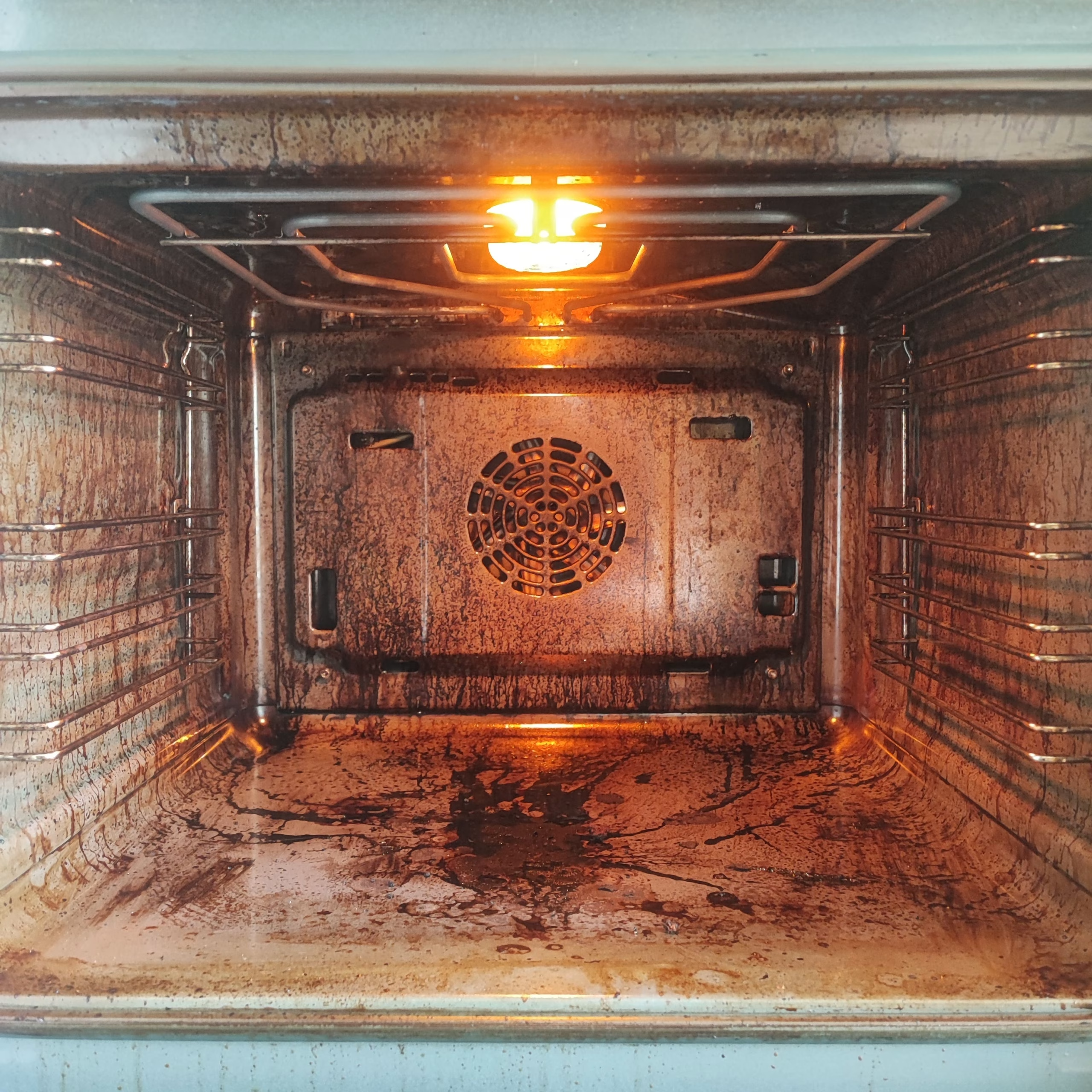
Oven
If your oven has a self-clean cycle, you have a decision to make. Self-clean cycles use extremely high heat to carbonize residue, and exact temperatures vary significantly by model. Always check your owner’s manual for the specific requirements and safety precautions of your oven’s self-clean feature before starting the cycle. It’s effective but produces significant heat and fumes, and many owner’s manuals warn against running it with gaskets, probes, or aluminum items left inside. A gentler approach — cleaning your self-cleaning oven without the self-clean feature — uses a baking soda paste applied overnight, then wiped out the next morning. That guide walks through the full procedure and explains when the self-clean cycle is and isn’t a good idea.
For a general deep-clean pass: remove the racks, soak them in warm soapy water in the sink or tub, apply baking soda paste to the interior walls, floor, and inside of the door glass, leave it for 12 hours overnight, then wipe out with a damp cloth. Rinse and repeat for stubborn spots.
Stovetop and Grates
For gas stovetops, remove the grates and burner caps. Soak them in hot soapy water — 30 minutes30 minuten usually loosens baked-on residue enough to scrub off with a non-scratch pad. For the stove surface itself (gas or induction/glass-top), use a cleaner appropriate for the surface — glass-top stoves in particular should not have abrasive pads used on them. Check your manual.
Pay attention to: the gaps around burner knobs (food debris hides there), and the seam where the stovetop meets the counter (grease seeps in). A toothbrush is useful for both.
Range Hood and Filter
The single most-neglected appliance in most kitchens. Grease-saturated filters reduce airflow, let smoke linger, and become a fire concern over time. The filter mesh can usually be removed and either soaked in hot water with degreaser or run through a dishwasher cycle, depending on the type. The hood exterior itself benefits from a degreaser wipe — everything above the stove accumulates a greasy film faster than any other surface in the kitchen.
Our full guide walks through the whole process: how to clean a range hood and filter. If you haven’t done this in over a year, expect the first pass to be ugly — subsequent ones are much faster.
Microwave
Fill a microwave-safe bowl with water and a small splash of white vinegar. Microwave on high for 3-5 minutes3-5 minuten until the interior steams up. Let it sit for another 2 minutes2 minuten with the door closed — the steam loosens dried-on splatter. Wipe the interior with a damp cloth; most stuck-on food will come off without scrubbing.
Don’t forget: the turntable (wash separately), the microwave ceiling (most people miss this), and the door seal. If there’s a removable vent filter above the microwave on an over-the-range unit, check your manual for cleaning or replacement intervals.
Refrigerator
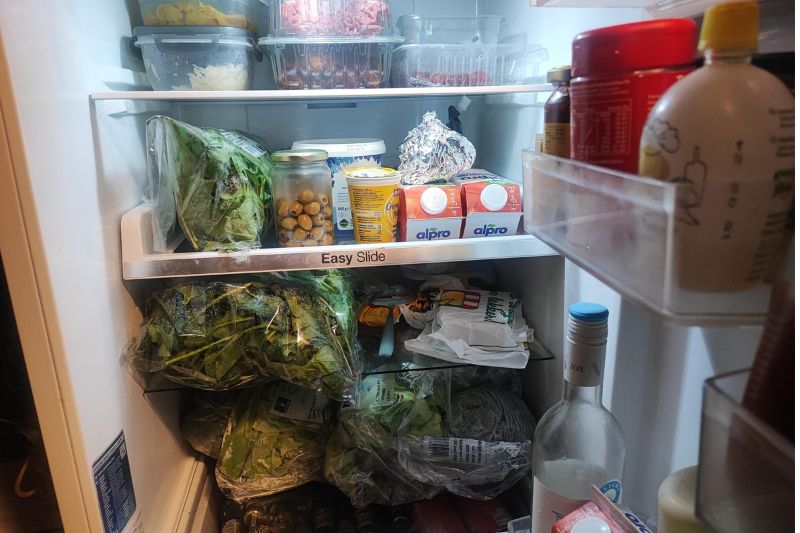
This one’s a time commitment — budget 45-90 minutes45-90 minuten depending on how much is inside. The method:
- Empty the fridge into a cooler or insulated bags. Check expiration dates as you go and toss anything past it.
- Remove shelves, drawers, and door bins. Wash them in the sink with warm soapy water. Let them air-dry while you work on the interior — cold glass shelves can crack if you put hot water directly on them, so let them come closer to room temperature first.
- Wipe the interior walls, ceiling, and door gasket with warm soapy water. Get into the corners and the grooves of the gasket — mold and food residue collect here.
- Reinstall dry shelves and drawers, then restock.
- Vacuum the condenser coils (usually at the back or underneath, behind a kick plate). Dust here meaningfully reduces efficiency.
- Check the temperature: the FDA recommends keeping your refrigerator at or below 40°F4°C, and the freezer at 0°F-18°C. If you don’t have a built-in thermometer, an inexpensive fridge thermometer is worth keeping.
Safety Note: Refrigerated food stays safe at room temperature for up to 2 hours (per USDA guidance). If your fridge clean-out runs longer, put perishables in a cooler with ice packs. When in doubt about a food item’s safety after the fridge has been open, follow the “if in doubt, throw it out” rule — especially for raw meat, dairy, and prepared foods.
Dishwasher
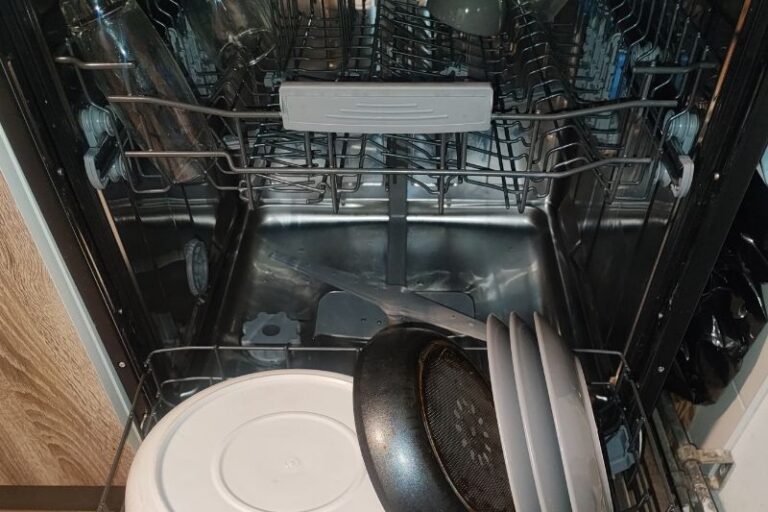
Deep cleaning a dishwasher is not the same as running a normal cycle. The filter at the bottom traps food debris and almost certainly needs removal and rinsing. The spray arms have small holes that clog with mineral deposits. The gasket around the door is where most dishwasher mold and smell comes from.
The full procedure — filter, spray arms, gasket, vinegar cycle, and exterior — is in our dedicated guide: how to clean a dishwasher. If your dishes have been coming out cloudy, smelly, or with debris on them, this is the first thing to tackle.
Garbage Disposal
A quick freshen-up is the ice-and-salt method (run a tray of ice cubes with a handful of coarse salt through the disposal, followed by cold water and citrus peels). For a more thorough clean, including getting at the biofilm under the rubber splash guard, see how to clean a garbage disposal.
Safety Note: Never put your hand into a garbage disposal, even to clear a jam. Use pliers or a disposal wrench with the switch clearly in the OFF position, or better, the breaker cut. If it’s jammed and you’re uncertain, call a plumber.
Small Appliances
Toasters, coffee makers, stand mixers, blenders, electric kettles, food processors — all of these accumulate buildup you don’t see because the dirty part is enclosed. Unplug before cleaning. Empty crumb trays. Descale anything that heats water (coffee maker, kettle) periodically with vinegar or the manufacturer’s descaler.
For blenders — especially Ninja-style systems with multiple attachments — the two spots that get skipped most often are the base (wipe down, never submerge) and the blade assembly (disassemble and hand-wash, don’t rely on the dishwasher). Handle those two and you’ve solved most odor and residue issues. The full disassembly walk-through, including cups, gaskets, and when to replace parts, is in our Ninja blender cleaning guide.
Zone 2: Sink and Drain
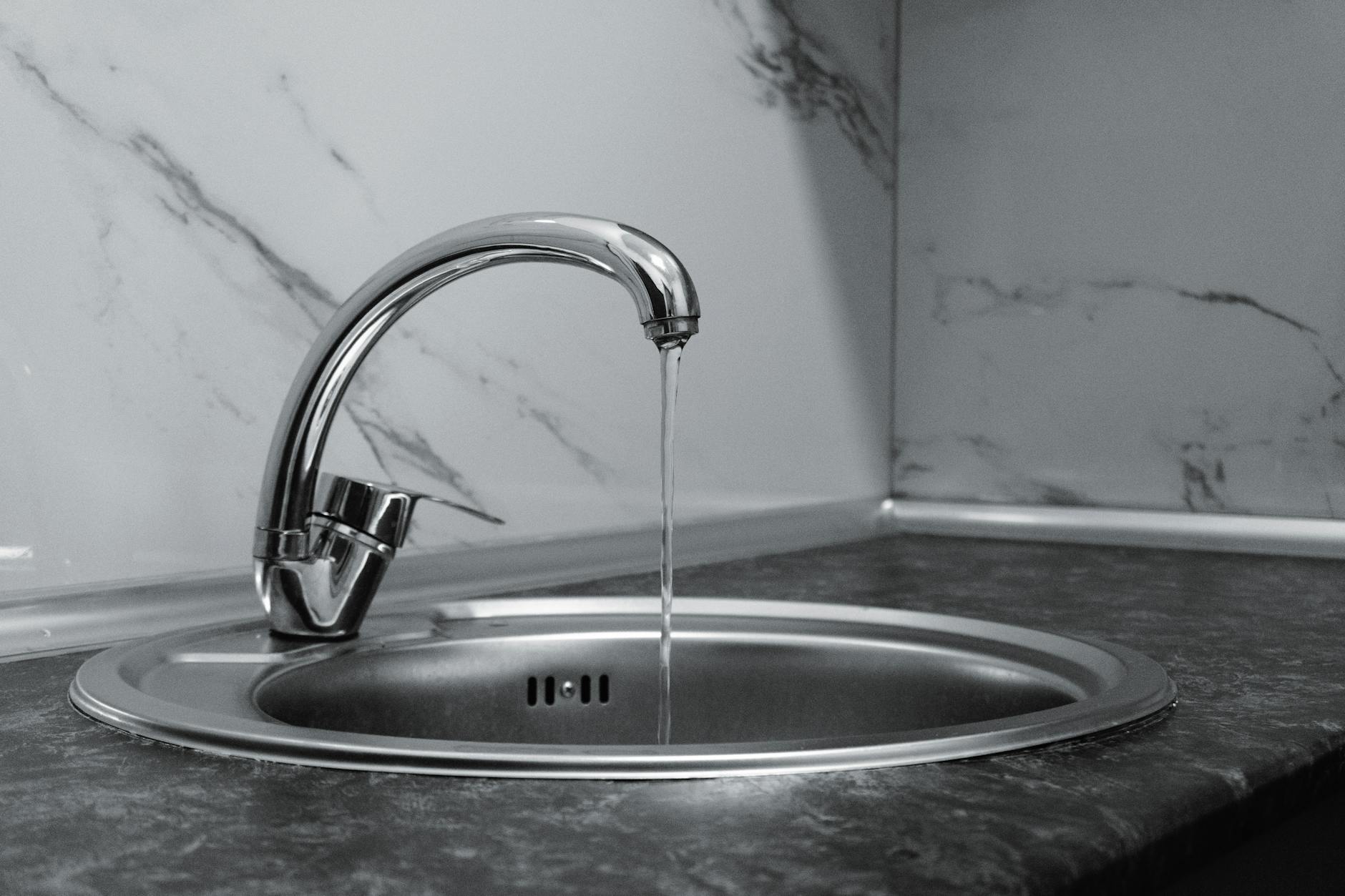
The sink looks clean because you rinse it hourly, but the drain is a different story. Food particles, soap residue, and mineral buildup accumulate in the trap and along the pipe walls. Smell is the usual first sign — long before visible clogging, the drain develops a distinctive funk.
For deep cleaning the sink basin: use a non-abrasive cleaner for stainless steel (baking soda paste works), a mild cleaner for composite sinks, and whatever your manufacturer recommends for any specialty surface. Pay attention to the seam where the sink meets the counter, the underside of the faucet base, and the aerator on the faucet (which can usually be unscrewed and soaked in vinegar to clear mineral deposits).
For the drain itself, start with the gentlest method: pour a kettle of hot (not boiling) water down, follow with a generous scoop of baking soda, let it sit a few minutes, then flush with more hot water. That clears most odor and light buildup. If it doesn’t, a chaser of white vinegar after the baking soda helps lift biofilm. Still slow after that? Time for the drain pipe itself. Our kitchen sink drain guide walks through every level — with specific quantities and timing — from odor-clearing through full P-trap access and when to call a plumber.
Where grime hides: the dish rack and drying pad (wash these too — they’re often grimier than the sink), the soap dispenser pump (if you have one built in), and the caulk line where the sink edge meets the counter.
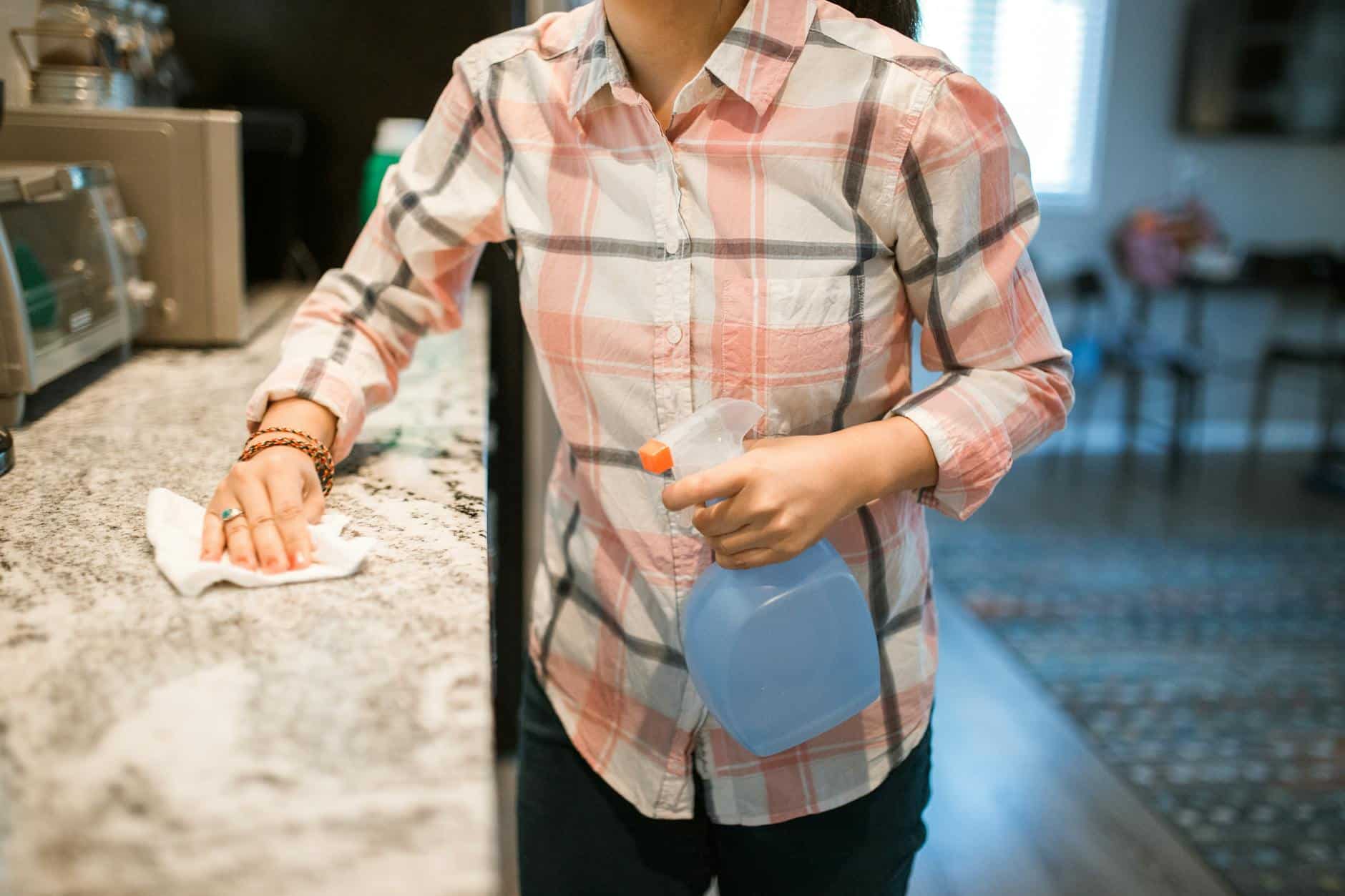
Zone 3: Counters, Backsplash, and Cabinets
Counters
Counter material dictates cleaner choice more than most people realize. The quick rules:
- Granite and natural stone — stone-safe cleaner or plain warm water with mild dish soap. Avoid vinegar and other acids; they etch the surface over time.
- Quartz — warm soapy water for daily cleaning; avoid harsh solvents and abrasives.
- Laminate — almost any mild cleaner works; avoid soaking (water at seams can swell the underlying board).
- Butcher block / wood — soapy water, wiped dry immediately, then periodically oiled per manufacturer guidance.
- Stainless steel — microfiber and mild soap, wiped in the direction of the grain.
For a deep clean, clear the counter fully first — every jar, appliance, and canister. Wipe underneath and behind everything. The sticky ring under the oil bottle is a universal kitchen truth.
Backsplash
Tiled backsplashes: clean the tile face with a mild cleaner, but don’t neglect the grout — it absorbs grease. For grout that’s gone yellow-brown from years of cooking splatter, a baking soda paste scrubbed in with a grout brush will get it most of the way back. Sealed grout performs much better over time. If you haven’t sealed yours, that’s a once-every-year-or-two job worth learning.
Painted wall backsplashes: mild soap and a soft cloth. Test in a hidden area first — some paints can’t take repeated wet cleaning and will start to show it.
Cabinet Fronts
The handle area is where most of the visible grime concentrates — oil from hands, food residue, grease particles from cooking. The tops of upper cabinets (if they don’t go to the ceiling) collect a surprising amount of greasy dust that bonds into a film over time. A degreaser-and-warm-water mix handles both.
Finish-specific notes: painted cabinets take gentle cleaning — avoid harsh solvents and very abrasive pads. Wood cabinets benefit from a finish-appropriate cleaner (check your manual or manufacturer website; a specialty wood cabinet cleaner is inexpensive and worth it for nice cabinetry). Laminate/thermofoil cabinets clean easily with mild soap but don’t tolerate prolonged water contact at seams.
Cabinet Interiors (Once-or-Twice-a-Year Job)
You don’t need to do this every deep clean. But every few deep cleans, empty at least one cabinet at a time, wipe down the shelves, check for crumbs in the corners, toss anything expired, and replace any peeling shelf liner. The pantry is usually where this matters most — dry goods, spices, and baking supplies hide a lot of small debris.
Zone 4: Floor (Save This for Last)
Sweep or vacuum first. Every deep-clean step above knocks debris onto the floor — don’t try to mop crumbs and dust into a wet floor, you’ll just push them around.
After sweeping, mop with a cleaner appropriate for your flooring type:
- Tile — most pH-neutral cleaners work; avoid very acidic ones on natural-stone tile
- Sealed hardwood — barely-damp mop and a hardwood-specific cleaner; avoid soaking
- Vinyl / LVP — standard floor cleaner or mild soap and water
- Laminate — barely-damp mop, laminate-specific cleaner; water at seams is the enemy
Don’t forget: the baseboards (a melamine foam sponge works well), the corners behind the toekicks if yours are removable, and the threshold between the kitchen and the next room. If you have an area rug or mat in the kitchen, take it outside to shake out and check the underside — that’s where crumbs and grease drippings end up.
Common Mistakes to Avoid
- Starting with the floor. — Cleaning the floor first means you’ll track dust, grease, and debris right back onto it from every other step. Floor comes last for a reason. If the floor is your main problem and you don’t care about the rest right now, just mop — but don’t call that part of a deep clean.
- Using the wrong cleaner for the surface. — Vinegar etches natural stone. Abrasive pads scratch glass-top stoves and some stainless finishes. Harsh solvents soften painted cabinets and some laminate sealants. When in doubt, test a small hidden area first and check manufacturer guidance.
- Treating the microwave’s ceiling like it’s someone else’s problem. — Food splatter migrates upward every time you heat something uncovered. Most people don’t look at the microwave ceiling. It’s often the grimiest part of the microwave — check yours after the next steam clean.
- Skipping the fridge gasket. — The rubber gasket around the fridge door collects food residue and moisture, and develops mold along the folds. It’s also where cold air leaks from if the gasket gets distorted. Wipe it every quarter, and don’t force it if it’s brittle — a damaged gasket is worth replacing (manufacturers sell them for most models).
- Using “disinfectant” every time you clean. — The EPA distinguishes between cleaners (remove dirt and some germs) and disinfectants (kill a specified list of pathogens when used correctly — which usually means staying wet on the surface for several minutes). For most kitchen surfaces on most days, cleaning is enough. Save disinfection for high-risk situations: after raw meat handling, during illness, or after contact with pets/raw produce from dubious sources. Overusing disinfectants is costly and not more hygienic than regular cleaning for everyday grime.
Quick Decision Table: DIY vs. Call a Pro
Not every kitchen problem responds to a deep clean. Some need different expertise.
| Situation | DIY? | When to escalate |
|---|---|---|
| Normal grease, grime, and food buildup | Yes — this guide + spoke articles | N/A |
| Clogged sink drain, light | Yes — see sink drain guide | Standing water after 24 hours → plumber |
| Slow garbage disposal | Yes — see disposal guide | Humming without spinning, repeated jams → electrician or appliance repair |
| Visible mold in cabinets or under sink | Small, localized: DIY with gloves and mask | Large area, recurring, or on drywall behind cabinet → mold remediation pro |
| Range hood not venting | Filter clean: yes | Fan not running, ducting issue → appliance repair or HVAC |
| Fridge not cooling properly | Clean coils first; check gasket seal | Still warm after coil clean and temp adjustment → appliance repair |
| Oven won’t self-clean / error code | Manual clean: see guide | Error codes, won’t heat, gas smell → immediately call pro |
| Grease fire residue | Light surface cleanup: yes | Structural smoke/soot damage → restoration specialist |
| Persistent pest activity | Clean and seal small entry points | Recurring or droppings → pest control pro |
Frequently Asked Questions
How long does a deep clean actually take?
Typically 3-6 hours for a standard kitchen, depending on how long since the last deep clean and how much you’re tackling in one session. If it’s been over a year, expect the higher end — and plan to split it across two sessions if you start to tire.
How often should I deep clean my kitchen?
A full deep clean twice a year works for most households. Every quarter is ideal if you cook frequently, have a larger family, pets, or anyone who smokes indoors. The Frequency Matrix above breaks this down by task — most of what people think of as “deep cleaning” is actually a mix of quarterly and biannual jobs.
What’s the difference between cleaning and disinfecting?
According to EPA guidance, cleaning removes dirt and some germs from surfaces, and disinfecting kills a specified list of pathogens when the product is used correctly (usually requiring the surface to stay wet for a specified contact time). For most kitchen surfaces on most days, cleaning is sufficient. Disinfection is worth doing after raw meat handling, during illness in the household, or after contact with contaminated items.
Can I use the same cleaner on everything?
No. Different surfaces have different tolerances. Vinegar is great for mineral deposits but etches natural stone. Abrasive cleaners work on stainless but damage glass-top stoves. Harsh solvents soften some painted finishes. The safest default is mild dish soap with warm water for most surfaces, then specialty cleaners only where needed. When in doubt, test in a hidden area first.
What order should I clean in?
Top-down, dry-before-wet, appliances before surfaces, floor last. The full logic and step list is in the Top-Down Order section — this is the single biggest efficiency lever in a kitchen deep clean.
Do I really need to clean my dishwasher?
Yes — the dishwasher cleans your dishes, but the food, grease, and mineral deposits it traps eventually degrade its own performance and create odor. The filter at the bottom is the most-neglected part. Full procedure in the dishwasher cleaning guide. If your dishes are coming out cloudy, spotty, or smelling odd, start here.
What about the fridge temperature — does it really matter?
Yes. The FDA recommends keeping your refrigerator at or below 40°F4°C and the freezer at 0°F-18°C. Above these temperatures, perishables move into the “danger zone” where bacteria grow quickly. A cheap fridge thermometer removes the guesswork. If your fridge struggles to hold these temperatures even after a coil clean, that’s an appliance-repair situation, not a cleaning one.
Is it worth hiring a professional cleaner for this?
For most households, no — the deep clean is learnable and the products are inexpensive. Where a pro adds real value: a one-time reset if you’ve moved into a kitchen that hasn’t been deep cleaned in years; a post-renovation clean where there’s construction dust everywhere; or any situation involving mold, pest remediation, or grease-fire aftermath, where specialized training and equipment matter. For routine quarterly or biannual deep cleans, DIY is usually the better value.
When to Call a Professional
A deep clean is a great diagnostic — it tells you what’s working and what isn’t. If during your deep clean you encounter any of the following, stop and bring in the right expertise:
- Persistent water damage under the sink, behind appliances, or at wall seams — a plumber or restoration specialist
- Mold covering more than about a square foot, or mold on drywall behind cabinetry — a mold remediation professional
- Gas smell near the stove at any time — leave the room, do not use electrical switches or flames, and call your gas utility immediately
- Electrical issues with any appliance (sparking, tripped breakers, scorching) — a licensed electrician or appliance repair pro
- Recurring pest activity — a pest control professional, not another DIY cycle
- Structural damage or soft spots in cabinets, floor, or walls — a contractor
Knowing what’s outside your scope is part of a good deep clean. It’s also the difference between a $50 weekend and a $5,000 repair six months later.