

How to clean a range hood filter means removing the layer of cooking grease, oil residue, and grime that builds up on the metal mesh or baffle filters inside your kitchen range hood. These filters are designed to trap airborne grease before it reaches the ductwork or motor, but they can only do their job when they’re not clogged. A dirty filter reduces your hood’s suction, lets grease accumulate in places it shouldn’t, and — in the worst case — increases the risk of a grease fire.
The good news: cleaning a range hood filter is one of the most satisfying kitchen tasks. The transformation from grimy and yellow to clean and shiny is dramatic, and it typically takes less than an hour of hands-on work. This guide covers the soaking method that works for most metal filters, how to identify what type of filter you have, and how often you should be cleaning based on how much you cook.
About this guide: Written by Joe Carrow, who covers kitchen and appliance topics at HomeNerdy. This article was last reviewed in March 2026 and follows our editorial standards: we prioritize safety, reference manufacturer guidance and industry best practices, and clearly state limitations.
How we develop our guides: We base our steps on common manufacturer recommendations (including guidance from Broan-NuTone, Zephyr, and GE Appliances), kitchen safety standards from the NFPA, and established household maintenance practices. We do not claim to have personally tested every method — instead, we compile guidance from authoritative sources and widely reported user experiences.
Scope: This guide covers cleaning residential range hood filters — both mesh (aluminum or stainless steel) and baffle types. It does not cover charcoal/carbon filters (those are replaced, not cleaned), commercial kitchen exhaust systems, or ductwork cleaning beyond the filter itself.
Quick Summary (TL;DR)
Step 1: Remove the filter(s)
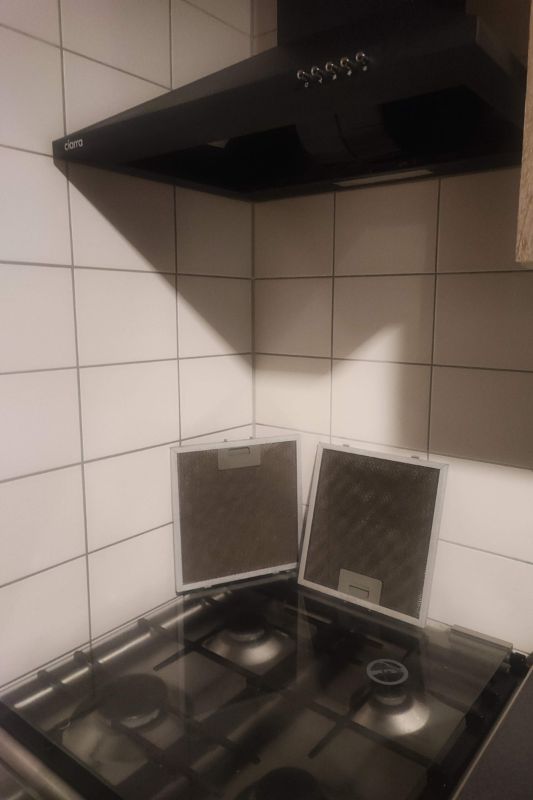
Most slide out or unclip from the underside of the hood. No tools required in most cases.
Step 2: Soak in hot water with degreaser
Fill your sink or a large container with very hot water, add dish soap and baking soda. Submerge the filter and let it soak for 10-30 minutes.
Step 3: Scrub and rinse
Use a non-abrasive brush to loosen remaining grease. Rinse thoroughly under hot running water.
Step 4: Dry and reinstall
Let the filter air dry completely (or pat dry), then slide it back into the hood.
Know when to stop: If the filter is bent, corroded, or still heavily discolored after cleaning, it may need replacement. Mesh filters typically last 5-10 years with regular cleaning. If you can’t see light through a mesh filter after cleaning, the pores may be permanently clogged.
Safety First: Read Before You Start
Hot Water
This process uses very hot water. You’ll be working with water that’s hot enough to dissolve grease, which means it can scald skin.
- Wear rubber gloves when handling filters in hot soaking water.
- Don’t use boiling water directly from a kettle — very hot tap water or water just below boiling is sufficient and safer to handle.
- Be careful when draining the sink — greasy water can be slippery.
Chemical Safety
The methods in this guide use common household products (dish soap, baking soda, vinegar). These are generally safe, but:
- Commercial degreasers: If you choose to use a spray degreaser, work in a well-ventilated area and follow the product’s instructions. Some degreasers contain caustic chemicals that can irritate skin and eyes.
- Ammonia-based cleaners + bleach: If you use ammonia-based products, never combine them with bleach. This produces toxic chloramine gas.
Grease Fire Awareness
The reason we’re cleaning this filter is important: grease accumulation in range hoods is a leading cause of kitchen fires, according to the National Fire Protection Association (NFPA). A clogged filter means grease travels further into the ductwork and motor housing, where it’s harder to clean and more dangerous. Regular filter cleaning is fire prevention, not just aesthetics.
Stop and Reassess If:
- Your filter is a charcoal or carbon type — these cannot be cleaned and need to be replaced.
- The motor housing or ductwork behind the filter has significant grease buildup. This may require professional hood cleaning.
- The hood isn’t pulling air properly even with a clean filter — the motor or ductwork may need service.
Know Your Filter Type
Before you start cleaning, check what kind of filter you have. The cleaning approach depends on the type.
Mesh / Screen Filters (Most Common)
Made of layered aluminum or stainless steel mesh. These look like a fine screen or grid and are found in the majority of residential range hoods. Cleanable — follow the methods in this guide. They’re typically silver or gray when clean, and turn yellow-brown as grease accumulates.
Baffle Filters
Made of stainless steel with alternating ridges that force air to change direction, separating grease from the airflow. Common in higher-end hoods and commercial-style ranges. Cleanable — the same soaking method works, though they’re heavier and may need a larger soaking container.
Charcoal / Carbon Filters
Black or dark gray pads filled with activated carbon. Found in ductless (recirculating) range hoods. Not cleanable — must be replaced. These filters absorb odors rather than trapping grease. They typically need replacement every 3-6 months depending on cooking frequency. Check your owner’s manual for the correct replacement filter.
Not sure what you have? Remove the filter and look at it. If it’s a metal screen or grid you can see through (when clean), it’s mesh. If it has thick stainless ridges like a maze, it’s a baffle. If it’s a lightweight black pad, it’s charcoal. Your owner’s manual will also list the filter type and replacement part numbers.
60-Second Diagnostic: How Dirty Is Your Filter?
Remove the filter from the hood and assess what you’re working with:
Visual check
- ☐ Light yellow tint, mostly see-through — Light buildup. A quick soak should handle it. Method 1.
- ☐ Yellow-brown, partially blocked — Moderate grease. Standard soaking method with scrubbing. Method 1 or Method 2.
- ☐ Dark brown/black, can’t see through it — Heavy grease. Extended soak + baking soda boost. Method 2.
- ☐ Sticky to the touch, dripping grease — Severely neglected. Full deep clean. Method 3.
Light test
Hold the filter up to a light source (window or overhead light). Can you see light through the mesh?
- ☐ Light passes through easily — Filter is in good shape. Routine cleaning.
- ☐ Light is dim or patchy — Grease is blocking many pores. Needs thorough cleaning.
- ☐ No light visible — Filter is heavily clogged. If light doesn’t pass through after a deep clean, consider replacement.
Structural check
- ☐ Filter is flat and rigid — Good condition. Clean and reuse.
- ☐ Filter is bent or warped — It may not seal properly in the hood. Try cleaning first; if it doesn’t sit flat, replace it.
- ☐ Filter has rust or corrosion — If cleaning doesn’t remove it, the filter has reached the end of its life. Replacement filters are available from the manufacturer or universal-fit options.
Quick Decision Table
| What you see | Grease level | Method | Soak time | Stop & replace if… |
|---|---|---|---|---|
| Light yellow tint | Light | Dish soap soak | 10-15 minutes | N/A — routine maintenance |
| Yellow-brown, partially blocked | Moderate | Baking soda + dish soap | 20-30 minutes | Filter is corroded or warped |
| Dark brown, can’t see through | Heavy | Extended soak + boiling water | 30-60 minutes | Still blocked after deep clean |
| Charcoal/carbon filter | Any | Replace — do not clean | N/A | Odors not absorbed, filter older than 6 months |
Common Mistakes to Avoid
- Putting the filter in the dishwasher without checking the manual. Some mesh filters are dishwasher-safe, but many are not — especially aluminum filters. Dishwasher detergent can discolor and oxidize aluminum, turning it dark or dull. Stainless steel baffle filters generally handle the dishwasher better. Check your range hood’s manual before trying this shortcut.
- Using abrasive scrubbers on the mesh. Steel wool and aggressive scouring pads can damage the fine mesh, creating tears or enlarging the pores so the filter catches less grease. Use a nylon brush, old toothbrush, or non-scratch sponge instead.
- Cleaning the filter but ignoring the hood interior. The area behind and around the filter — the hood cavity — also collects grease. If you clean the filter but leave a layer of grease on the hood interior, the filter will get dirty faster. Wipe down the inside of the hood while the filters are out.
- Reinstalling a wet filter. A damp filter can drip grease-tinted water onto your stovetop the next time you cook. Let the filter dry completely before putting it back — air drying on a towel works well, or pat it dry with paper towels.
- Waiting too long between cleanings. The longer grease sits on a filter, the harder it bonds to the mesh and the more difficult it becomes to remove. Monthly cleaning for regular cooks means a 10-minute easy soak. Annual cleaning means a 60-minute battle with hardened grease. Stay on top of it.
Method 1: Hot Water + Dish Soap Soak (Light to Moderate Grease)
The simplest method and the one you’ll use for routine maintenance. Dish soap is designed to cut grease — that’s literally its job — and hot water softens the grease so it releases from the mesh.
Time needed: 5 minutes setup + 10-15 minutes soak + 5 minutes scrub
Materials: Very hot water, dish soap (a generous squirt), rubber gloves, nylon brush or non-scratch sponge
Best for: Monthly maintenance, light to moderate grease buildup
Instructions
- Remove the filter(s) from the hood. Most filters slide out toward you or unclip from the underside. Some have a latch or spring mechanism — gently push and slide. If your hood has two filters, clean both.
- Fill your sink with very hot water. The hotter the better — hot tap water is fine. You want enough water to fully submerge the filter(s).
- Add a generous squirt of dish soap. Swirl to distribute. The water should be soapy, not just tinted.
- Submerge the filter(s). Let them soak for 10-15 minutes. You’ll start to see grease lifting off into the water.
- Scrub with a nylon brush. After soaking, use a brush or non-scratch sponge to work on any remaining greasy areas. Scrub in the direction of the mesh, not against it.
- Rinse under hot running water. Hold the filter under the tap and rinse until the water runs clear and you can see through the mesh.
- Dry completely. Place on a clean towel and let air dry, or pat dry with paper towels. Reinstall once fully dry.
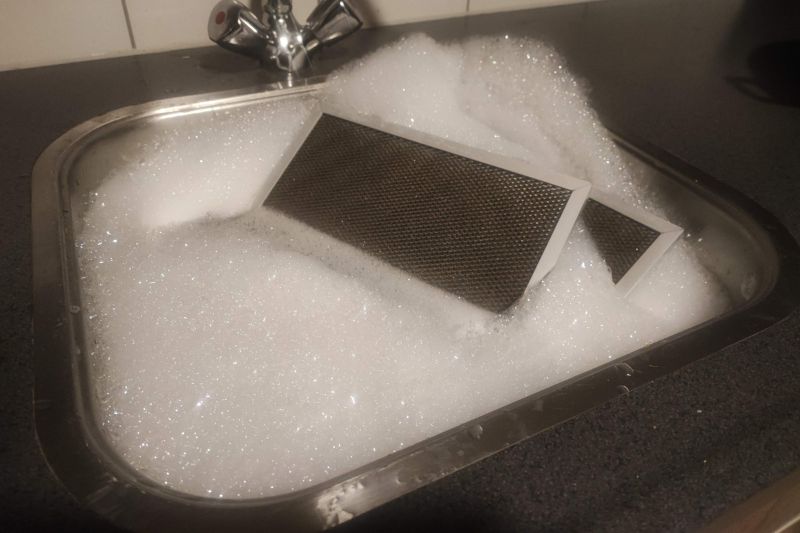
Why this works: Dish soap contains surfactants that break the bond between grease molecules and the metal surface. Hot water makes the grease more fluid, allowing it to release from the mesh. Soaking gives the soap time to penetrate multiple layers of buildup.
Limitations: This method handles routine grease well but may not fully remove heavy, baked-on buildup that’s been accumulating for months. If the filter still looks brown or feels greasy after this process, move to Method 2.
Method 2: Baking Soda + Dish Soap Power Soak (Moderate to Heavy Grease)
When dish soap alone isn’t cutting through the buildup, baking soda adds alkaline cleaning power and gentle abrasion. This is the method to use when you can see that the grease has been building up for a while.
Time needed: 5 minutes setup + 20-30 minutes soak + 10 minutes scrub
Materials: Very hot water, dish soap, 1/2 cup120 ml baking soda, rubber gloves, nylon brush
Best for: Moderate to heavy grease, filters cleaned every 2-3 months
Instructions
- Remove the filter(s) from the hood.
- Fill your sink with very hot water.
- Add dish soap and 1/2 cup120 ml of baking soda. Stir with a spoon or spatula until the baking soda dissolves. The solution will fizz slightly — this is normal.
- Submerge the filter(s). Let them soak for 20-30 minutes. The water will turn visibly greasy and yellow-brown — that’s the grease coming off.
- Scrub remaining grease. After soaking, use a nylon brush to work on stubborn areas. Sprinkle a little extra baking soda directly onto the filter as a gentle abrasive while scrubbing.
- Rinse thoroughly under hot water. Make sure all baking soda residue and grease are flushed out of the mesh.
- Check and repeat if needed. Hold the filter up to the light. If you still can’t see through parts of it, soak for another 15-20 minutes and scrub again.
- Dry completely before reinstalling.
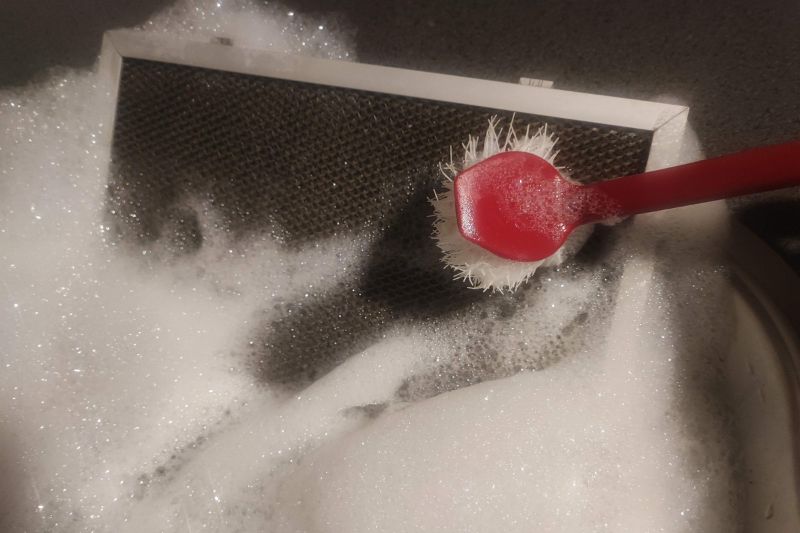
Why this works: Baking soda is alkaline (pH ~8.3), which helps break down acidic grease compounds. Combined with dish soap’s surfactants and hot water, it creates a triple-action cleaning solution. The gritty texture of undissolved baking soda provides gentle abrasion without scratching metal.
Limitations: For extremely heavy, baked-on grease (the kind that feels hardened rather than sticky), even this method may need multiple rounds. If two rounds of soaking don’t make progress, try Method 3.
Method 3: Boiling Water Treatment (Heavy or Neglected Filters)
For filters that haven’t been cleaned in six months or more, the grease may be polymerized — meaning it has chemically bonded with the metal surface under heat exposure. This requires more aggressive treatment.
Time needed: 15 minutes setup + 30-60 minutes soak + 10 minutes scrub
Materials: Boiling water, dish soap, 1 cup240 ml baking soda, rubber gloves, nylon brush, large pot or roasting pan (if filter doesn’t fit in sink)
Best for: Severely greasy filters, annual deep cleans, neglected hoods
Safety note: This method involves boiling water. Use caution when pouring and handling. Wear rubber gloves and pour slowly to avoid splashing. Place the filter in the sink or container before pouring hot water over it.
Instructions
- Place the filter(s) in your sink or a large container. If your filter is too large for the sink, a roasting pan or plastic storage bin works.
- Boil water in a large pot or kettle. You need enough to fully or mostly submerge the filter.
- Add 1 cup240 ml of baking soda to the filter in the sink. Sprinkle it over the filter surface.
- Carefully pour the boiling water over the filter. Pour slowly — the baking soda will fizz vigorously when the hot water hits it. This is the reaction doing its job.
- Add a generous squirt of dish soap and let the whole thing soak for 30-60 minutes.
- Scrub with a nylon brush. The grease should be significantly softened. Work in the direction of the mesh weave.
- For remaining stubborn spots: Make a paste of baking soda and a small amount of water. Apply it directly to the greasy areas, let it sit for 10 minutes, then scrub again.
- Rinse thoroughly and check your results against the light test.
- Dry completely before reinstalling.
Why this works: Boiling water has maximum grease-dissolving power. Combined with the alkaline reaction of baking soda in hot water, it breaks down even polymerized grease. The extended soak time allows the solution to penetrate deep into clogged mesh pores.
Limitations: If a filter is still visibly clogged after this treatment, the grease has likely permanently bonded with the metal. At that point, replacement is more effective than further cleaning attempts. Mesh filters typically cost $10-$30 depending on brand and size.
While the Filters Are Out: Clean the Hood Interior
With the filters removed, you have access to the inside of the hood — and it’s probably greasy too. Take 5 minutes to wipe it down while the filters are soaking.
- Wipe the interior surface. Spray a cloth with an all-purpose kitchen cleaner or a 50/50 mix of dish soap and warm water. Wipe the inside of the hood cavity, focusing on the area directly above the filters where grease splashes up.
- Clean the underside of the hood. This is the visible surface you see when looking up — it collects a greasy film over time.
- Check the light lens (if applicable). Many hoods have a light underneath. The lens or cover can get coated with grease. Remove it if possible and wash it with soapy water.
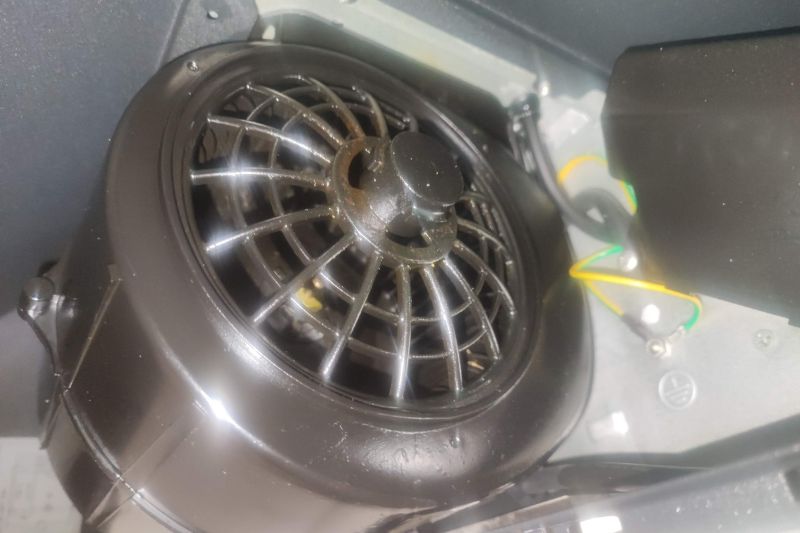
- Look at the fan or ductwork opening. Don’t reach into moving parts, but visually inspect whether there’s heavy grease accumulation beyond where the filter sits. If the ductwork visible from below looks coated in grease, professional hood cleaning may be worthwhile.
Note: Do not spray cleaning products directly into the motor housing, fan area, or electrical components. Wipe around them with a damp cloth only.
How Often to Clean (And How to Stay Ahead)
How often you need to clean your range hood filter depends on one thing: how much you cook, and what you cook.
| Cooking frequency | Type of cooking | Suggested cleaning interval |
|---|---|---|
| Daily (1-2 meals on stovetop) | Mix of frying, sauteing, boiling | Monthly |
| Heavy (deep frying, wok cooking, grilling) | High-heat oil cooking frequently | Every 2 weeks |
| Light (few times per week, mostly boiling/baking) | Low-grease cooking | Every 2-3 months |
| Rarely | Occasional meals | Every 3-6 months |
Prevention habits
- Turn on the hood BEFORE you start cooking. Let it pull air for a minute before heat and grease are generated. This creates airflow that captures grease from the start.
- Use the hood on the right speed. Higher speed for frying and sauteing, lower speed for simmering. Matching the fan speed to the cooking intensity improves grease capture.
- Use lids on pots and pans when possible. This reduces the amount of grease and steam that reaches the filter in the first place.
- Keep the hood running for a few minutes after cooking. Grease particles stay airborne for a while after you turn off the heat. The hood needs time to capture them.
When to Replace Instead of Clean
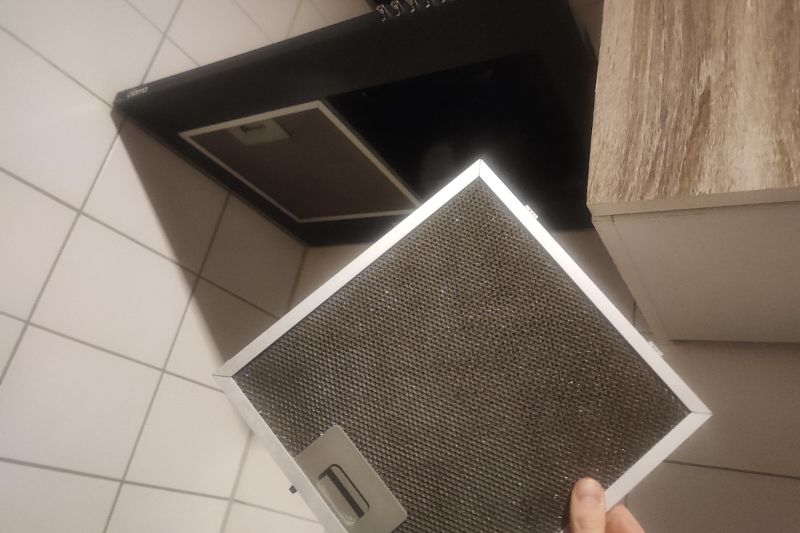
Cleaning extends the life of a filter, but filters don’t last forever. Consider replacement if:
- The mesh is torn or has holes. Damaged mesh lets grease pass through uncaptured.
- The filter is permanently bent or warped and doesn’t sit flush in the hood. Gaps around the edges let grease bypass the filter entirely.
- You can’t see light through it after a deep clean. If the pores are permanently clogged, the filter can’t do its job regardless of how clean the surface looks.
- Corrosion or rust is present. This weakens the mesh structure and can flake into your cooking area.
- It’s a charcoal/carbon filter. These are replaced, not cleaned. Typical lifespan is 3-6 months.
Finding replacements: Check your range hood’s model number (usually on a sticker inside the hood or in the manual). Search for “[brand] [model number] replacement filter.” Many hoods also accept universal-fit mesh filters if the original is discontinued. Measure your filter’s dimensions before ordering.
When to Call a Professional
Filter cleaning is a DIY job. But some situations go beyond the filter:
- Heavy grease buildup inside the ductwork. If you can see grease coating the inside of the duct opening beyond the filter, a professional hood cleaning may be necessary. This is especially important if you do heavy frying or wok cooking regularly.
- The hood motor isn’t pulling air. If the hood runs but doesn’t move air effectively even with a clean filter, the motor may be failing or the duct may be blocked. This needs a technician.
- Unusual noises from the fan. Grinding, rattling, or squealing from the motor area suggests a mechanical issue.
- Electrical issues. If the hood light flickers, the fan speed control doesn’t work, or you notice a burning smell from the motor — stop using it and call an electrician or appliance technician.
Frequently Asked Questions
Can I put my range hood filter in the dishwasher?
It depends on the filter material. Stainless steel baffle filters are generally dishwasher-safe — many manufacturers explicitly recommend it. Aluminum mesh filters may not be. Dishwasher detergent is alkaline and can oxidize aluminum, causing discoloration (the filter turns dark gray or black). Check your owner’s manual. If in doubt, hand-washing with dish soap is the safer option.
How often should I clean my range hood filter?
For most households that cook daily, monthly cleaning keeps grease from building up to problematic levels. If you do a lot of frying or wok cooking, every two weeks is better. Light cooks who mostly boil or bake can stretch it to every 2-3 months. The visual check is simple: if the filter looks yellow-brown or you can’t easily see through the mesh, it’s time.
Can I use oven cleaner on my range hood filter?
Some people use oven cleaner for very heavy grease, and it can be effective. However, oven cleaners contain caustic chemicals (typically sodium hydroxide) that require careful handling — wear gloves and eye protection, work in a ventilated area, and rinse the filter extremely thoroughly afterward. Also note that oven cleaner can damage aluminum filters and non-stainless finishes. The baking soda and dish soap methods are safer and sufficient for most situations.
Why does my range hood filter get greasy so fast?
Several factors affect how quickly grease builds up: cooking method (frying generates far more grease than boiling), fan speed selection (higher speed captures more), whether you use the hood consistently, and whether you use lids on pots and pans. If the filter gets dirty unusually fast, you may also have a ductwork issue — a partially blocked duct reduces airflow, meaning the filter has to work harder.
Does a dirty range hood filter affect my cooking?
Indirectly, yes. A clogged filter reduces the hood’s ability to remove smoke, steam, and grease from the air. This means more grease settles on your countertops, cabinets, and walls near the stove. It also means cooking odors linger longer. In poorly ventilated kitchens, reduced hood performance can also trigger smoke alarms more frequently during high-heat cooking.
What about grease on the outside of the range hood?
The exterior surfaces (typically stainless steel, painted metal, or plastic) can be wiped down with an all-purpose kitchen cleaner or a damp cloth with dish soap. For stainless steel, wipe in the direction of the grain. This is a quick job you can do while the filters soak — no special techniques needed.
Conclusion
Range hood filter cleaning comes down to hot water, dish soap, and patience. For most households, a monthly 20-minute soak keeps the filter performing well and prevents grease from building up in the ductwork where it becomes a fire safety concern. The soaking does the hard work — you’re mostly just waiting.
If you’ve been putting off this job, start with the baking soda power soak and don’t be alarmed by what comes off. Even heavily neglected filters can usually be restored with one or two rounds of soaking. And once you see the difference in your hood’s suction power and your kitchen’s air quality, it’s easy to keep up the monthly routine.
Remember: charcoal filters get replaced, not cleaned. And if the hood itself isn’t pulling air properly even with a clean filter, that’s a motor or ductwork issue for a technician.
Questions or tips from your own experience? Visit our contact page or learn more about our team on our about page.