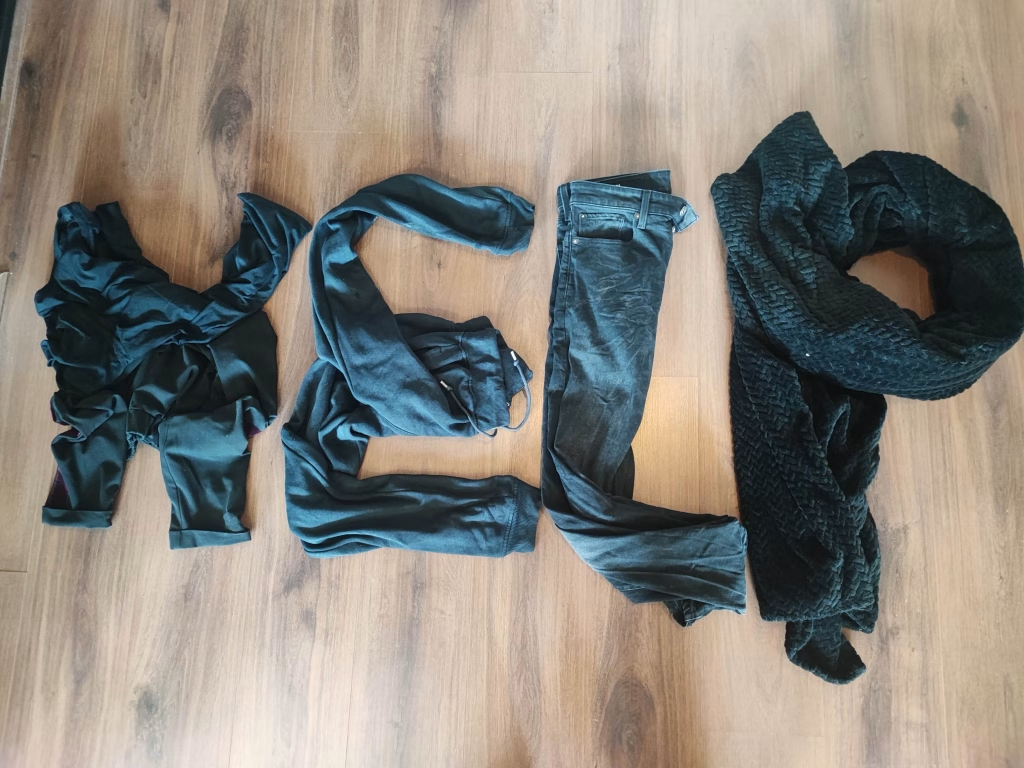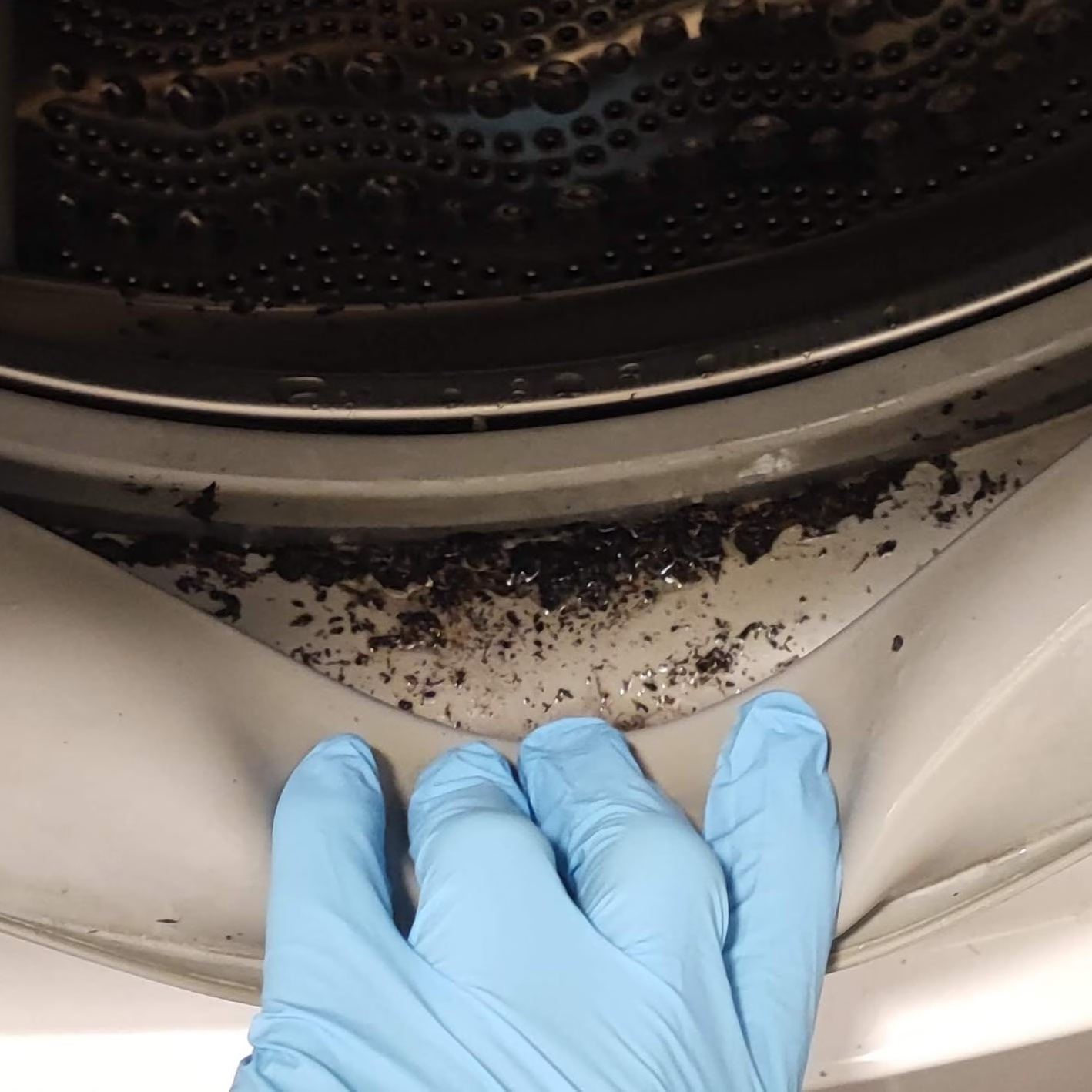


Good laundry habits keep your clothes looking new, your washing machine running smoothly, and your utility bills under control. But most of us learned how to do laundry by watching someone else do it, and picked up a few bad habits along the way.
This guide covers the fundamentals that actually matter: how to sort and wash your clothes properly, how to deal with stains, how to maintain your washing machine, and which common mistakes are quietly ruining your clothes or your washer. We’ve also linked to our detailed guides throughout, so if you need a deep dive on any specific topic, you can jump straight to it.
About this guide: Written by Sophie Harper, Senior Cleaning & Household Editor at HomeNerdy. This article was last reviewed in March 2026 and follows our editorial standards. We reference manufacturer guidance and established household practices; we do not claim to have tested every product or method mentioned.
Laundry Cheat Sheet
If you remember nothing else from this guide, remember this:
| Rule | Why it matters |
|---|---|
| Sort by color AND fabric type | Prevents color bleeding and ensures the right wash cycle for each fabric |
| Use less detergent than you think | Excess detergent leaves residue on clothes and inside your machine, feeding mold and causing odor |
| Cold water for most loads | Saves energy, prevents shrinking, and is fine for everyday clothes. Use warm/hot only for towels, bedding, or heavily soiled items |
| Don’t overload the drum | Clothes need room to move. Overloading means poor cleaning, extra wrinkles, and more stress on the machine |
| Treat stains immediately | The longer a stain sets, the harder it is to remove. Blot (don’t rub) and rinse with cold water as soon as possible |
| Leave the washer door open after use | Prevents mold and musty odor, especially in front loaders. This single habit saves you hours of deep cleaning later |
| Clean your machine monthly | Even clean-looking machines build up detergent residue, bacteria, and mineral deposits over time |
Washing Basics: Getting It Right
Sorting your laundry
Sorting isn’t just about separating whites from colors. For the best results, sort by three criteria:
- Color: Whites, lights, darks, and brights. New clothes (especially red and dark denim) are most likely to bleed: wash them separately for the first few cycles.
- Fabric type: Delicates (silk, lace, lingerie) need a gentle cycle. Towels and jeans can handle a normal or heavy cycle. Mixing them means either the delicates get beaten up or the heavy items don’t get clean.
- Soil level: Heavily soiled work clothes or gym gear should be washed separately from lightly worn everyday clothes. This prevents dirt from redepositing on cleaner items.
Water temperature
The care label on your clothes is the final word, but here’s a general guide:
- Cold (60-80°F / 15-27°C): Everyday clothes, colors, delicates, anything that might shrink. Cold water is also more energy-efficient: up to 90% of the energy your washer uses goes to heating water.
- Warm (90-110°F / 32-43°C): Permanent press fabrics, synthetic blends, moderately soiled items.
- Hot (120-140°F / 49-60°C): Whites, towels, bedding, heavily soiled items, cloth diapers. Hot water is better at killing bacteria and removing grease.
Detergent: less is more
This is the most common laundry mistake. Using too much detergent doesn’t make your clothes cleaner: it leaves a sticky residue that:
- Traps dirt and bacteria in fabric fibers (making clothes smell worse over time)
- Builds up inside your washing machine (causing mold and odor)
- Can irritate sensitive skin
Check the dosing guidelines on your detergent. If you have a high-efficiency (HE) washer, use HE detergent, and likely less than the cap suggests. Soft water areas need even less detergent than hard water areas.
Tip: If you see suds left on your clothes or inside the drum after a cycle finishes, you’re using too much detergent. Reduce the amount by a quarter and see if the problem goes away.
Drying tips
- Don’t over-dry. Remove clothes while they’re still slightly damp to reduce wrinkles and save energy. Over-drying also causes shrinking and wears out fabric faster.
- Clean the lint filter every load. A clogged lint filter reduces drying efficiency and is a fire hazard.
- Air-dry when possible. Hanging clothes to dry is gentler on fabric and free. Especially good for delicates, activewear, and anything with elastic.
- Shake clothes before loading the dryer. This reduces clumping and drying time.
Stain Removal: Quick Reference
The golden rule: treat stains as soon as possible. Blot (don’t rub), rinse with cold water, and apply the appropriate treatment before washing. Hot water or a dryer cycle can permanently set many stains.
| Stain type | First step | Treatment | Important |
|---|---|---|---|
| Coffee / tea | Rinse with cold water immediately | Apply liquid detergent or white vinegar, let sit 5-10 min, wash normally | Avoid hot water until stain is gone |
| Grease / oil | Blot excess with paper towel | Apply dish soap directly, work into fabric, let sit 15 min, wash in warm water | Dish soap cuts grease better than laundry detergent |
| Blood | Rinse with cold water immediately | Soak in cold salt water or apply hydrogen peroxide (test on hidden area first) | NEVER use hot water: it cooks the protein and sets the stain permanently |
| Red wine | Blot (don’t rub), cover with salt | Pour boiling water from height through the stain (stretches fabric taut first), or use white wine to dilute | Act fast: dried red wine is extremely difficult to remove |
| Grass | Scrape off excess | Apply white vinegar or rubbing alcohol, let sit 15 min, wash normally | Avoid chlorine bleach on grass stains: it can react with the organic compounds |
| Sweat / yellow underarm | Rinse area with cold water | Make a paste of baking soda + water, apply to stain, let sit 30 min, wash in warm water | The yellow color comes from a reaction between sweat and aluminum in deodorant |
| Ink | Place fabric on a paper towel, stain side down | Apply rubbing alcohol to the back of the stain (ink transfers to paper towel), repeat until clear | Do not rub: it spreads the ink. Dab and blot only |
Always check before drying: Before putting a stained garment in the dryer, check if the stain is gone. The heat from a dryer can permanently set stains that are still present. If the stain is still visible, treat it again and rewash before drying.
Washing Machine Care
Your washing machine cleans your clothes, but it can’t clean itself. Detergent residue, body soil, and moisture build up inside the drum, door seal, detergent drawer, and drain system over time, leading to musty smells, mold, and even bacteria transferring to your laundry.
Maintenance schedule
| When | What to do |
|---|---|
| After every wash | Leave the door open to air out. Wipe the door seal dry (front loaders). Remove wet clothes promptly. |
| Monthly | Run an empty hot cycle with 2 cups (475 ml) of white vinegar or a washer cleaner tablet. Clean the detergent drawer. |
| Every 2-3 months | Check and clean the drain filter (if your model has one). Inspect the door gasket for mold. |
| Annually | Inspect water supply hoses for cracks or bulges. Replace rubber hoses every 3-5 years (or switch to stainless steel braided hoses). |
Our detailed washing machine guides
We’ve written in-depth guides for the most common washing machine issues:
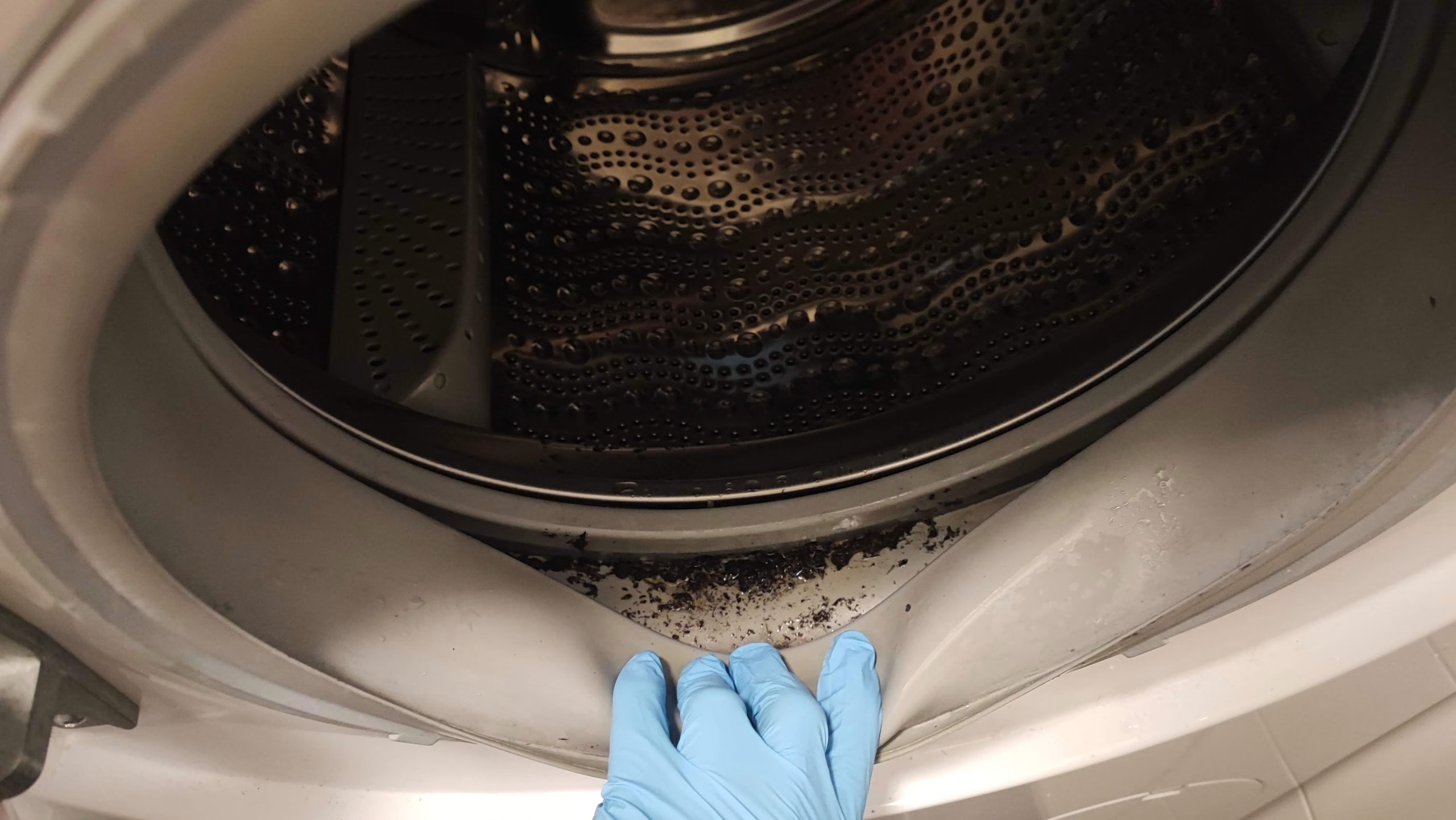
- How to Clean a Washing Machine: the right cleaning cycle and cleaner for your brand, plus the gasket, detergent drawer and pump filter. Start here if your front loader smells.
- How to Remove Washing Machine Mold: Health risks, detection, step-by-step removal with vinegar, and prevention strategies.
- Dishwasher Tablets in The Washing Machine: Can you use them? Yes, with important rules about water temperature and cycle selection.
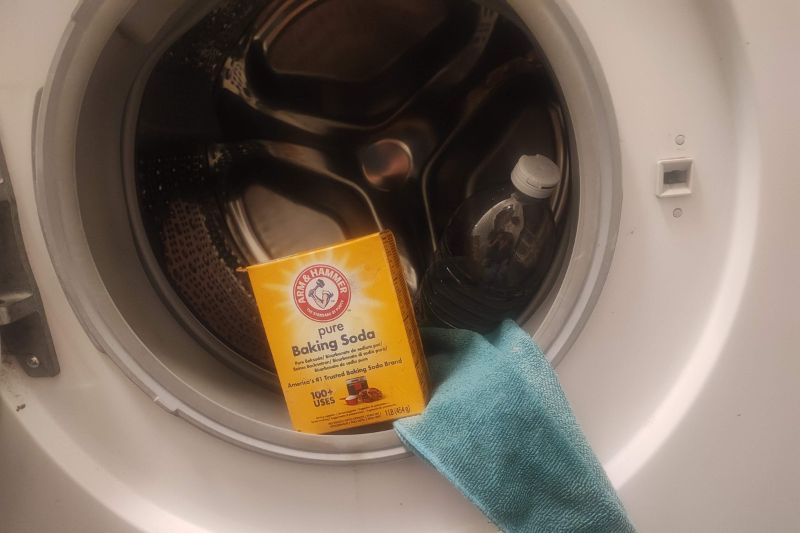
- Baking Soda in The Washing Machine: How to use it safely for deodorizing and cleaning, and why you should never mix it with vinegar in the same cycle.
Fabric Care Basics
Reading care labels
Every garment has a care label with symbols that tell you exactly how to wash, dry, iron, and bleach it. Here are the most important ones:
- Tub with number: Maximum wash temperature in Celsius (30, 40, 60, etc.)
- Tub with hand: Hand wash only
- Tub with X: Do not wash (dry clean only)
- Triangle: Bleaching allowed. Triangle with X = do not bleach.
- Square with circle: Tumble dry allowed. Dots indicate heat level (1 dot = low, 2 = medium, 3 = high)
- Iron with dots: Ironing temperature (1 dot = low, 2 = medium, 3 = high)
Common fabrics and how to care for them
- Cotton: Durable, can handle warm to hot water. Prone to shrinking in high heat: air dry or use medium dryer heat.
- Polyester / synthetic: Wash in cold or warm water. Dries quickly. Low heat in dryer. Avoid high heat: it can melt or damage the fibers.
- Denim: Wash inside out in cold water to preserve color. Wash less frequently (every 3-5 wears) to maintain fit and color.
- Wool: Hand wash or use the delicate/wool cycle in cold water. Never wring: roll in a towel to remove water. Lay flat to dry.
- Silk: Hand wash in cold water with a mild detergent. Never wring or twist. Air dry away from direct sunlight.
- Activewear / moisture-wicking: Wash in cold water, inside out. Skip fabric softener: it clogs the moisture-wicking fibers. Air dry when possible.
Wrinkle removal without ironing
Don’t have an iron or steamer handy? There are several ways to get wrinkles out of clothes without traditional ironing. We cover seven different methods in our detailed guide: How to Steam Clothes Without a Steamer.
Laundry Products: What You Actually Need
The laundry aisle can be overwhelming. Here’s what’s essential, what’s optional, and what you can skip:
Essential
- Detergent (liquid or pods): Use HE detergent if you have a high-efficiency washer. Measure according to the bottle: don’t eyeball it.
- Stain treatment: A basic stain remover spray or stick for pre-treating before washing. White vinegar and dish soap from your kitchen work for most stains too.
Optional (but useful)
- Fabric softener or dryer sheets: Makes clothes feel softer and reduces static. But it leaves residue on fabric and inside your washer. Skip it for towels (reduces absorbency) and activewear (clogs moisture-wicking fibers). Baking soda is a natural alternative for softening.
- Laundry sanitizer: Kills bacteria that survive cold and warm wash cycles. Useful for gym clothes, towels, or if someone in the household is sick. Not necessary for everyday laundry.
- Oxygen bleach (like OxiClean): Color-safe brightener and stain remover. Gentler than chlorine bleach. Good for periodic soaking of dingy whites.
Usually unnecessary
- Scent boosters: Fragranced beads that add scent to laundry. They don’t clean anything: they’re purely cosmetic. If your clothes smell bad after washing, the issue is your machine, not a lack of fragrance. See our washing machine cleaning guide.
- Multiple specialized detergents: You don’t need separate detergents for darks, whites, and delicates. One good quality HE detergent handles most loads. The exception: a dedicated wool/delicates detergent for hand-washing silk and wool.
Common Laundry Mistakes

- Using too much detergent. The number one mistake. More soap does not equal cleaner clothes. It equals residue buildup: on your clothes, in your machine, and in your drain system. Here’s what that residue does to your washer.
- Washing everything in hot water. Hot water fades colors, shrinks cotton, and wastes energy. Reserve it for towels, bedding, and heavily soiled items. Cold water handles 80-90% of your laundry just fine.
- Ignoring care labels. That “dry clean only” label isn’t a suggestion. Washing a dry-clean-only garment can permanently alter its shape, texture, or color.
- Leaving wet clothes in the washer. Even a few hours of sitting in a sealed drum creates a musty smell that transfers to the fabric. If you can’t move clothes to the dryer right away, at least open the washer door.
- Overloading the machine. A packed drum can’t agitate properly. Clothes come out poorly cleaned, extra wrinkled, and the machine wears out faster. Fill the drum about three-quarters full.
- Putting stained clothes in the dryer. Dryer heat permanently sets most stains. Always check that a stain is gone before drying. If it’s still there, treat and rewash.
- Never cleaning the washing machine. If your clean laundry smells musty, the machine is the problem. Monthly maintenance takes 5 minutes of active work. Mold in your washer is more common than you think.
- Skipping the lint filter. A clogged dryer lint filter reduces drying efficiency (costing you time and money) and is a genuine fire hazard. Clean it every single load.
Frequently Asked Questions
How often should I wash jeans?
Every 3-5 wears, unless they’re visibly dirty or smelly. Frequent washing fades the color and breaks down the denim fibers. When you do wash them, turn them inside out and use cold water.
Should I wash new clothes before wearing them?
Yes. New clothes may contain chemical residues from the manufacturing and dyeing process, as well as dust and bacteria from storage and handling. A cold wash before first wear is a sensible precaution, especially for anything that touches your skin directly.
Is it bad to leave clothes in the washer overnight?
Occasionally, it’s not the end of the world: just rewash them if they smell musty. But making it a habit promotes mold growth inside the machine and can leave your clothes smelling sour. Try to move laundry to the dryer (or a drying rack) within an hour of the cycle finishing.
Do I really need fabric softener?
No. Fabric softener is optional. It makes clothes feel softer and reduces static, but it also leaves a waxy coating on fabric that reduces towel absorbency, clogs moisture-wicking activewear, and builds up in your washing machine. If you want softer laundry without the residue, try wool dryer balls or add a half cup of baking soda to the wash cycle.
Why do my clothes still smell after washing?
The most common causes: too much detergent (creates residue that traps odor), leaving wet clothes in the washer too long, or a dirty washing machine. If the smell persists after adjusting these habits, your machine likely needs a thorough cleaning. See our front load washing machine guide or our mold removal guide.
Can I wash shoes in the washing machine?
Some shoes (canvas sneakers, certain athletic shoes) can be machine washed on a gentle cycle in cold water inside a mesh laundry bag. Remove laces and insoles first. Never machine wash leather, suede, or dress shoes. For more details, see our guide on the best way to clean shoes.
Conclusion
Good laundry comes down to a handful of habits: sort properly, use less detergent, choose the right water temperature, treat stains quickly, and maintain your washing machine. None of these are complicated: they just need to become routine.
If your clothes aren’t coming out as clean or fresh as they should, the answer is almost always one of three things: too much detergent, a dirty washing machine, or the wrong water temperature. Fix those, and the rest takes care of itself.
Have a question we didn’t cover? Visit our contact page or learn more about our team on our about page.