


How to clean a front load washing machine means tackling the musty smell, hidden mold, and grimy residue that build up inside the drum, rubber door gasket, and detergent dispenser over time. Front loaders are more water-efficient than top loaders, but that same design — a horizontal drum with a tight-sealing door — creates the perfect environment for moisture to linger, mold to grow, and detergent residue to accumulate in places you can’t see.
If your clean laundry comes out smelling worse than it went in, or you’ve noticed dark spots inside the rubber seal around the door, you’re dealing with a common front loader problem that regular cleaning can fix. This guide covers three areas that need attention (gasket, drum, and detergent drawer), four cleaning methods from gentle maintenance to deep cleaning, and the daily habits that prevent the smell from coming back.
About this guide: Written by Sophie Harper, who covers cleaning and household maintenance at HomeNerdy. This article was last reviewed in March 2026 and follows our editorial standards: we prioritize safety, reference manufacturer guidance and appliance industry best practices, and clearly state limitations.
How we develop our guides: We base our steps on common manufacturer recommendations (including cleaning guidance from Samsung, LG, Whirlpool, and Bosch), appliance industry standards, and established household safety practices. We do not claim to have personally tested every method — instead, we compile guidance from authoritative sources and widely reported user experiences.
Scope: This guide covers standard residential front load washing machines. It does not cover top load washers, commercial machines, or washer-dryer combo units with sealed drums. If your machine is leaking, making unusual noises, or displaying error codes, consult the manufacturer or a qualified appliance technician before cleaning.
Quick Summary (TL;DR)
Step 1: Clean the rubber door gasket
Peel back the folds of the rubber seal around the door. Wipe out trapped debris, hair, and moisture with a damp cloth. This is where most of the smell comes from.
Step 2: Run a cleaning cycle
Run an empty hot cycle with 2 cups475 ml of white vinegar or your machine’s self-clean function. This tackles residue inside the drum and drain system.
Step 3: Clean the detergent drawer
Pull out the detergent dispenser and scrub away the sticky buildup. Most drawers slide out completely — check your manual for the release mechanism.
Step 4: Prevent it from coming back
- Leave the door ajar after every wash
- Wipe the gasket dry after use
- Use the right amount of HE detergent (less is more)
Know when to stop: If you see persistent mold that returns within days of cleaning, water pooling under the machine, or a gasket that’s cracked or torn — those are repair issues, not cleaning issues.
Safety First: Read Before You Start
Mold and Bacteria
Front load washers can harbor mold in the door gasket. The rubber seal traps moisture, lint, hair, and detergent residue — creating conditions where mold and bacteria thrive. In most cases, this is a cosmetic and odor issue rather than a serious health hazard, but basic precautions are smart.
- Wear rubber gloves when cleaning the gasket, especially if you see visible mold.
- If you’re sensitive to mold or have respiratory conditions, consider wearing a mask while cleaning the gasket area.
- For more on washing machine mold and health considerations, see our guide: Is Washing Machine Mold Dangerous?
Chemical Safety
Do not mix cleaning products. If you switch between vinegar and bleach methods, run a complete rinse cycle between them.
- Vinegar + bleach = chlorine gas (toxic). Never combine these, even in separate compartments of the same wash cycle.
- Too much detergent = more residue, not cleaner clothes. Front loaders need HE (High Efficiency) detergent in smaller amounts than you’d think.
Electrical Safety
- For routine cleaning cycles, the machine stays plugged in — that’s normal.
- If you’re cleaning the detergent drawer or wiping down the exterior near the control panel, there’s no need to unplug.
- If you need to clean the drain filter (some models have one at the bottom front), place towels down first — water will come out.
Stop and Reassess If:
- You see water leaking from under the machine during or after a cycle.
- The door gasket is cracked, torn, or pulling away from the drum.
- Mold returns within a few days of thorough cleaning (this suggests a deeper moisture issue).
- The machine vibrates excessively or makes grinding noises — that’s a mechanical issue, not a cleaning one.
60-Second Diagnostic: Where’s the Problem?
Before you start scrubbing, take one minute to figure out what you’re actually dealing with. Open the door, pull back the gasket folds, and check three areas:
Step 1: Smell the drum
- ☐ No smell — Your machine is in decent shape. A monthly maintenance cycle should be enough. See Method 2.
- ☐ Mild musty or damp smell — Moisture and residue buildup. Start with gasket cleaning and run a hot cleaning cycle.
- ☐ Strong mildew or sour smell — Established mold and bacteria. You’ll need to clean all three areas: gasket, drum, and detergent drawer.
- ☐ Sewage or rotten egg smell — This is likely a drain issue, not the washer itself. Check the standpipe connection and P-trap. If you’re unsure, call a plumber.
Step 2: Inspect the door gasket
- ☐ Clean, dry rubber — Good shape. Wipe after each use to maintain.
- ☐ Damp with lint or hair trapped in folds — Common and easy to fix. See Method 1.
- ☐ Dark spots or visible mold in the folds — Needs immediate attention. Method 1, then consider the deep clean.
- ☐ Gasket is cracked, torn, or pulling away — This is a replacement issue. Cleaning won’t fix structural damage — contact the manufacturer or an appliance tech.
Step 3: Pull out the detergent drawer
- ☐ Clean with minor residue — Quick rinse under warm water. See Method 3.
- ☐ Sticky buildup or discoloration — Detergent and fabric softener residue. Needs soaking and scrubbing. Method 3.
- ☐ Mold growing in or behind the drawer — Remove drawer, clean it AND the cavity behind it. Method 3 + deep clean.
Quick Decision Table
| What you notice | Likely cause | First step | Next step | Stop & call a pro if… |
|---|---|---|---|---|
| Musty smell from drum | Moisture + detergent residue trapped in drum and drain | Hot vinegar cycle | Clean gasket | Smell persists after 2 cleaning cycles |
| Dark spots in door gasket | Mold growing in rubber seal folds | Gasket cleaning | Deep clean with baking soda paste | Mold returns within days; gasket is cracked or torn |
| Sticky residue in detergent drawer | Excess detergent and fabric softener buildup | Drawer cleaning | Reduce detergent amount going forward | Drawer mechanism is broken or won’t slide back in |
| Clothes smell worse after washing | Bacteria transferring from dirty drum/gasket to clothes | Clean gasket + vinegar cycle | Full deep clean | Problem continues after cleaning all three areas |
| Visible grime on drum surface | Detergent residue, fabric softener film, body soil | Hot vinegar cycle | Baking soda + vinegar deep clean | Drum has rust spots or damage |
Common Mistakes to Avoid
- Using too much detergent. This is the single biggest cause of front loader smell. More detergent does not mean cleaner clothes — excess soap doesn’t rinse out completely, leaving a sticky film inside the drum and gasket that feeds mold and bacteria. Most front loaders need about half the amount you’d use in a top loader. Check your detergent’s HE dosing guidelines and consider using even less than recommended if you have soft water.
- Closing the door immediately after a cycle finishes. The sealed door design that makes front loaders efficient also traps moisture. If you close the door right after unloading, you’re creating a warm, damp, dark environment — ideal for mold. Leave the door ajar for a few hours after each wash, or at least until the drum and gasket feel dry to the touch.
- Mixing vinegar and bleach. Both are effective cleaners on their own, but combined they produce chlorine gas, which is dangerous to inhale. If you want to use both, run them in completely separate cycles with a rinse cycle between. Never pour both into the drum or dispenser at the same time.
- Ignoring the detergent drawer. Most people clean the drum but forget the dispenser. Pull it out and look — there’s often a layer of congealed detergent and fabric softener that’s been building up for months. This gunk feeds bacteria and can eventually clog the water jets that rinse the drawer during cycles.
- Scrubbing the gasket with abrasive pads. The rubber seal is durable but not indestructible. Steel wool, magic erasers used aggressively, or harsh scouring pads can scratch and weaken the rubber surface, creating tiny crevices where mold gets an even better foothold. Use a soft cloth or an old toothbrush for stubborn spots.
Understanding Your Door Gasket
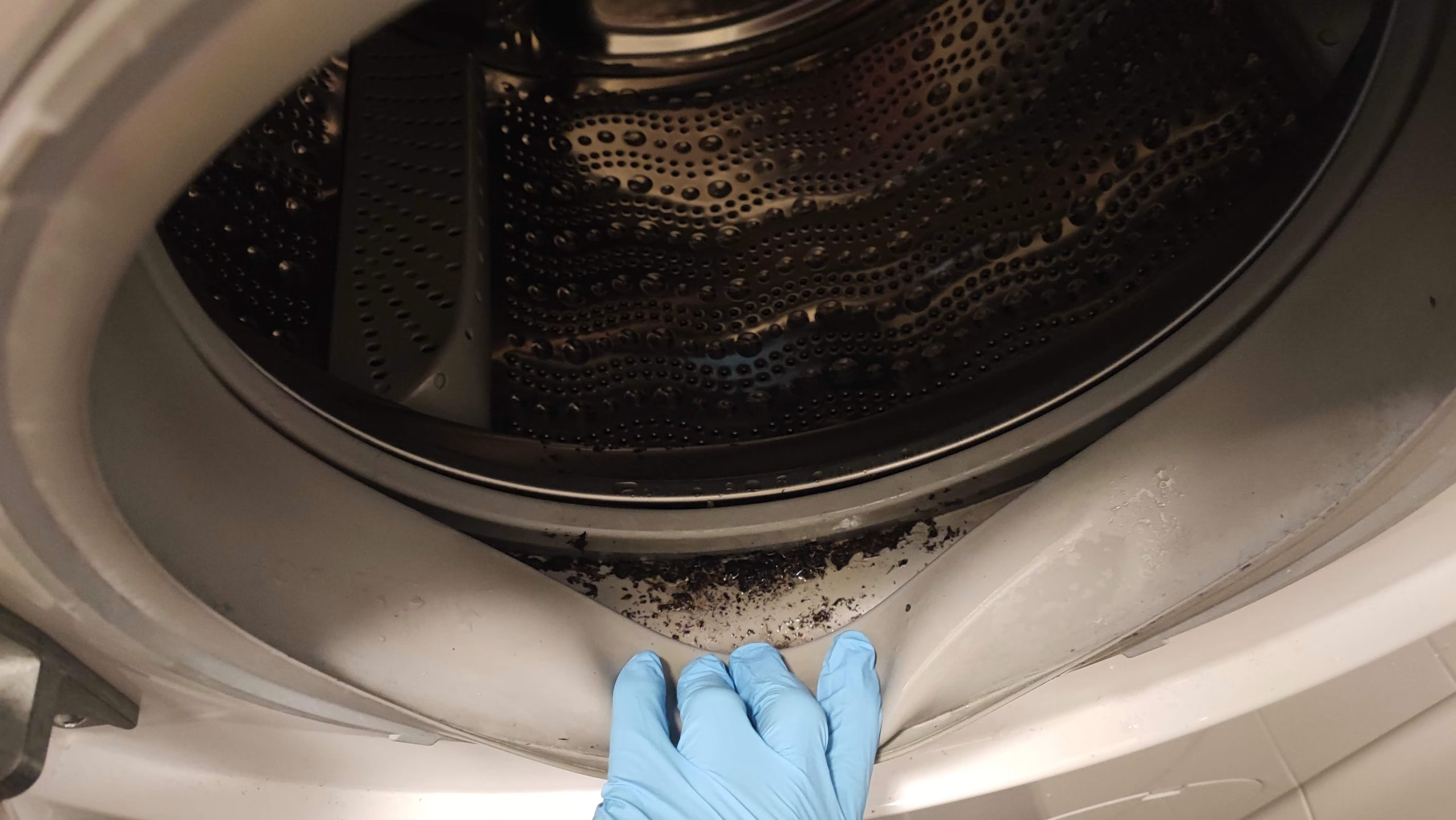
The rubber gasket (also called the door boot or bellows) is the flexible seal between the door and the drum. It keeps water inside during the cycle and creates the airtight seal that front loaders depend on. It’s also the number one place where mold, hair, coins, tissues, and mystery gunk accumulate.
Where mold actually hides
The gasket has folds — usually one or two deep creases that wrap around the entire door opening. Mold doesn’t just grow on the visible rubber surface. It grows inside these folds, in the areas you can only see when you peel the rubber back with your fingers. That’s why wiping the visible surface isn’t enough.
The drain holes
Most gaskets have small drain holes at the bottom that allow water to flow back into the drum after a cycle. If these get clogged with lint, hair, or residue, water pools in the gasket instead of draining — accelerating mold growth. Check for these holes when cleaning and clear any blockage with a cotton swab or toothpick.
When to replace, not clean
Cleaning can remove surface mold and most embedded staining. But if the rubber is cracked, torn, deformed, or pulling away from the drum housing, cleaning won’t solve the underlying issue. A damaged gasket can cause leaks, poor seal performance, and persistent mold. Replacement gaskets typically cost $50-$150 for the part, plus labor if you hire a technician.
Worth knowing: Some dark staining in the gasket may be permanent even after cleaning. Mold can leave discoloration in rubber that no amount of scrubbing will remove. If the gasket is clean, dry, and structurally sound but still looks stained — that’s cosmetic, not a hygiene issue.
Method 1: Gasket Cleaning
This is the most important step and the one most people skip. If your front loader smells, start here — the gasket is the source of the odor in the majority of cases.
Time needed: 10-15 minutes
Materials: Rubber gloves, microfiber cloth or soft rag, warm water, white vinegar or mild dish soap, old toothbrush (for tight spots), cotton swabs
Best for: Musty odors, visible mold, trapped debris in gasket folds
Instructions
- Open the door wide. You need access to the full gasket ring.
- Peel back the rubber folds. Using your fingers (with gloves on), pull the gasket lip away from the drum to expose the inner fold. Work your way around the entire opening.
- Remove trapped debris. You’ll likely find hair, lint, coins, tissues, and other items trapped in the fold. Remove everything by hand first.
- Wipe with a vinegar solution. Dampen a microfiber cloth with a 50/50 mix of white vinegar and warm water. Wipe the entire gasket surface, paying extra attention to the folds and the area at the bottom where water pools.
- Use a toothbrush for stubborn spots. For mold stains or buildup in tight creases, dip an old toothbrush in the vinegar solution and scrub gently.
- Clear the drain holes. Check the bottom of the gasket for small drainage holes. If they’re clogged, use a cotton swab or toothpick to clear them.
- Dry the gasket thoroughly. Use a dry cloth to wipe all moisture from the gasket folds. This step matters — leaving the gasket wet defeats the purpose.
Why this works: The vinegar’s acidity disrupts mold growth and dissolves soap residue, while the mechanical action of wiping removes the biofilm that harbors bacteria. Clearing the drain holes ensures water doesn’t pool in the gasket between uses.
Limitations: If mold has deeply penetrated the rubber (you can see dark staining even after scrubbing), the discoloration may be permanent. The gasket can still be functionally clean even if it looks stained. If mold returns within days despite regular drying and door-ajar habits, the gasket may need professional assessment or replacement.
Method 2: Hot Cleaning Cycle (Drum Cleaning)
This handles the inside of the drum, the drain hoses, and the internal plumbing that you can’t reach by hand. Many modern front loaders have a dedicated “Tub Clean” or “Self Clean” cycle — if yours does, use that. If not, a hot empty cycle with vinegar achieves a similar result.
Time needed: 5 minutes setup + 1-2 hours for the cycle to complete
Materials: 2 cups475 ml white distilled vinegar OR manufacturer-recommended washing machine cleaner
Best for: Drum odor, internal residue buildup, routine monthly maintenance
Instructions
- Remove all laundry and items from the drum. Check pockets and the gasket for stray items.
- If your machine has a “Tub Clean” or “Self Clean” cycle: Select it and follow the on-screen prompts. Some machines ask you to add cleaner to the drum or the dispenser — check your manual.
- If your machine does not have a dedicated cleaning cycle: Pour 2 cups475 ml of white vinegar directly into the drum (not the dispenser). Select the hottest, longest cycle available.
- Let the cycle run completely. Don’t interrupt it — the hot water and vinegar need the full cycle time to dissolve residue in the drum and drain system.
- After the cycle finishes: Open the door and wipe down the drum interior and door glass with a dry cloth. Leave the door ajar to allow everything to air dry.
Tip: If you want extra cleaning power, you can follow the vinegar cycle with a second cycle using 1/2 cup120 ml of baking soda sprinkled directly into the drum. Do not combine vinegar and baking soda in the same cycle — they neutralize each other’s cleaning properties when mixed. Run them separately for the best result. For more on using baking soda in your washer, see our guide: Can You Put Baking Soda in the Washing Machine?
Why this works: The hot water loosens built-up detergent film and body soil residue, while the vinegar’s acidity breaks down mineral deposits and soap scum. Running the cycle empty means no laundry absorbs the cleaning agents — they stay concentrated in the drum and drain system where you need them.
Limitations: A single cleaning cycle may not eliminate severe buildup. If the drum still smells after one cycle, repeat it. For persistent issues, the manufacturer’s recommended tub cleaner (usually a tablet or powder) tends to be stronger than vinegar for heavy-duty cleaning.
Method 3: Detergent Drawer Cleaning
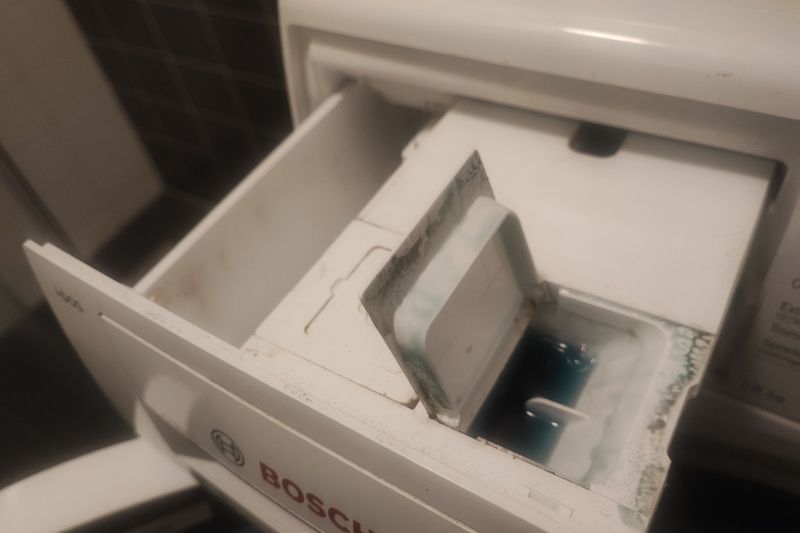
The detergent dispenser is a breeding ground for congealed soap, fabric softener residue, and occasionally mold. Most people pour detergent in and never look at what’s been building up in the compartments over months of use.
Time needed: 10-15 minutes
Materials: Warm water, old toothbrush or small cleaning brush, mild dish soap, cloth or paper towels
Best for: Sticky residue, clogged softener compartment, mold in drawer area
Instructions
- Remove the drawer completely. Most front loader drawers have a release mechanism — usually a tab or button you press while pulling the drawer toward you. Check your owner’s manual if it doesn’t come out easily. Don’t force it.
- Rinse under warm running water. Knock out loose residue and rinse away the bulk of the buildup.
- Scrub each compartment. Use an old toothbrush or small brush with a drop of dish soap to scrub all compartments — the main wash, pre-wash, and fabric softener sections. Pay attention to the underside and any water-jet openings.
- Clean the drawer cavity. While the drawer is out, look inside the opening where it sits. You’ll often find residue and sometimes mold on the top surface (where water jets spray into the drawer). Wipe this area with a damp cloth. An old toothbrush helps reach the back.
- Rinse and dry the drawer. Rinse thoroughly, shake off excess water, and let it air dry before sliding it back in.
Why this works: Removing the drawer gives you access to all the hidden surfaces where detergent congeals and water sits. The dish soap cuts through the sticky residue that vinegar alone struggles with.
Limitations: If the water jets inside the cavity are heavily clogged, a simple wipe-down may not fully clear them. In that case, running a cleaning cycle after reassembling the drawer can help flush the jets. Persistent clogging may require disassembly by a technician.
Method 4: Deep Clean (For Neglected Machines)
If your machine hasn’t been cleaned in a long time, or the smell and mold are severe, a comprehensive deep clean combines all three methods with extra attention to overlooked areas.
Time needed: 30-45 minutes active work + 1-2 hours for cleaning cycles
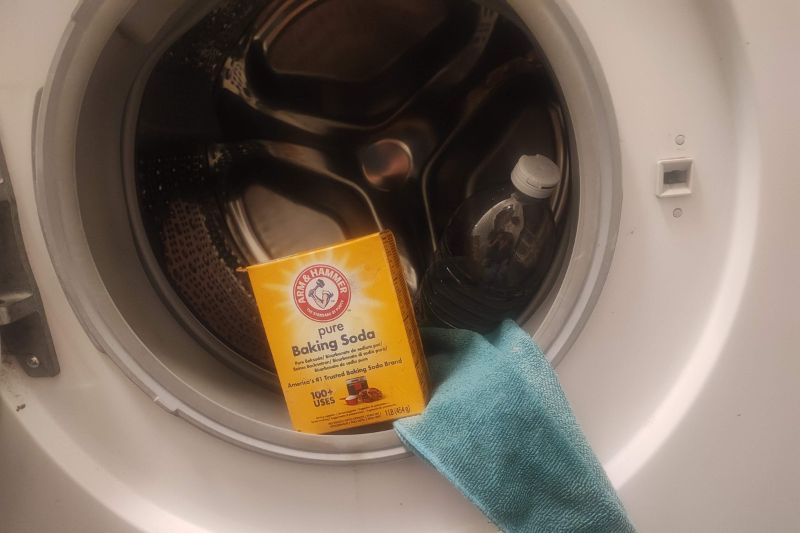
Materials: White vinegar, baking soda, rubber gloves, microfiber cloths, old toothbrush, dish soap, towels
Best for: Machines with strong odor, visible mold in gasket, neglected for 6+ months
Instructions
- Start with the gasket. Follow Method 1 completely. For stubborn mold, make a paste of baking soda and a small amount of water, apply it to the moldy areas, let it sit for 15 minutes, then scrub with a toothbrush and wipe clean.
- Clean the detergent drawer. Follow Method 3, including cleaning the cavity.
- Check the drain filter (if applicable). Some front loaders have a small access panel at the bottom front of the machine. Behind it is a drain filter or coin trap. Place towels underneath, open the panel, and slowly unscrew the filter cap — residual water will drain out. Remove any lint, hair, or debris caught in the filter. Rinse the filter under running water before replacing it.
- Run a vinegar cleaning cycle. Follow Method 2 with 2 cups475 ml of white vinegar.
- Follow with a baking soda cycle. After the vinegar cycle completes, sprinkle 1/2 cup120 ml of baking soda into the drum. Run another hot cycle. This neutralizes any remaining odors and provides additional scrubbing action.
- Wipe down the exterior. Use a damp cloth to clean the door glass (inside and out), the control panel area, and the top of the machine.
- Final dry-down. Wipe the drum, gasket, and door glass dry. Leave the door and drawer open to air dry completely.
Why this works: By cleaning all three problem areas (gasket, drum, drawer) and the drain filter in one session, you eliminate every source of odor and mold simultaneously. The separate vinegar and baking soda cycles provide both acid and alkaline cleaning action — each targeting different types of buildup.
Important: If the machine still smells after a full deep clean, the problem may be in the drain hose or standpipe connection rather than the machine itself. A kinked, improperly installed, or clogged drain hose can trap water and cause persistent odor. This typically requires a technician to diagnose and fix.
How to Prevent Front Loader Smell
Cleaning your washer fixes the current problem. These habits prevent it from coming back.
After every wash
- Leave the door ajar. Even cracking it open 2-3 inches5-8 cm allows air circulation that prevents moisture from being trapped inside. If pets or small children are a concern, some manufacturers sell door props or magnetic door holders designed for this purpose.
- Wipe the gasket dry. A quick wipe of the rubber seal and the area at the bottom where water pools takes 30 seconds and eliminates the moisture that mold needs to grow.
- Remove laundry promptly. Don’t leave wet clothes sitting in the drum for hours. The longer damp fabric sits in a sealed space, the faster bacteria multiply.
Weekly
- Leave the detergent drawer slightly open to allow air circulation and prevent moisture from building up in the compartments.
Monthly
- Run a cleaning cycle. Use your machine’s Tub Clean function, or run an empty hot cycle with 2 cups475 ml of vinegar. This prevents residue from building up to the point where it causes odor.
- Check and clean the drain filter (if your model has one). This takes 5 minutes and prevents clogs that cause standing water and odor.
Ongoing
- Use the right amount of HE detergent. More detergent does not equal cleaner clothes. Excess soap creates more residue, which feeds mold. Measure according to the detergent’s instructions for HE machines — and consider using less if you have soft water or smaller loads.
- Skip the liquid fabric softener. Fabric softener is one of the biggest contributors to residue buildup in front loaders. If you want softer laundry, dryer sheets or dryer balls are alternatives that don’t leave residue in the washer.
- Run an occasional hot cycle. If you primarily wash in cold water (which is energy-efficient and fine for most laundry), an occasional hot cycle helps dissolve the residue that cold water cycles leave behind.
When to Call a Professional
Most front loader cleaning is straightforward DIY. But some situations need professional help:
- Mold returns within days despite thorough cleaning and consistent prevention habits. This may indicate a moisture issue in the machine’s design, a failing gasket seal, or a drainage problem.
- Water leaking from under the machine during or after cycles. This could be a gasket failure, a loose door boot clamp, or a cracked hose.
- The gasket is visibly cracked, torn, or deformed. Replacement is the only fix. While some handy homeowners replace gaskets themselves, it’s a moderately difficult job that involves partially disassembling the front panel.
- Persistent drain odor that doesn’t improve after cleaning the machine, gasket, and drawer. The issue is likely in the drain hose connection or household plumbing.
- Error codes on the display related to draining, water level, or door locking. These are mechanical or electrical issues, not cleaning issues.
Cost expectation: A service call for a washing machine typically costs $75-$200 for diagnosis plus parts. Gasket replacement parts range from $50-$150 depending on brand and model. Total gasket replacement (parts + labor) commonly runs $150-$300.
Frequently Asked Questions
How often should I clean my front load washing machine?
Run a cleaning cycle (empty hot cycle with vinegar or tub cleaner) once a month. Wipe the gasket dry and leave the door open after every wash. Clean the detergent drawer every 1-2 months, or whenever you notice residue building up. If you use your machine daily or primarily wash in cold water, you may benefit from biweekly cleaning cycles.
Can I use bleach instead of vinegar to clean my front loader?
Yes, bleach is effective for killing mold and sanitizing the drum. Add 1/2 cup120 ml of liquid chlorine bleach to the bleach dispenser (or directly into the drum if your machine doesn’t have one) and run a hot cycle. However, never mix bleach with vinegar — this produces toxic chlorine gas. If you’ve used vinegar, run a full rinse cycle before using bleach, and vice versa. Some manufacturers explicitly recommend against regular bleach use as it can degrade rubber seals over time — check your manual.
Why does my front loader smell even though I just bought it?
New machines sometimes have a slight chemical or plastic odor from manufacturing. This typically fades after a few washes. Run 2-3 empty hot cycles to help clear it. If the smell is musty or mildewy rather than chemical, the machine may have sat in a warehouse or store with the door closed for an extended period. A vinegar cleaning cycle should resolve it.
Does vinegar damage the rubber gasket?
Diluted white vinegar used occasionally (monthly cleaning) is generally considered safe for washing machine gaskets. The concern arises with concentrated acidic solutions used frequently, which could theoretically degrade rubber over extended periods. Most major manufacturers include vinegar as an acceptable cleaning agent in their care guides. If you’re concerned, use a manufacturer-recommended tub cleaner instead.
Why do front loaders smell more than top loaders?
Design differences. Top loaders have a vertical drum with an opening at the top that naturally allows air circulation and moisture to evaporate. Front loaders have a horizontal drum with an airtight door seal — when that door closes after a cycle, moisture, heat, and residue are trapped inside. This isn’t a defect; it’s a trade-off of the water-efficient design. The solution is simple: leave the door open after washing.
Can I use dishwasher tablets to clean my washing machine?
Some people report success with this method, and it has become a popular tip online. However, most washing machine manufacturers don’t recommend it. Dishwasher tablets are formulated for different water temperatures, cycle times, and materials than what a washing machine uses. They can produce excessive foam in a front loader, which may trigger error codes or residue buildup. Stick with vinegar, baking soda, or a product specifically designed for washing machine cleaning.
Is the black mold in my gasket dangerous?
In most cases, gasket mold is more of an odor and aesthetic issue than a health hazard. However, if anyone in your household has asthma, mold allergies, or a compromised immune system, it’s worth taking it more seriously. Clean the gasket thoroughly and maintain prevention habits. For a deeper look at this topic, see our article: Is Washing Machine Mold Dangerous?
Conclusion
Front load washing machine smell comes down to three problem areas: the door gasket, the drum interior, and the detergent drawer. Clean these regularly and you’ll eliminate the musty odor that’s been transferring to your laundry. The gasket is where most of the problem lives — peel back the folds, clean out the debris, and dry it after every use.
The biggest prevention habit is the simplest one: leave the door open after washing. That single change starves mold of the moisture it needs to grow. Combine it with the right amount of HE detergent and a monthly cleaning cycle, and your front loader should stay fresh between deep cleans.
If the smell persists after a thorough cleaning, or if the gasket is physically damaged, that’s a sign to bring in a professional — the problem has moved beyond what cleaning can solve.
Questions or tips from your own experience? Visit our contact page or learn more about our team on our about page.