

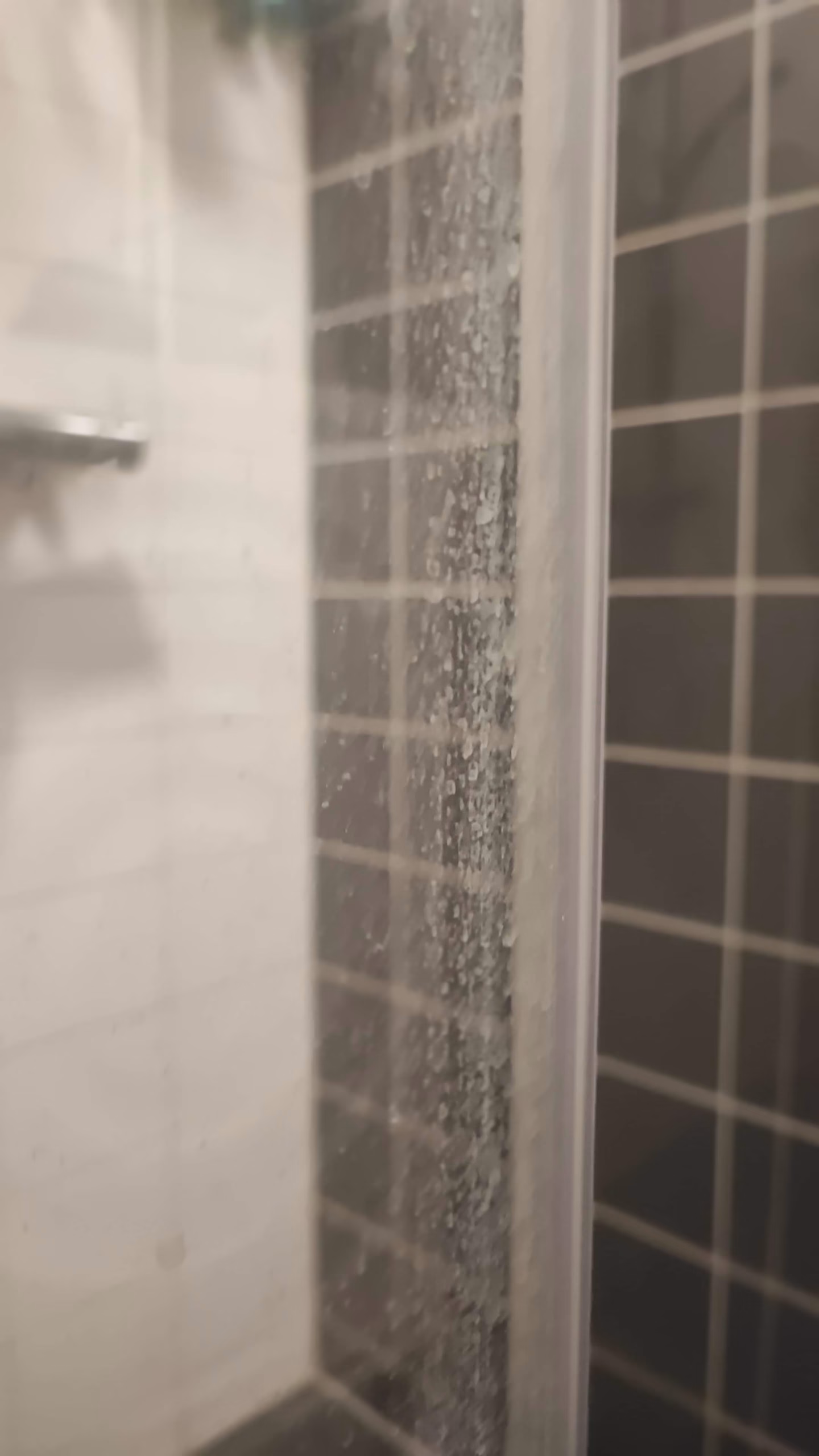
Water stains on glass are the cloudy white or rainbow-colored deposits left behind when mineral-rich water evaporates. You’ll see them on shower doors, windows, glassware fresh out of the dishwasher, car windshields after a rainstorm, and pretty much anywhere hard water is allowed to sit and dry. The staining itself is typically surface buildup, meaning it responds well to the right cleaning method, but if it’s been left long enough, it can chemically react with the glass and cause permanent etching that no cleaner will remove.
This guide covers five methods matched to how stubborn your stains are, plus a surface-and-stain compatibility matrix so you don’t accidentally damage coated glass, and a special-cases section for the places water stains show up most: glassware, windows, shower doors, and car windshields. The goal is simple: match your effort to what you’re actually dealing with, and know when to stop before you make things worse.
About this guide: Written by Sophie Harper, who covers cleaning and household maintenance at HomeNerdy. This article was last reviewed in April 2026 and follows our editorial standards: we prioritize safety, reference manufacturer guidance and standard household practices, and clearly state limitations.
How we develop our guides: We base our steps on manufacturer care guidelines for various glass types, general glass cleaning best practices, and established water quality information from organizations like the Water Quality Association and USGS. We do not claim to have personally tested every method; instead, we compile guidance from authoritative sources and common user experiences.
Scope: This guide covers water stains on tempered glass, standard flat glass (windows), and typical glassware. It does not cover antique or leaded glass, specialty optics, art glass, or solar panels: these require specialized care. If your glass has chips, cracks, or a surface that feels rough to the touch even after cleaning, the damage is likely structural or etched and cleaning won’t fix it.
Quick Summary (TL;DR)
Step 1: Identify what you’re dealing with
- Light water spots or recent stains: Start with Method 1 (Vinegar Spray): fastest fix for fresh buildup.
- Cloudy haze that won’t wipe off: Method 2 (Baking Soda Paste): gentle scrubbing action.
- White crusty mineral deposits: Method 3 (Extended Vinegar Treatment): soak the deposits to break them down.
- Rainbow or rust-colored stains: Method 4 (Commercial Lime/Rust Remover): metal deposits need targeted chemistry.
- Thick crystalline buildup that nothing else touches: Method 5 (Razor Blade): physical removal, flat tempered glass only.
Step 2: Check your glass type before you start
- Coated glass (easy-clean, hydrophobic) and textured or frosted glass need different care. See the compatibility matrix before applying any acid or abrasive.
Step 3: Prevent future stains
- The single best habit is drying glass before water has a chance to evaporate: squeegee shower glass after use, towel-dry glassware, rinse car windows with distilled or treated water. See prevention for specifics per surface.
Step 4: Know when you’re out of options
- If the glass feels gritty or rough after cleaning, or if cloudiness doesn’t improve across multiple methods, you’re likely dealing with permanent etching. At that point, restoration or replacement are the realistic paths: see when to call a professional.
Safety First: Read Before You Start
Ventilation
Work in a well-ventilated area. Vinegar fumes aren’t toxic but they’re sharp in an enclosed space. Commercial lime or rust removers often contain acids that produce fumes you don’t want to inhale: open windows and doors, run an exhaust fan, and take breaks if you feel lightheaded.
Chemical Mixing: Never Mix These
If you’ve recently used a commercial cleaner, wait at least 24 hours before switching to vinegar or another acid. Mixing cleaners can produce toxic fumes.
Do Not Mix:
- Bleach + Vinegar = Chlorine gas (toxic)
- Bleach + Ammonia = Chloramine gas (toxic)
- Different commercial rust/lime removers = Unpredictable acid reactions
PPE (Personal Protective Equipment)
- Rubber or nitrile gloves: Protects hands from acidic cleaners and prevents fingerprints on freshly cleaned glass.
- Eye protection: Strongly recommended when spraying overhead or using commercial lime/rust removers. Splash-back is common.
- Old clothes or an apron: Vinegar won’t stain fabric, but commercial rust removers can bleach or mark clothing permanently.
Test First, Every Time
Test any cleaner or tool on a small, inconspicuous corner of the glass before treating the whole surface. Coated glass, antique glass, and some specialty glassware can be damaged by acids or abrasives. Wait 5 minutes after the test, rinse, and check for dulling, discoloration, or texture change before proceeding.
Glass Types at Higher Risk
- Coated or treated glass (often marketed as “easy-clean” or “hydrophobic”): acids can strip the coating.
- Leaded crystal or antique glass: acid can etch decorative cuts and discolor lead content.
- Frosted or textured glass: abrasives get trapped in the texture and create permanent haze.
- Car windshield interiors with anti-glare coating: abrasives and ammonia-based cleaners can damage the coating.
Stop and Reassess If:
- The glass feels rougher after cleaning than before.
- You see new scratches, haze, or discoloration appearing.
- The cloudiness gets worse rather than better.
- The glass has cracks or chips (don’t apply pressure to damaged glass: it can shatter).
- You feel dizzy, lightheaded, or notice breathing discomfort: leave the area immediately and ventilate.
60-Second Diagnostic
Before you grab a cleaner, take a minute to figure out exactly what you’re dealing with. Water stains look similar at a glance, but the underlying cause (and the right fix) varies.
Step 1: What do you see?
- ☐ Light cloudy film across the whole surface → General soap and mineral residue. Start with Method 1 (Vinegar Spray).
- ☐ Distinct spots where water droplets dried → Classic hard water spots. Method 1 usually clears these.
- ☐ White crusty deposits raised above the glass surface → Severe mineral buildup. Go to Method 3 (Extended Vinegar Treatment).
- ☐ Rainbow iridescent stains → Metal deposits (iron, copper) from water pipes. Use Method 4 (Commercial Lime/Rust Remover).
- ☐ Rust-colored or orange-brown stains → Iron staining. Method 4.
- ☐ Glass surface feels gritty or rough to the touch → Permanent etching. Cleaning won’t fix this: see When to Call a Professional.
Step 2: Run the water test
Spray plain water on the glass and watch what happens:
- ☐ Water beads up cleanly and runs off → Surface is in good condition, probably just light buildup.
- ☐ Water clings in sheets or leaves instant spots → There’s a layer of residue changing how water interacts with the glass.
- ☐ No change at all, water just sits → Heavy buildup or potential etching: you’ll need Method 3 or beyond.
Step 3: How long have the stains been there?
- ☐ Days to a couple weeks → A single gentle method usually handles it.
- ☐ Months → Expect to combine methods (vinegar + baking soda, or extended soak).
- ☐ Years / unknown → Start gentle, work up to stronger methods. If nothing works, assume etching.
Quick Decision Table
| What you see | Likely cause | First step | If that fails | Stop & call a pro if… |
|---|---|---|---|---|
| Light cloudy film | Routine soap and mineral residue | Vinegar spray | Baking soda paste | Cloudiness persists after repeated cleaning and the glass feels rough |
| Distinct water spots | Hard water minerals left behind after evaporation | Vinegar spray | Extended vinegar soak | Spots leave a rough impression even after removal (surface etching) |
| Crusty white deposits | Heavy calcium/magnesium buildup | Extended vinegar treatment | Razor blade on flat tempered glass | Deposits won’t budge and glass is curved, coated, or damaged |
| Rainbow / iridescent stains | Metal deposits from water pipes (iron, copper) | Commercial lime/rust remover | Professional glass restoration | Color remains after multiple treatments |
| Rust-colored streaks | Iron in water supply or corroded fixtures | Commercial lime/rust remover | Replace fixture if it’s the source | Stains return quickly after each cleaning (plumbing issue) |
| Gritty rough texture | Permanent etching from prolonged mineral exposure | Professional polishing evaluation | Replacement | This is already the “call a pro” signal |
Surface & Cleaner Compatibility Matrix
The right method for one glass surface can damage another. Use this matrix to check compatibility before you apply anything.
| Cleaner / Tool | Windows (Standard) | Shower / Tempered Glass | Glassware | Coated / Treated | Car Windshield |
|---|---|---|---|---|---|
| White vinegar (diluted) | ✅ Safe | ✅ Safe | ✅ Safe | ⚠️ Test first: may strip coating | ✅ Safe (exterior) |
| White vinegar (undiluted) | ✅ Safe with time limit | ✅ Safe | ⚠️ Rinse fully: can cloud crystal | ❌ Avoid: strips coating | ⚠️ Exterior only, test first |
| Baking soda paste | ✅ Safe | ✅ Safe (light pressure) | ✅ Safe | ⚠️ Very light pressure only | ⚠️ Exterior only: never on anti-glare interior |
| Commercial lime/rust remover | ✅ Safe (follow label) | ✅ Safe (follow label) | ⚠️ Short contact time only | ❌ Avoid: strips coating | ⚠️ Exterior only, careful of paint |
| Razor blade | ✅ On flat glass, wet, 45° angle | ✅ On flat tempered only | ❌ Avoid: curved surface scratches | ❌ Avoid: scratches coating | ❌ Avoid: curved glass and wiper risk |
| Microfiber cloth | ✅ Best choice | ✅ Best choice | ✅ Best choice | ✅ Best choice | ✅ Best choice |
| Squeegee | ✅ Excellent | ✅ Excellent (prevention) | ❌ Not applicable | ✅ Safe | ✅ Safe (flat windshields) |
| Abrasive pads / steel wool | ❌ Avoid | ❌ Avoid | ❌ Avoid | ❌ Avoid | ❌ Avoid |
How to read this matrix: ✅ means compatible under normal conditions. ⚠️ means use with caution and test first. ❌ means avoid: the method will likely damage the surface.
Common Mistakes to Avoid
- Skipping the surface test: Many homeowners spray vinegar on a whole window or shower door only to discover it had a protective coating that’s now dulled or stripped. Always test a small, inconspicuous corner first. Wait 5 minutes, rinse, and check before scaling up.
- Letting cleaner dry on the glass: If vinegar, commercial cleaner, or baking soda paste dries before you rinse it, you’ve just created new streaks and residue that are often harder to remove than the original stains. Work in manageable sections and rinse before anything has a chance to dry.
- Cleaning in direct sunlight or on hot glass: Warm glass evaporates cleaner too fast, leaving streaks behind. Clean windows on overcast days or in the shade. For shower glass, clean when the bathroom is cool, not right after a hot shower.
- Using abrasive pads or steel wool “to get tough stains off”: Glass scratches more easily than people think, and micro-scratches make future buildup stick faster. Stick to soft cloths, sponges, and non-scratch scrubbers. Baking soda paste gives you scrubbing power without the scratch risk.
- Confusing etching with buildup: If you’ve cleaned the same spots multiple times and they still look cloudy, stop and check the surface with your fingertips. If it feels rough or gritty even when clean, the glass is permanently etched. No amount of scrubbing will fix that: at that point, you’re wasting effort.
Method 1: Vinegar Spray (Light Stains & Fresh Spots)
White vinegar is the starting point for water stain removal because it’s mildly acidic (around 2.5 pH), which dissolves the alkaline minerals in hard water without damaging most glass. If the stains are fresh, days to a few weeks old, this method typically handles them in one application.
Time needed: 5-10 minutes
Materials: 1 part1 deel white vinegar, 1 part1 deel water, spray bottle, microfiber cloth or squeegee
Best for: Light water spots, fresh cloudy film, routine maintenance on any standard glass
Instructions
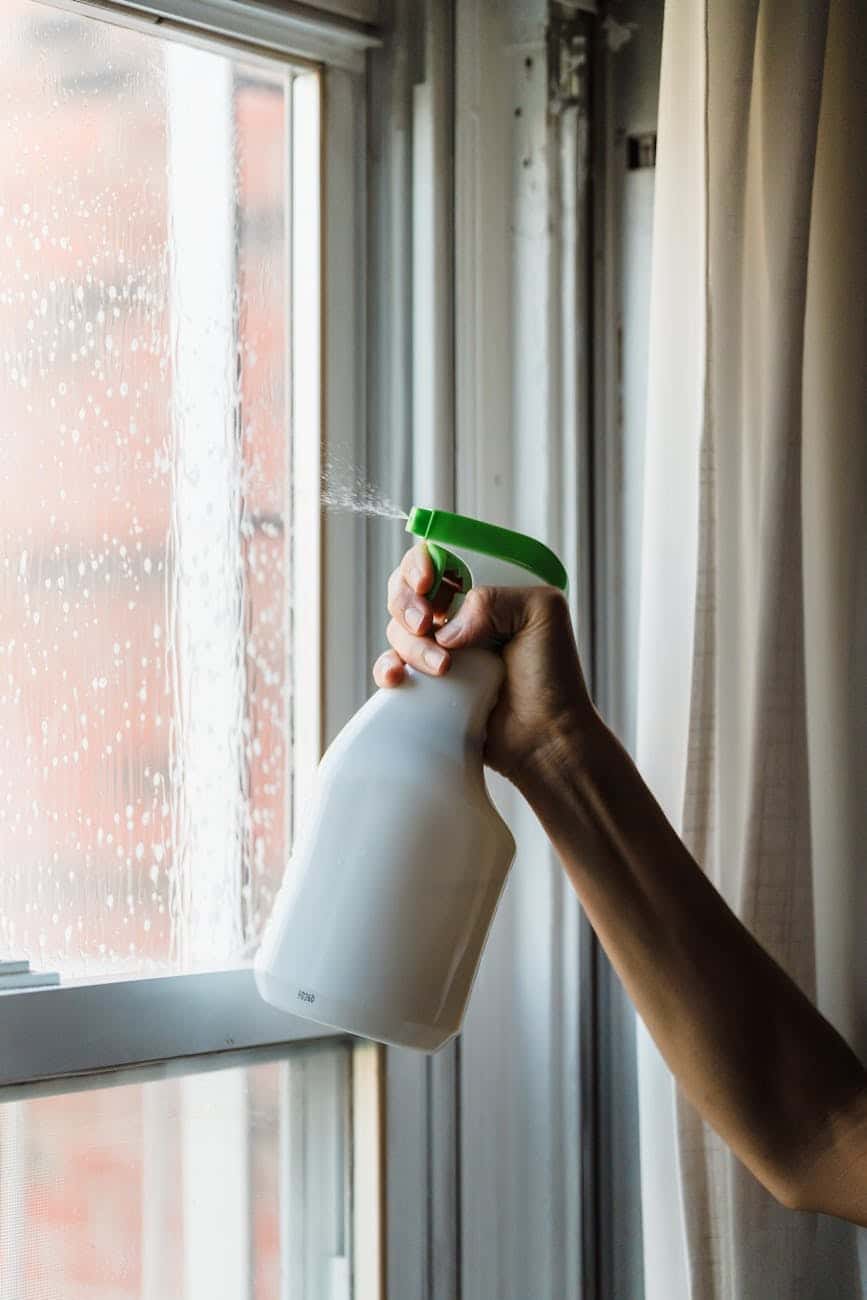
- Mix equal parts white vinegar and water in a clean spray bottle. For very light staining, this ratio is plenty; skip the urge to go straight vinegar unless the gentle version fails.
- Open a window or run a ventilation fan if you’re working indoors.
- Spray the vinegar solution generously over the stained surface. Cover the entire area, not just visible spots, because some staining is too light to see until it dries.
- Let it sit for 5-10 minutes. Don’t let it dry; re-spray if needed.
- Wipe with a microfiber cloth in straight overlapping strokes. For small areas of stubborn buildup, a soft sponge can help.
- Rinse thoroughly with clean water. For windows, a fresh spray of plain water and a microfiber wipe works fine. For glassware, rinse under running water.
- Dry immediately with a squeegee (for flat glass) or a dry microfiber cloth. Never air-dry: that’s how water stains form in the first place.
Why vinegar works: Hard water stains are mostly calcium carbonate and magnesium deposits, both alkaline. The acetic acid in vinegar reacts with them and breaks them down into water-soluble compounds that rinse away. For light staining, this reaction is fast and thorough. For heavier deposits, you need more time or more concentration (see Method 3).
Limitations: Diluted vinegar struggles with heavy mineral crusts, rainbow-colored metal deposits, and stains that have been sitting for months. If the surface still looks cloudy after rinsing and drying, move to Method 2 or Method 3.
If this doesn’t work: Try again with undiluted vinegar and a longer contact time (15-20 minutes, keeping the surface wet). If that still doesn’t clear it, the staining is too bonded for spray-and-wipe: move to extended treatment.
Method 2: Baking Soda Paste (Moderate Cloudy Buildup)
Where vinegar dissolves, baking soda scrubs, gently. This method is the bridge between “spray and wipe” and “soak and wait.” If the vinegar cleared some but not all of the stains, baking soda’s fine abrasive texture works through what’s left without scratching the glass.
Time needed: 10-15 minutes
Materials: ¼ cup60 g baking soda, a few tablespoons of water, soft sponge or microfiber cloth, vinegar spray (from Method 1), rinse water
Best for: Moderate cloudy film, soap-and-mineral mix, spots that didn’t clear with vinegar alone
Instructions
- Put on rubber gloves.
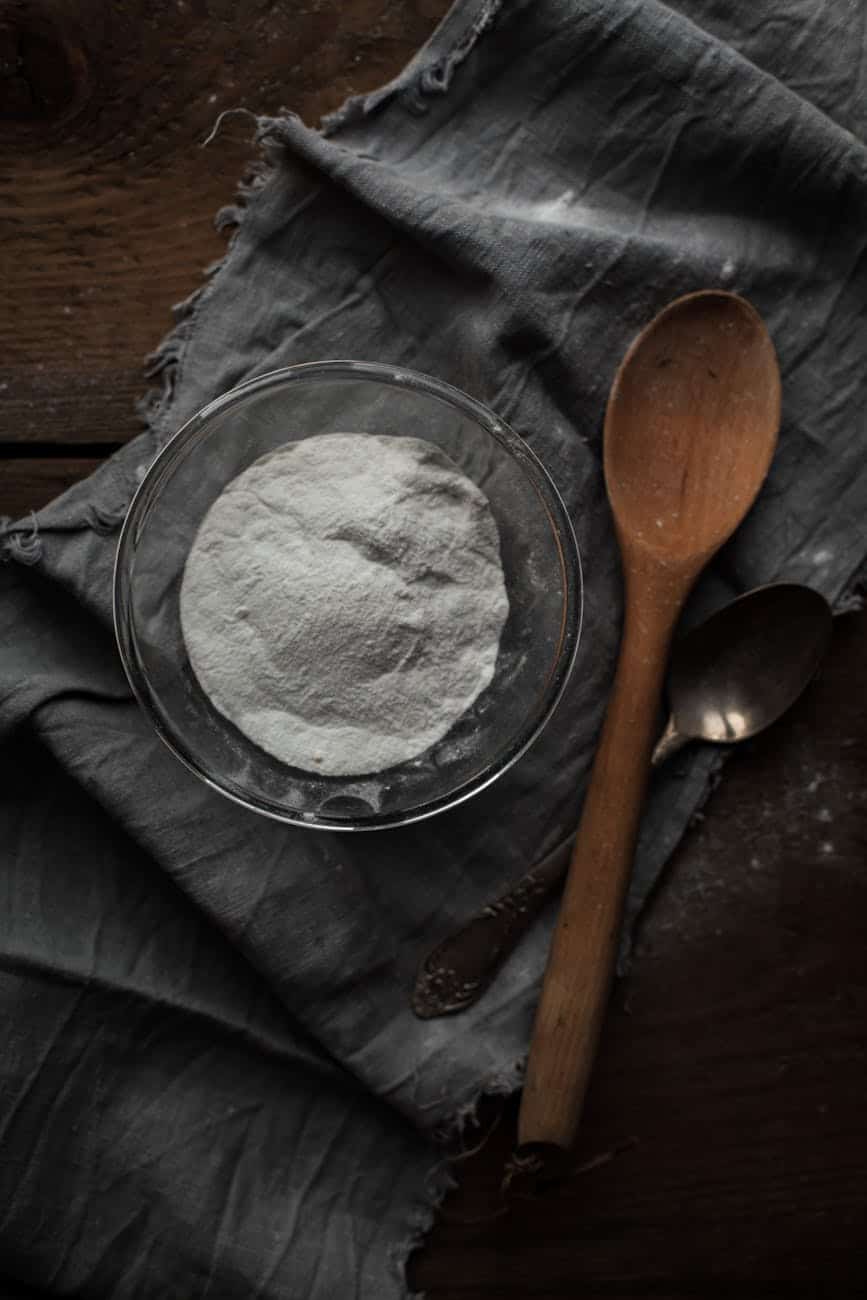
- Mix ¼ cup60 g of baking soda with just enough water to make a thick paste, about the consistency of toothpaste. It should cling to a cloth without dripping.
- Apply the paste to the stained area with a soft sponge or your gloved hand. Cover the buildup completely.
- Let it sit for 5 minutes. This gives the paste time to loosen the residue before you scrub.
- Scrub in small circular motions with gentle pressure. The baking soda provides the abrasion: you don’t need to push hard. Hard scrubbing risks micro-scratches.
- Rinse thoroughly with clean water. Baking soda residue will leave its own cloudy film if not fully rinsed.
- Finish with a light vinegar spray (from Method 1) to neutralize any remaining baking soda and add shine. Rinse again.
- Dry immediately with a squeegee or microfiber cloth.
Don’t mix the paste with vinegar directly: You’ll often see guides recommending a baking-soda-and-vinegar paste. Chemically, they neutralize each other on contact: the fizzing is CO2 release, and what’s left is mostly salt water with weak cleaning power. Use them sequentially instead: baking soda for scrubbing, vinegar as a finishing rinse.
Why this works: Baking soda (sodium bicarbonate) is mildly alkaline and has a hardness rating of 2.5 on the Mohs scale, harder than the soap and mineral film you’re removing, but softer than glass (around 5.5-6). That’s why it scrubs stains without scratching the surface underneath.
Limitations: Won’t break down thick crystalline mineral deposits bonded to the glass. For those, you need the extended vinegar soak.
Method 3: Extended Vinegar Treatment (Heavy Mineral Deposits)
If you have visible white crusty deposits, especially along the bottom edge of shower doors, the lower corners of windows, or inside glassware, you’re dealing with mineral buildup that has had time to crystallize and bond to the glass. Spray-and-wipe doesn’t give vinegar enough contact time to break these deposits down. This method does.
Time needed: 30-60 minutes (mostly waiting)
Materials: Undiluted white vinegar, spray bottle, paper towels or microfiber cloths, plastic wrap (optional), soft sponge, baking soda (backup), rinse water
Best for: Heavy mineral crusts, persistent white deposits, stains that survived Method 1
Instructions
- Pour undiluted white vinegar into a spray bottle.
- Spray the affected area generously. The surface should be thoroughly wet, not just misted.
- Press paper towels or microfiber cloths over the wet glass so they stick. This keeps the vinegar in contact with the deposits instead of running off.
- Optional but effective: cover the cloths with plastic wrap. This prevents evaporation and extends contact time significantly.
- Let it sit for 30-60 minutes. For extreme buildup, you can go up to 2 hours, but check every 30 minutes and re-spray if the cloth is drying out.
- Remove the plastic wrap and cloths.
- Scrub the deposits with a soft sponge in circular motions. Most of the buildup should come off with light pressure at this point.
- For stubborn residue, apply baking soda paste (from Method 2) on top and scrub.
- Rinse thoroughly with clean water.
- Dry immediately with a squeegee or microfiber cloth.
Test first on coated glass: If your glass has a water-repellent coating (common on modern shower doors and some windshields), undiluted vinegar for 30+ minutes can strip it. Test a small corner, wait 30 minutes, rinse, and check for dulling or changes in how water beads on the surface before treating the full area.
Why this works: The chemistry is the same as Method 1, but the time factor is different. Calcium carbonate deposits that have been bonding to glass for months need prolonged acid contact to break down. Keeping the vinegar pressed against the deposit with a wet cloth ensures the reaction has time to work.
Limitations: This method removes surface deposits but cannot repair glass that has been etched underneath. If the surface still looks cloudy after cleaning and feels rough to the touch, you’re past the point cleaning can help: see When to Call a Professional.
Method 4: Commercial Lime & Rust Removers (Iron & Metal Deposits)
Rainbow-colored stains, rust streaks, and orange-brown discoloration aren’t calcium: they’re metal deposits, usually iron or copper leached from old pipes. Vinegar barely touches these. Commercial products formulated to dissolve metal deposits use stronger acids (often phosphoric, sulfamic, or oxalic) that work where household acid fails.
Time needed: 10-30 minutes (follow product label)
Materials: Commercial lime/rust remover (CLR, Lime-A-Way, Bar Keepers Friend, or similar), rubber gloves, eye protection, ventilation, soft sponge, rinse water
Best for: Iridescent stains, rust marks, stains from metal fixtures leaching into glass
Instructions
- Read the product label completely before starting. Lime and rust removers vary in strength and contact time: some are fine at 2 minutes, others stay on for 15. Follow the manufacturer’s timing, not general advice.
- Put on rubber gloves and eye protection. Ventilate the area.
- Test the product on a small, inconspicuous corner of the glass first. Wait the label’s recommended time, rinse, and check for dulling, discoloration, or damage before continuing.
- Apply the product to the stained area with a soft sponge or as directed on the label. Don’t use straight from the bottle in splashy ways: drips on countertops, metal fixtures, or paint can cause damage.
- Wait the full label time. Don’t extend it; these products can etch glass themselves if left too long.
- Scrub gently with a soft sponge or non-scratch pad if the label permits it.
- Rinse thoroughly with plenty of clean water. Keep rinsing longer than you think necessary: acid residue left on the glass will continue to react.
- Dry immediately with a microfiber cloth.
Safety callouts for this method:
- Never mix commercial lime/rust removers with bleach, ammonia, or other cleaners.
- Protect nearby metal fixtures (faucets, window frames, chrome): these products can etch or discolor metal.
- Avoid on natural stone (granite, marble) near the glass: acids etch stone permanently.
- If the product gets on skin, rinse immediately for at least 5 minutes. If in eyes, flush for 15 minutes and seek medical attention.
Why this works: Iron and copper deposits form different types of bonds with glass than calcium does. The stronger acids in commercial formulations (phosphoric, sulfamic, oxalic) dissolve these specific metal compounds. That’s why vinegar, which handles calcium well, struggles with rust.
Limitations: Won’t fix the underlying cause. If iron stains return shortly after cleaning, your plumbing or water supply is depositing metal continuously. A water filter or plumbing inspection may be needed to stop the source.
Method 5: Razor Blade (Last Resort for Flat Tempered Glass)
When chemical methods fail and you’re still looking at thick crystalline deposits, physical removal is the remaining option. A razor blade held at the correct angle on wet glass can scrape off heavy mineral buildup without scratching the surface underneath. The word “can” is doing a lot of work in that sentence: this method carries the highest damage risk of anything in this guide. Use it only when you’re comfortable working carefully, and only on the right kind of glass.
Time needed: 15-30 minutes
Materials: Single-edge razor blade or glass scraper tool, spray bottle with soapy water or diluted vinegar, microfiber cloth, rinse water
Best for: Thick mineral crusts that survived Method 3, on flat tempered glass only (shower doors, windows, flat glassware)
⚠️ Use only if ALL of the following are true:
- The glass is flat (not curved, no drinking glasses, bottles, car windshields).
- The glass is tempered or standard flat glass: not coated, not treated, not frosted, not textured.
- There are no chips or cracks in the glass.
- You can hold the blade at a consistent 45-degree angle. If you can’t, don’t use this method.
- The glass is wet the entire time: never scrape dry glass.
Instructions
- Spray the glass thoroughly with soapy water or diluted vinegar. The surface must stay wet throughout.
- Hold the razor blade at a 45-degree angle to the glass. Tilting too steep (close to 90°) increases scratch risk; too shallow (below 30°) means the blade won’t cut.
- Push the blade forward in one direction with light, even pressure. Think of shaving, not sawing. Don’t scrape back and forth.
- Work in small sections, about 6 inches15 cm at a time. Re-wet frequently.
- Wipe the blade clean after every few strokes. Buildup on the blade can drag across the glass and scratch it.
- Once deposits are removed, rinse the whole area with plenty of water.
- Follow up with a vinegar spray (from Method 1) to clean away any residual film.
- Dry immediately with a microfiber cloth.
Why this works: For mineral deposits that have crystallized and hardened against the glass, chemical dissolution becomes impractical: you’d need acid contact for hours. A sharp blade held at a shallow angle slides between the deposit and the glass surface, separating them without damaging the glass beneath.
Limitations: High user-error risk. Will not remove etching: if the glass still looks cloudy after scraping, you’re dealing with surface damage, not deposits. Not suitable for curved glass, coated surfaces, or damaged glass.
If you’re uncomfortable with this method: Don’t force it. Professional glass restoration services use specialized polishing equipment that’s often more effective than a razor blade and carries less scratch risk. For valuable or large glass surfaces, paying for a professional evaluation is often the smarter call.
Special Cases: Specific Glass Surfaces
Different glass surfaces collect water stains for different reasons, and the best approach varies by context.
Cloudy Glassware (from the Dishwasher)
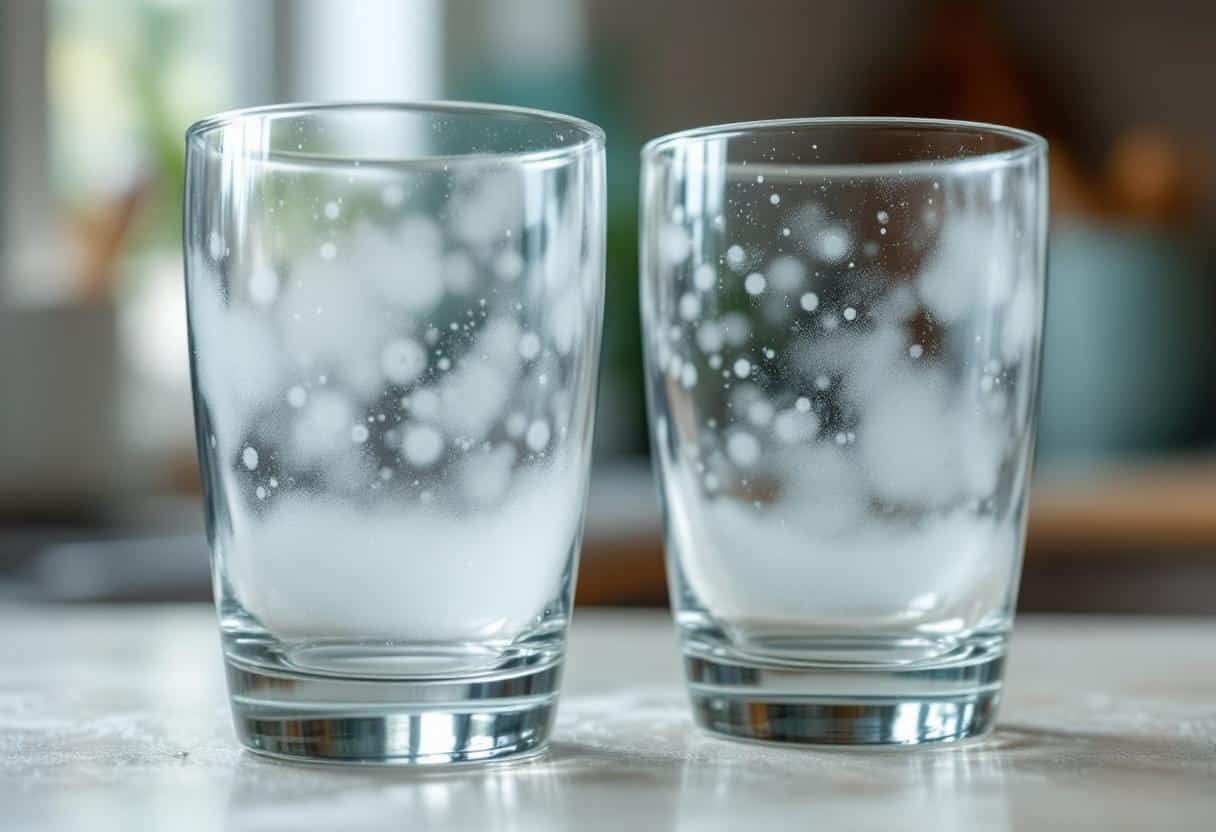
If your drinking glasses come out of the dishwasher hazy, the cause is usually one of two things: hard water mineral deposits or permanent etching from soft water plus detergent. Here’s the quick test: soak a cloudy glass in undiluted white vinegar for 15 minutes and rinse. If the cloudiness clears, it was mineral buildup (fixable). If it stays cloudy, the glass is etched (permanent).
For mineral buildup, soak affected glassware in a vinegar bath (1 cup240 ml vinegar per 1 gallon4 liter warm water) for 30 minutes, then wash and dry by hand. Prevent recurrence by using a rinse aid, checking water hardness, and making sure your dishwasher filter is clean. Our dishwasher cleaning guide covers how to improve cleaning performance across the board.
Windows
Exterior windows collect water stains from rain, sprinklers, and splashed runoff, especially on the lower half. Interior windows get stains from condensation. Method 1 (vinegar spray) handles most window staining. For windows that face sprinklers daily or have years of buildup, use Method 3 (extended vinegar treatment) on the worst sections.
Prevention for exterior windows: adjust sprinklers so they don’t hit the glass, and squeegee the windows after washing. For interior condensation: run a bathroom exhaust fan, open blinds to improve airflow, and address the humidity source.
Shower Doors
Shower doors face the hardest water stain challenge of any household glass: constant exposure to soap-and-mineral spray plus heat, with little time to dry. The methods in this guide work, but shower-specific care (including coating considerations and prevention via squeegee) deserves its own treatment. See our dedicated guide: How to Clean Shower Glass Doors.
Car Windshields
Exterior windshields collect water stains from rain, road spray, and sprinklers. Interior windshields are typically streaked from condensation or cleaning residue rather than mineral deposits. For exterior mineral stains: spray with diluted vinegar, let sit briefly, wipe with a microfiber cloth (don’t let vinegar drip onto paint or rubber seals). Avoid Methods 4 and 5 on car windshields: modern windshields often have subtle coatings that commercial cleaners and blades can damage.
For persistent windshield stains, automotive glass polishes designed specifically for car glass are often a better choice than household methods.
Bathroom Mold Confused for Water Stains
If the “stain” on bathroom glass is dark-colored or greenish rather than white/cloudy, you’re looking at mold or mildew, not mineral deposits. Water stains don’t have color beyond white, rust, or rainbow-iridescent. For mold treatment, see our guide on how to clean mold in the bathroom.
Prevention: Stop Water Stains Before They Start
Water stain cleaning is always reactive work. Prevention is cheaper, faster, and kinder to your glass over time. The universal prevention rule: don’t let water evaporate on glass. Every method below is a variation on that rule.
Daily Habits
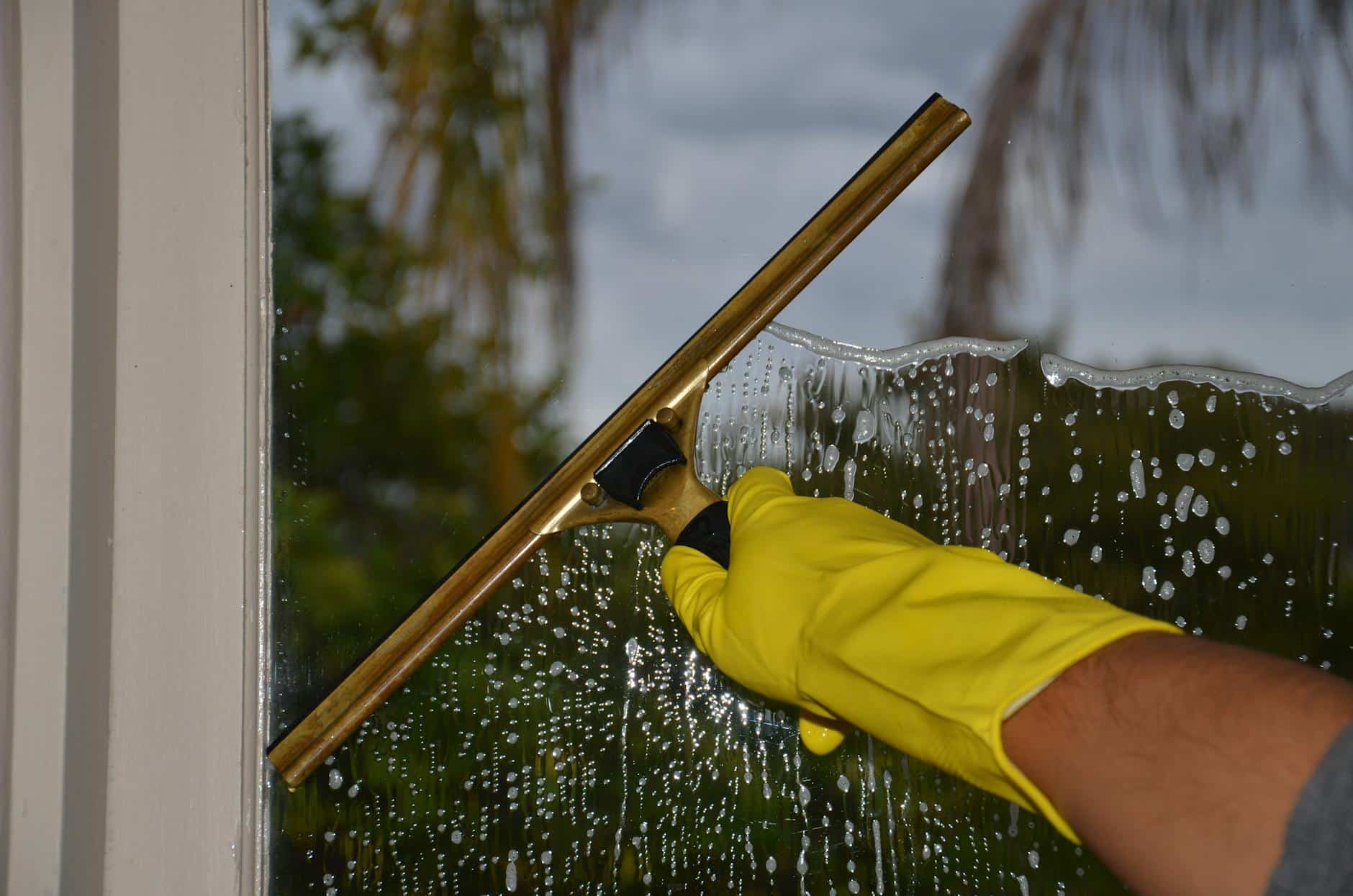
- Squeegee shower glass after every shower. Takes 10-15 seconds. Removes the water that would otherwise dry into spots. Top to bottom, overlapping strokes.
- Towel-dry glassware by hand when possible. Especially for “good” glasses. Air-drying is what creates water spots in the dishwasher.
- Don’t let exterior sprinkler water sit on windows. Adjust sprinkler direction so they don’t hit the glass.
Weekly Maintenance
- Light vinegar spray on frequently-wet glass. Even if it looks clean, a quick vinegar wipe prevents deposit buildup. Takes under 5 minutes for shower or bathroom windows.
- Clean your dishwasher filter and run an empty hot cycle with vinegar. A clogged filter means dirty rinse water, which means water spots on glassware.
Monthly / As Needed
- Check and clean showerheads and faucet aerators. Mineral buildup in these fixtures sprays deposits onto nearby glass. Soak in vinegar monthly.
- Apply a water-repellent treatment to shower glass. Products like Rain-X make water bead and roll off instead of clinging and drying.
Long-Term Solutions
- Water softener: If you’re on hard water, a whole-house water softener reduces mineral content and dramatically cuts water stain formation. Higher upfront cost but significant impact everywhere water touches.
- Dishwasher rinse aid: Designed specifically to prevent water spots on glassware. Worth the few dollars per month.
- Distilled water for final rinses: Photographers and car detailers use distilled water because it contains no minerals. For windows or valuable glassware, a final rinse with distilled water leaves nothing behind to stain.
How much water hardness matters: Water hardness is typically measured in grains per gallon (gpg) or milligrams per liter (mg/L). Soft water is under 1 gpg17 mg/L; very hard water is above 10 gpg170 mg/L. The harder your water, the faster stains form and the more aggressive your prevention needs to be. Your local water utility can usually tell you your hardness level, or you can test at home with an inexpensive test strip.
When to Call a Professional
Not every water stain responds to cleaning. Here’s when to stop scrubbing and get expert help.
The Glass is Etched
If the surface feels rough or gritty to the touch even after thorough cleaning, or if the cloudiness doesn’t budge after trying multiple methods, the glass has likely been chemically etched by prolonged mineral exposure. At that point:
- Glass restoration services can sometimes polish out light-to-moderate etching with specialized equipment.
- Replacement is the solution for severe etching. For shower doors and windows, replacement is often more cost-effective than restoration.
The Glass is Damaged
If you see cracks, chips, or sharp edges, don’t apply pressure to the damaged areas: glass under pressure can shatter suddenly. Call a glazier for inspection and repair or replacement.
Stains Return Immediately After Cleaning
If stains come back within days, cleaning alone won’t solve the problem: there’s an ongoing source depositing minerals or metals onto the glass. Consider:
- Plumber inspection for iron staining (often indicates pipe corrosion).
- Water utility contact for unusual staining (could indicate supply-side issues).
- Water softener or filter installation for hard water stains.
Large-Scale or High-Value Glass
For large picture windows, skylights, art glass, antique glassware, or anything where mistakes would be costly, professional glass cleaners have the equipment, solutions, and experience to handle it safely. Expect to pay $100-400 depending on scope and condition.
Frequently Asked Questions
Can I use lemon juice instead of vinegar?
Yes. Lemon juice contains citric acid, which dissolves hard water deposits similarly to the acetic acid in vinegar. It works for light-to-moderate staining. The tradeoffs: lemon juice costs more per ounce than vinegar, and it can leave a sticky sugar residue if not rinsed fully. If you prefer the scent, it’s a viable swap, just rinse thoroughly.
Why does my water leave stains but my neighbor’s doesn’t?
Water hardness varies by neighborhood, well depth, and treatment. Even houses on the same block can have different hardness levels if they’re on different wells. Your local water utility can provide hardness data for your area, or an inexpensive home test kit will tell you in minutes.
Will vinegar damage my window coatings?
Most standard windows don’t have a coating that vinegar damages. However, “low-E” coatings (on energy-efficient windows) and some privacy films can be damaged by prolonged acidic contact. If you’re not sure what kind of window you have, check the manufacturer specs or test in a corner first. For car windshields, the interior anti-glare coating is especially sensitive: avoid ammonia-based cleaners and strong acids there.
Can I use distilled vinegar or does it have to be white vinegar?
“White vinegar” and “distilled white vinegar” are the same product. Apple cider vinegar and balsamic vinegar both contain acetic acid, but they also contain sugars and pigments that leave residue on glass. Stick to plain distilled white vinegar for cleaning.
Are water stains permanent?
Not automatically. Most water stains are surface deposits that respond to cleaning. But if minerals have been sitting on glass long enough, they can chemically etch the surface, and that etching is permanent. The fingertip test is the quickest way to tell: after cleaning, run your finger across a stained area. If it feels smooth and clear, it’s buildup. If it feels rough, the glass is etched.
Will a magic eraser work on water stains?
Magic erasers (melamine foam) are mildly abrasive and can work on light water spots, but they create micro-scratches on glass over time. Those scratches aren’t visible immediately but they accumulate, making the glass rougher and causing future stains to stick harder. Baking soda paste gives similar scrubbing power with less long-term damage risk.
Does hot water or cold water work better for rinsing?
Warm water (not hot, not cold) is the best choice for rinsing. Hot water evaporates too fast and can leave streaks before you can dry the glass. Cold water rinses fine but doesn’t dissolve any remaining residue as effectively. Room-temperature-to-warm is the sweet spot.
Can I prevent water stains by just cleaning more often?
Sort of: frequent cleaning prevents heavy buildup. But the more effective prevention is drying water off glass before it evaporates, not cleaning more often. A 10-second squeegee daily prevents the need for a 30-minute deep clean monthly. Prevention beats reaction on both time and glass health.
Should I use newspaper to dry glass like my grandmother did?
Newspaper can work for streak-free drying: the paper texture and ink polish the glass as you wipe. The downsides: modern newspaper ink can smudge your hands and sometimes the glass itself, and the process is messier than a microfiber cloth. For most people today, a clean dry microfiber cloth or squeegee gives equivalent results with less cleanup.
Conclusion
Water stains on glass respond to a predictable order of operations: gentle acid first, then abrasive scrubbing, then extended acid contact, then specialized chemistry or physical removal. Most staining clears up with the first or second method: it’s the unusual case (heavy metal deposits, years of neglect, coated surfaces) that requires the heavier approaches further down the list.
The surface-and-cleaner matrix matters more than the methods themselves. Using the right approach on the wrong glass is how permanent damage happens. When in doubt, test a corner. When still in doubt, stop and ask.
And once your glass is clear, the prevention habits do the real work: squeegee after showers, hand-dry glassware, adjust sprinklers, and keep up with dishwasher maintenance. Water stains aren’t something you solve once: they’re something you stop forming.
Have a stubborn water stain situation that didn’t match these methods? Drop a comment below. We’d like to hear what surface, what stain, and what you’ve tried. We may be able to point you toward a different approach.

