
A washing machine that smells is not dirty in the way a floor is dirty. The problem is residue: detergent, fabric softener and body soil that a normal wash leaves behind in places the water barely reaches, kept damp between loads until mold and bacteria move in. Cleaning one means removing that residue from the tub, then clearing the parts a cleaning cycle cannot reach on its own.
This guide covers both front load and top load washers. It starts with the step most guides get wrong, which is the cleaner itself: the big manufacturers give different instructions, and the vinegar method repeated across the internet is one that Whirlpool and LG specifically warn against for the inside of their machines. From there it covers the door gasket, the detergent drawer, the drain pump filter, the agitator, and the habits that keep the smell from coming back.

About this guide: Written by Sophie Harper, who covers cleaning and household maintenance at HomeNerdy. This article was last reviewed in October 2026 and follows our editorial standards: we prioritize safety, reference manufacturer care instructions, and state our limitations plainly.
How we develop our guides: This guide is research-led. The cleaning cycles, cleaner choices and intervals come from the published support pages of Samsung, LG, Whirlpool and GE Appliances, and the chemical safety guidance comes from the Washington State Department of Health. We do not claim to have tested these methods ourselves. Where a HomeNerdy guide reports a test we ran, it says so at that point and shows the result.
Scope: Front load and top load household washers, including high-efficiency (HE) models. It does not cover leaks, error codes, repairs, commercial machines or washer-dryer combos with their own care routines. Your model’s use and care guide is the final word where it differs from the general guidance here.
This page contains an Amazon affiliate link. If you purchase through it, HomeNerdy earns a commission at no extra cost to you.
Quick Summary (TL;DR)
Step 1: Use your brand’s cleaning cycle and cleaner. Most current washers have one: Self Clean (Samsung), Tub Clean (LG), Clean Washer (Whirlpool), Basket Clean (GE). Use the cleaner your manual names, which is not the same for every brand.
Step 2: Do it monthly. Whirlpool and GE recommend cleaning once a month; Whirlpool and LG also give 30 washes as the trigger.
Step 3: Go easy on vinegar. Whirlpool warns that vinegar’s acidity can weaken rubber seals and hoses over time, and LG says to avoid acidic and chlorine cleaners in Tub Clean. Use vinegar for the detergent drawer and the outside, not the drum, unless your manual says otherwise.
Step 4: Clean what the cycle misses. The door gasket and the detergent drawer on every front loader, the drain pump filter on most front loaders, and the agitator and lid area on top loaders.
Step 5: Let it dry. Leave the door or lid and the detergent drawer open between washes. This one habit does more than any cleaner.
Safety First: Read Before You Start
Do not mix cleaners
Bleach mixed with an acid such as vinegar releases chlorine gas, and bleach mixed with ammonia releases chloramine gas. The Washington State Department of Health lists both among the combinations to avoid at home, and Whirlpool repeats the vinegar warning in its own washer guidance. See the Washington State DOH guidance on mixing bleach.
- Use one cleaner per cycle. If you switch from one product to another, run a rinse cycle in between.
- Do not add a washer cleaner to a bleach cycle, or bleach to a cleaner cycle, unless the product label says it is compatible.
- Wear gloves when cleaning the gasket and handling bleach, and keep the laundry room ventilated.
Hot water and drain filters
Cleaning cycles run hot: LG’s Tub Clean holds the water at 140°F60°C. Samsung advises waiting one hour after a hot cycle before opening the drain pump filter, so the water left inside can cool. Put towels and a shallow tray down first, because that water comes out of the filter opening.
If you get fumes
Leave the room and get fresh air. If symptoms continue, call Poison Control on 1-800-222-1222, or 911 if breathing is difficult.
Stop and call for service if
- Water leaks from under the machine during or after a cycle.
- The door gasket is cracked, torn or pulling away from the drum.
- Mold returns within days of a thorough clean.
- The washer shows an error code, will not drain, or makes grinding noises.
The 60-Second Diagnostic: What Is Your Washer Telling You?
- A musty or mildew smell, mostly from the drum. Residue and moisture. Run your brand’s cleaning cycle, then clean the gasket or lid area.
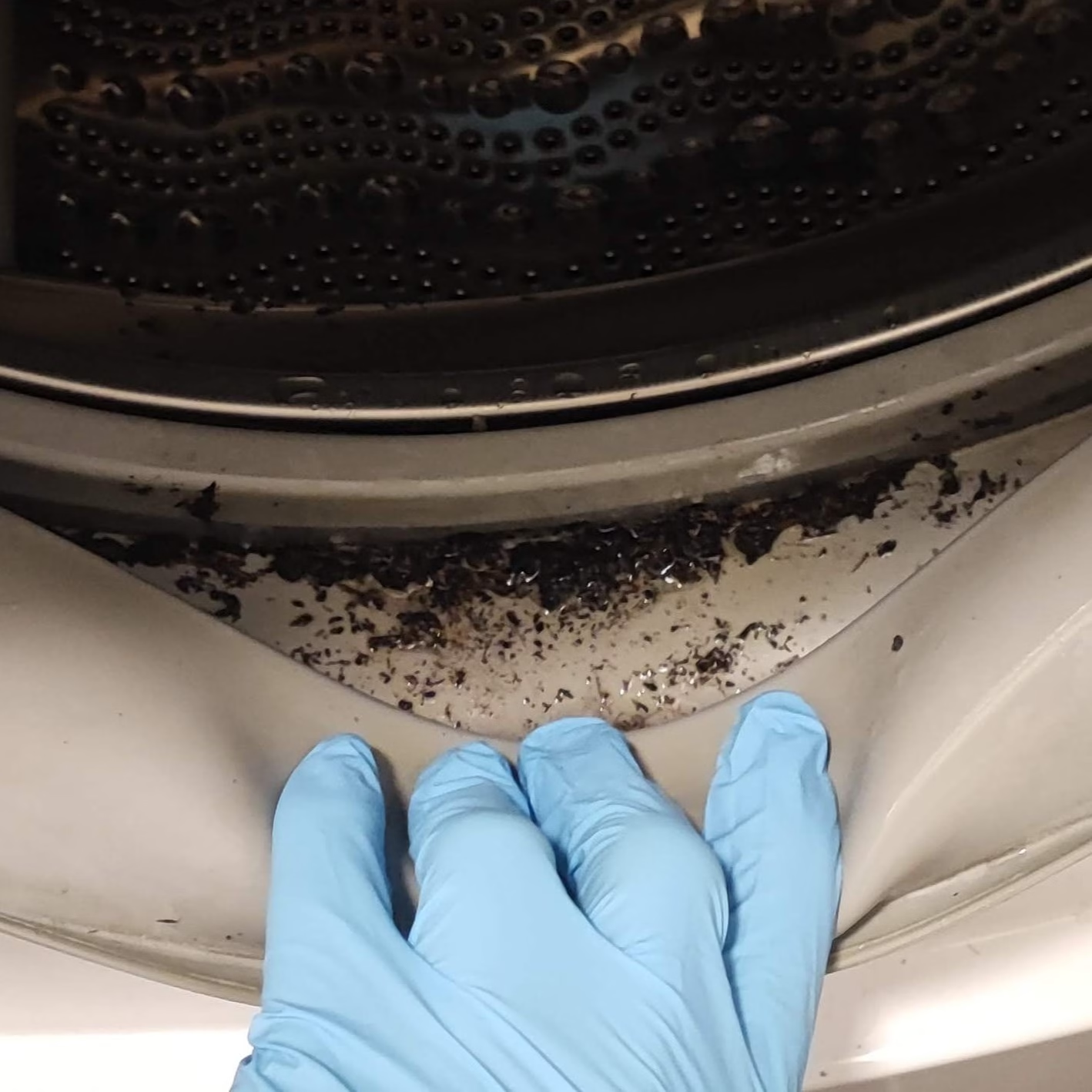
- Black or dark spots in the front-loader door seal. Mold in the gasket folds. Clean the gasket by hand; a cycle alone will not reach it.
- Clean clothes smell worse than before. Residue is transferring from the machine. Clean the tub, the gasket and the detergent drawer, and cut back on detergent and fabric softener.
- A sewage or rotten-egg smell. Usually the drain, not the washer. GE and Samsung both point to a drain hose pushed too far into the standpipe, which can siphon drain water back into the machine.
- Suds during an empty cleaning cycle. Detergent buildup coming out. Samsung recommends running another cleaning cycle afterwards.
- Grey flecks or lint on “clean” laundry. On top loaders, check the lint filter; on front loaders, the drain pump filter.
Severity check: smells, spots and residue are DIY. Leaks, a damaged gasket and error codes are service calls.
Quick Decision Table
| What you notice | Likely cause | First step | Stop and call a pro if |
|---|---|---|---|
| Musty smell from the drum | Residue and moisture in the tub and drain | Brand cleaning cycle with the cleaner your manual names | Smell persists after two cycles and a gasket clean |
| Dark spots in the door seal | Mold in the gasket folds | Hand-clean the gasket, clear its drain holes, dry it | Mold returns within days or the gasket is damaged |
| Sticky detergent drawer | Excess detergent and softener | Remove and soak the drawer, clean the cavity | The drawer mechanism is broken |
| Sewage smell | Drain hose siphoning from the standpipe | Pull the hose back and clip it in place | The smell continues with the hose correctly set |
| Water left in the drum, slow draining (front load) | Clogged drain pump filter | Clean the pump filter | It still will not drain, or shows a drain error |
Start Here: What Your Washer’s Maker Says to Use
This is the part most guides skip. The cleaning cycle on your washer was designed around a specific kind of cleaner, and the four biggest brands in the US do not agree on which one. Find your brand, then use the method below that matches.
| Brand | Cycle name | What to add | How often |
|---|---|---|---|
| Samsung | Self Clean, Self Clean+ or Pure Cycle | Nothing for routine runs; liquid chlorine bleach only for an existing mildew smell or mold, per Samsung’s procedure | Monthly, or when the reminder lights (20 washes top load, 40 front load) |
| LG | Tub Clean (or Tub Sterilization) | An oxygen-based washing machine cleaner; LG says to avoid chlorine-based and acidic cleaners | Every 30 uses, or when the display shows “tcL” |
| Whirlpool (and Maytag, Amana) | Clean Washer, or a normal cycle on hot | A washing machine cleaner tablet; liquid chlorine bleach on some models if the manual allows it; not vinegar in the drum | Every 30 days or 30 cycles |
| GE Appliances | Basket Clean or Self Clean | 1 cup250 ml of bleach or a washing machine cleaner (front load); top load also lists vinegar | Once a month |
Sources: Samsung, LG, Whirlpool, GE front load and GE top load. Other brands, and older machines, follow the same pattern: check the use and care guide first.
About the vinegar method: “Run a hot cycle with two cups of vinegar” is the most repeated washer tip online. Whirlpool’s own guidance is that vinegar’s acidity can weaken rubber seals and hoses over time and that adding it directly to the drum can lead to costly repairs, and LG warns that acidic cleaners can cause discoloration or corrosion inside the machine. GE does list vinegar as an option for its top load Basket Clean. The safe reading: use vinegar inside the drum only if your manual names it, and use it freely on the detergent drawer and the outside of the machine.
Method 1: Run the Cleaning Cycle (Every Washer)
- Empty the drum of laundry. Check the gasket fold on a front loader and under the agitator or impeller on a top loader for stray items. Samsung warns that running Self Clean with laundry inside can damage both.
- Add the cleaner your manual names, in the place it names. Tablets usually go straight into the drum; Whirlpool says to put its tablet at the bottom of the tub. Follow the cleaner’s label for the dose.
- Select the cleaning cycle (Self Clean, Tub Clean, Clean Washer, Basket Clean). No cleaning cycle? Use the hottest, longest normal cycle, as Whirlpool and GE describe for older models.
- Let it finish without interrupting. GE notes that an interrupted Basket Clean should be run again in full before you wash clothes.
- Rinse if you used bleach or a strong cleaner. Whirlpool suggests a rinse and spin cycle afterwards to clear leftover cleanser.
- Wipe and air out. Wipe the drum and door glass dry, then leave the door or lid and the detergent drawer open.
A washer cleaner tablet such as affresh Washing Machine Cleaner is what Whirlpool, its maker, specifies for its Clean Washer cycle. On an LG, check that the cleaner you buy is oxygen-based.
Method 2: Clean the Door Gasket (Front Load)
The rubber gasket, also called the door boot or bellows, seals the door to the drum. It has one or two deep folds that trap water, lint, hair and detergent, and that is where front loader mold lives. A cleaning cycle rinses the surface; it does not reach inside the folds.
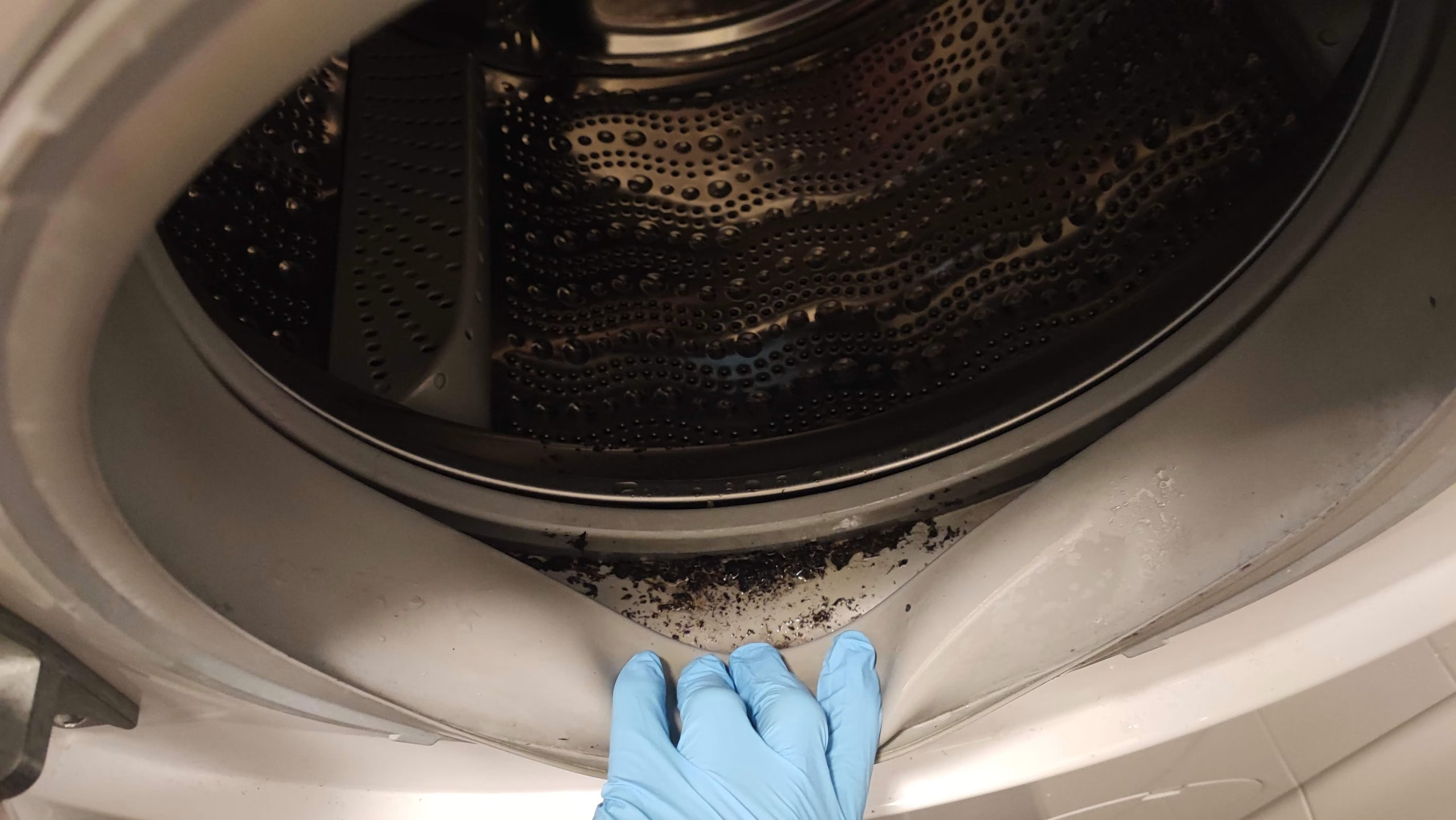
- Put on gloves and open the door wide.
- Peel back the folds with your fingers and work around the whole ring. Remove hair, lint, coins and anything else trapped there.
- Wipe the folds with a cloth dampened in warm water and a little mild detergent, or a washer cleaning wipe. Whirlpool suggests the textured side of a cleaning wipe for the inside and outside of the seal.
- Use a soft toothbrush for stains in tight creases. Skip steel wool and harsh scouring pads, which roughen the rubber and give mold more to hold on to.
- Clear the drain holes at the bottom of the gasket with a cotton swab, so water drains back into the drum.
- Dry the folds with a dry cloth. Leaving them wet undoes the job.
If stains remain: mold can leave permanent discoloration in rubber. A gasket that is clean, dry and intact but still stained is a cosmetic issue. A gasket that is cracked, torn or pulling away from the drum needs replacing; cleaning will not fix it.
Method 3: Clean the Detergent Drawer and Dispensers
Excess detergent and fabric softener congeal in the dispenser, and LG and Samsung both name softener overuse as a source of odor. Whirlpool says to clean the drawer every 30 days.
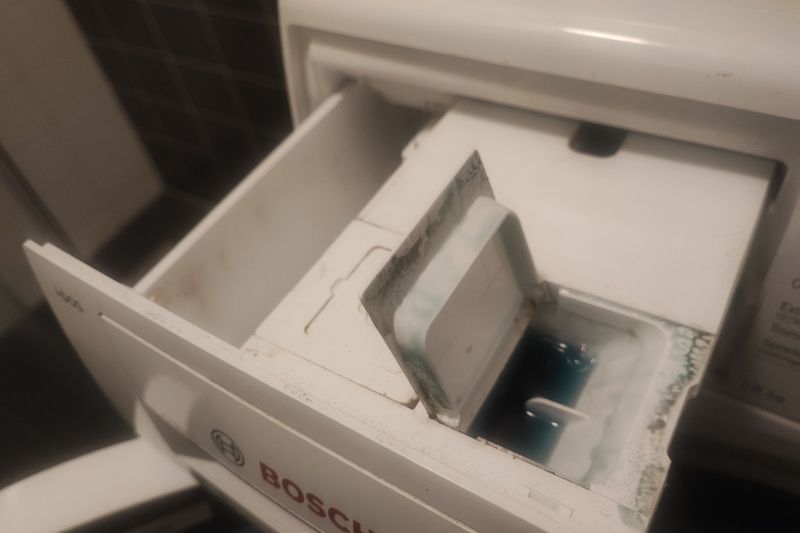
- Remove the drawer. On Samsung front loaders, push in on both ends and pull; on top loaders, pull it out and tip it up. Other brands use a release tab. Do not force it; check the manual.
- Soak the parts. This is where vinegar does belong: Whirlpool suggests soaking removable dispenser drawers in equal parts white vinegar and water, or hot water with a mild detergent.
- Scrub every compartment with a soft brush, including the softener siphon and the underside.
- Clean the cavity the drawer sits in, especially the water-jet openings in its roof, with a cloth or non-metallic brush.
- Rinse, dry and refit. Samsung says to make sure the recess is dry before the drawer goes back.
Method 4: Clean the Drain Pump Filter (Most Front Loaders)
The drain pump filter, sometimes called the debris filter or coin trap, catches lint, hair, coins and small items before they reach the pump. Samsung recommends cleaning it at least once a month or about every 40 washes, and says a neglected filter causes odors on its own. Top loaders generally do not have one.
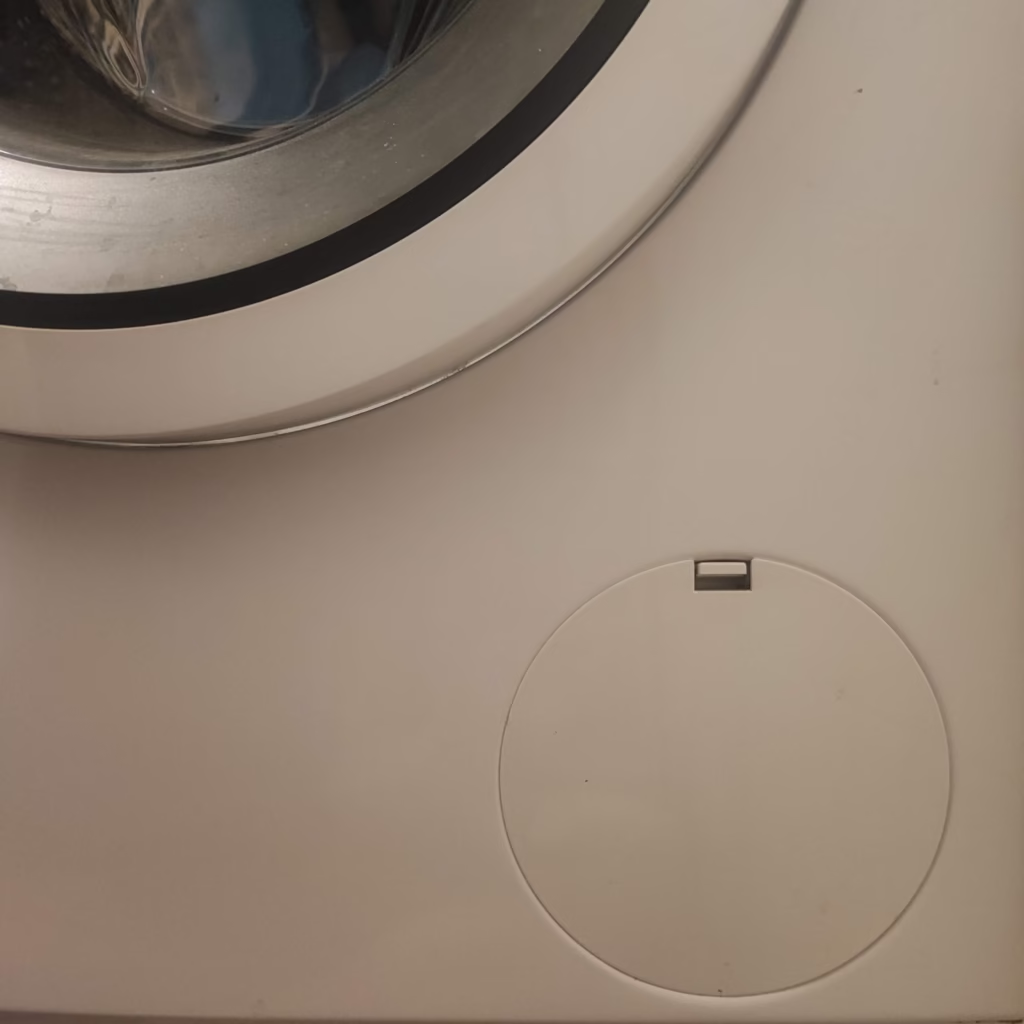
- Wait one hour after any hot cycle, per Samsung.
- Open the access panel near the bottom front of the machine.
- Drain the water first. Many models have a small drain hose beside the filter: put a towel and a shallow tray underneath, unplug the hose and let it empty.
- Unscrew the filter counterclockwise (some push in and twist like a medicine cap) and pull it out.
- Rinse it under running water with a soft brush, and check that the impeller in the housing is clear.
- Refit the filter clockwise until it seats, recap the drain hose and close the panel. Check for drips on the next wash.
Method 5: Top Load Specifics (Agitator, Lid and Lint Filter)
Top loaders breathe better than front loaders because the lid opens upward, but residue still builds up under the rim, around the agitator and in the dispensers.
- Agitator: if yours has a removable cap, Whirlpool says you may lift it off and clean inside with a cloth or brush. Not every cap comes off; do not force one that resists.
- Lid and rim: wipe the underside of the lid and the rim of the tub, where splashes of detergent dry and collect.
- Lint filter: Whirlpool notes it may be in the agitator or near the top of the tub, depending on the model. Clear it when you clean.
- Dispensers: soak and scrub them as in Method 3.
- Cleaning cycle: GE’s top load Basket Clean takes 1 cup250 ml of liquid bleach, vinegar or a washing machine cleaner poured into the basket. Samsung’s top load Self Clean runs about an hour and needs nothing added.
Method 6: The Deep Clean for a Neglected Machine
If the washer has gone months without attention and the smell is strong, do everything in one session, in this order, so each step does not undo the last:
- Clean the gasket (front load) or lid, rim and agitator (top load).
- Remove and soak the detergent drawer; clean the cavity.
- Clean the drain pump filter (front load).
- Run your brand’s cleaning cycle with its specified cleaner.
- If suds or residue appeared, run a second cleaning cycle with nothing added.
- For an established mildew smell on a Samsung, use Samsung’s bleach procedure instead: our guide to washing machine mold covers when that smell is a health concern.
- Wipe everything dry and leave the door and drawer open.

Keeping It Fresh Between Cleanings
- Leave the door or lid open between washes, and the detergent drawer too. Whirlpool, LG and Samsung all recommend it.
- Unload promptly. Samsung calls wet clothes left in the drum one of the most common sources of odor.
- Use HE detergent and less of it. Excess detergent leaves the residue that feeds odor. Stay at or below the MAX line and the detergent maker’s dose for your load.
- Go easy on fabric softener. LG and Samsung both name it as a cause of buildup.
- Run a warm or hot wash occasionally if you mostly wash cold. Whirlpool and Samsung both suggest it to slow residue buildup.
- Check the drain hose. Samsung says not to push it more than 6 inches15 cm into the standpipe, and GE recommends clipping it to the side so it cannot siphon.
- Keep the washer level. Samsung notes that an unlevel washer drains poorly and leaves residue behind.
Common Mistakes to Avoid
- Using vinegar in the drum because the internet says so. Whirlpool and LG both warn against acidic cleaners inside the machine. Use the cleaner your manual names, and keep vinegar for the drawer and exterior.
- Using the wrong cleaner for the brand. LG specifies oxygen-based cleaners and warns against chlorine; Samsung says routine Self Clean needs nothing; GE specifies bleach or a cleaner. One recipe does not fit all.
- Mixing bleach with vinegar or another cleaner. It releases toxic gas. One product per cycle, with a rinse between different ones.
- Cleaning the drum but skipping the gasket and drawer. The smell usually lives where the cycle cannot reach.
- Closing the door right after unloading. A sealed, damp drum is exactly what mold needs. Leave it open.
When to Call for Service
- Mold or odor returns within days despite cleaning and good habits.
- Water leaks from under the machine, or the gasket is cracked, torn or pulling away.
- The washer will not drain, or shows a drain, water-level or door-lock error.
- The smell continues after cleaning the tub, gasket, drawer and filter, and the drain hose is set correctly. The cause may be in the household plumbing.
Have the model number ready (inside the door or lid) when you contact the manufacturer or a technician.
Frequently Asked Questions
How often should you clean a washing machine?
About once a month. Whirlpool says every 30 days or 30 cycles, GE says once a month, LG says every 30 uses, and Samsung’s reminder comes on after 20 washes on top loaders and 40 on front loaders.
What is the best thing to clean a washing machine with?
The cleaner your manufacturer names. Samsung says nothing is needed for routine Self Clean, LG recommends an oxygen-based washer cleaner, Whirlpool recommends its affresh tablets, and GE specifies bleach or a washing machine cleaner.
Can you clean a washing machine with vinegar?
Check your manual first. Whirlpool warns that vinegar’s acidity can weaken rubber seals and hoses, and LG says to avoid acidic cleaners in Tub Clean. GE lists vinegar for its top load Basket Clean. Vinegar is a safe choice for soaking the detergent drawer and wiping the outside.
Can I use bleach to clean my washing machine?
On many models, yes: GE specifies 1 cup250 ml of bleach, and Whirlpool says bleach can be used on some models if the use and care guide allows it. LG advises against chlorine cleaners in Tub Clean. Run a rinse cycle afterwards, and do not combine bleach with vinegar.
How do I clean a washing machine without a self-clean cycle?
Run an empty cycle on the hottest, longest setting with the cleaner your manual names, as Whirlpool and GE describe for models without a cleaning cycle, then clean the gasket, drawer and filter by hand.
Why does my front loader smell more than my old top loader did?
The front loader’s door seals airtight, so moisture stays inside after a wash. The rubber gasket folds also trap water and lint. Leaving the door open and cleaning the gasket solves most of it.
Why does my washer smell like sewage?
Usually the drain hose is pushed too far into the standpipe and drain water siphons back. GE and Samsung both point to this; pull the hose back and clip it in place.
Can I use dishwasher tablets to clean a washing machine?
Some people do, but no manufacturer in this guide recommends it, and Whirlpool notes that high-sudsing products such as dish soap can cause a mess in a washer. See our full look at dishwasher tablets in the washing machine.
Conclusion
Cleaning a washing machine works best when you follow the machine rather than the internet. Run your brand’s cleaning cycle with the cleaner its maker names, about once a month. Then do the three things no cycle does for you: clean the folds of the door gasket, soak the detergent drawer, and clear the drain pump filter or, on a top loader, the agitator and rim. Keep the door and drawer open between washes, use less detergent and softener, and the smell has very little left to grow on.
Questions? Visit our contact page or read more about HomeNerdy.