

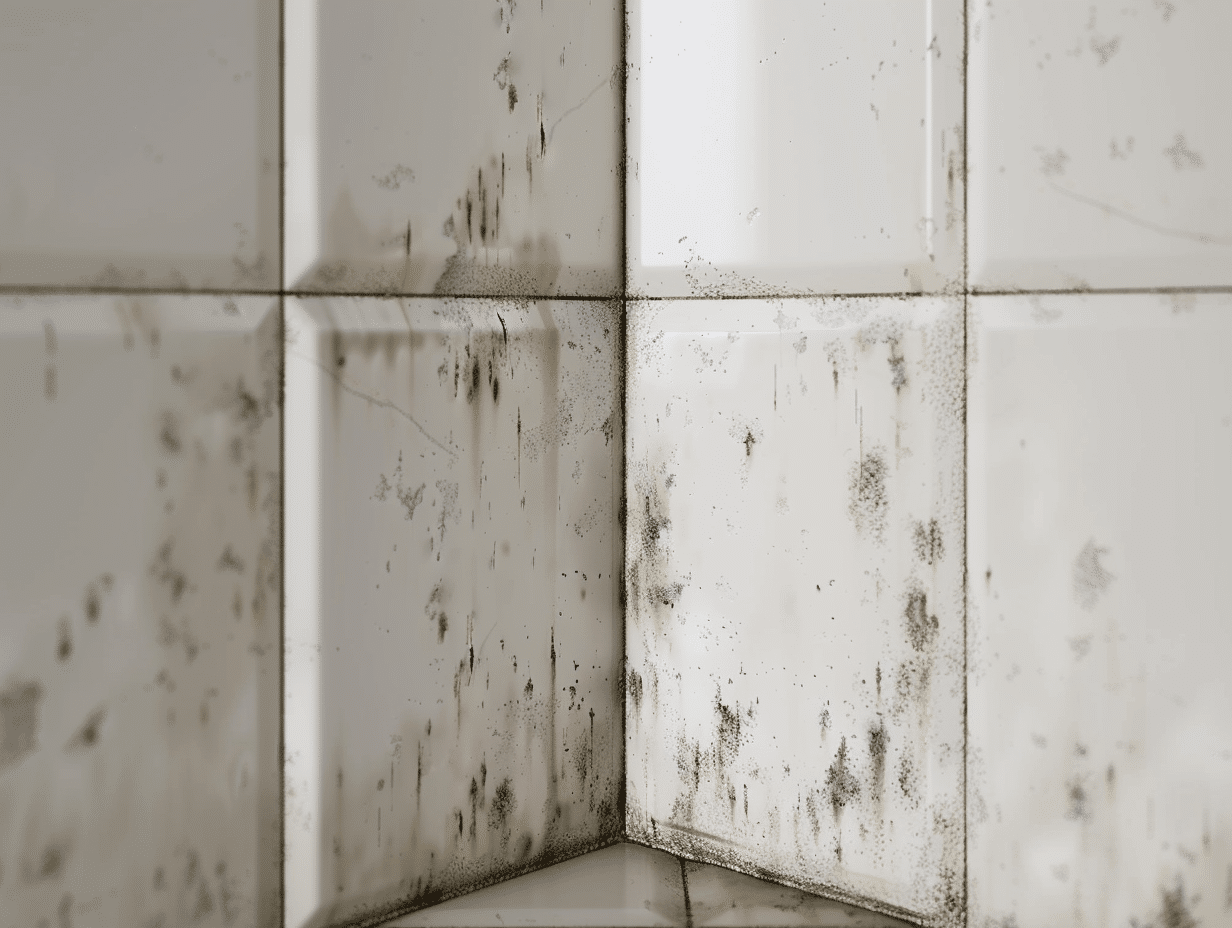
Cleaning mold in the bathroom means removing visible mold growth—typically black, green, or pink spots—from surfaces like grout, caulk, tile, and ceiling corners. Mold thrives in warm, damp environments, and bathrooms provide ideal conditions: humidity from showers, poor ventilation, and porous surfaces where moisture lingers.
If you’ve noticed dark spots spreading along your shower grout lines, fuzzy patches on the ceiling, or black stains creeping along the caulk where your tub meets the wall, you’re dealing with mold. It’s not just unsightly—mold can trigger allergies, irritate respiratory systems, and in some cases, indicate a deeper moisture problem in your home.
About this guide: Written by Sophie Harper, who covers cleaning and household maintenance at HomeNerdy. This article was last reviewed in April 2026 and follows our editorial standards: we prioritize safety, reference CDC/EPA guidelines, and clearly state limitations.
How we develop our guides: We base our steps on CDC guidelines for mold cleanup, EPA recommendations for ventilation, and standard household cleaning practices. We do not claim to have personally tested every method — instead, we compile guidance from authoritative sources and common user experiences.
Scope: This guide covers surface mold on bathroom fixtures—grout, caulk, tile, ceilings, and painted walls—in areas smaller than 10 square feet1 square meter. It does not address black mold (Stachybotrys) infestations, mold inside walls or subfloors, or mold caused by active leaks or flooding. If you have mold covering more than 10 square feet1 square meter, visible water damage, or a musty smell that doesn’t go away after cleaning, call a mold remediation specialist.
Quick Summary (TL;DR)
If you need a fast answer, here’s the core approach:
- Identify the mold type — Surface mold (mildew) is easy to clean. Deep mold (black, fuzzy, spreading) may need professional help. Limitation: If mold returns within days, you have a moisture problem, not just a cleaning problem.
- Ventilate and wear protection — Open windows, run the exhaust fan, and wear gloves, a mask (N95 if possible), and eye protection. Limitation: If you have asthma or mold allergies, don’t clean mold yourself—hire a pro.
- Use the gentlest effective cleaner — Start with vinegar or hydrogen peroxide. For stubborn mold, use diluted bleach. Limitation: Bleach works on nonporous surfaces (tile, tub) but doesn’t penetrate porous surfaces (grout, drywall).
- Scrub and dry completely — Spray the cleaner, let it sit 10-15 minutes, scrub with a brush, rinse, and dry the surface. Limitation: If mold has stained grout or caulk deeply, it may not come out completely—consider replacing the caulk.
- Fix the moisture source — Mold returns because bathrooms stay damp. Run the exhaust fan during and after showers, fix leaks, and improve airflow. Limitation: If your bathroom has no exhaust fan or window, moisture control is much harder—consider installing a fan.
Know when to stop: If mold covers more than 10 square feet1 square meter, if you see it growing inside walls, if you smell mold but can’t see it, or if you have health issues triggered by mold exposure, stop and call a licensed mold remediation specialist. DIY cleaning is for small, surface-level mold only.
Safety First
Mold spores become airborne when disturbed, and breathing them in can cause allergic reactions, asthma attacks, or respiratory irritation. Follow these precautions:
Rule #1: Ventilate Aggressively
- Open windows and doors. Turn on the exhaust fan. If you don’t have either, set up a box fan blowing outward. You want fresh air flowing through the room while you work.
Personal Protective Equipment (PPE)
- Wear an N95 mask or respirator — A regular dust mask won’t filter mold spores. An N95 mask (the kind used during COVID) or a respirator with a P100 filter protects your lungs. If you have asthma, allergies, or a compromised immune system, don’t clean mold yourself—hire a professional.
- Wear rubber gloves — Long-cuffed gloves protect your hands from cleaning chemicals and prevent skin contact with mold.
- Wear eye protection — Safety goggles or glasses prevent mold spores and cleaning spray from getting in your eyes.
Chemical Safety
NEVER mix cleaning chemicals. Bleach + ammonia creates toxic chloramine gas. Bleach + vinegar creates chlorine gas. Both can cause serious respiratory damage. Use one cleaner at a time, rinse between products.
⚠️ DO NOT MIX:
- Bleach + Vinegar = Chlorine gas (toxic)
- Bleach + Ammonia = Chloramine gas (toxic)
- Different commercial cleaners = Unpredictable reactions
Keep Kids and Pets Out
- Close the bathroom door while you work. Mold spores and cleaning fumes are harmful to small lungs.
Dispose of Cleaning Materials Properly
- Throw away sponges, brushes, or rags used on mold. Washing them just spreads spores to your washing machine. Bag them and toss them in the trash.
⚠️ When to call a professional instead: If you have a known mold allergy, asthma, COPD, or any respiratory condition, don’t attempt mold cleanup yourself. Even with an N95 mask, disturbing mold releases spores that can trigger serious reactions. A mold remediation specialist has industrial-grade equipment (HEPA vacuums, negative air machines) to contain spores safely.
60-Second Diagnostic: What’s Causing Your Mold?
Before you clean, identify the mold type and location. This helps you pick the right method and avoid wasting time.
| What You See | Likely Cause | First Step | Next Step | Stop & Call a Pro If… |
|---|---|---|---|---|
| Pink or orange slime on grout or shower corners | Serratia marcescens (bacteria, not mold) | Method 1: Vinegar Spray | Dry the shower after each use | It returns within 2-3 days despite drying |
| Black spots on grout lines or caulk | Surface mildew (common bathroom mold) | Method 2: Hydrogen Peroxide | Method 3: Bleach Solution (if needed) | Mold is deep in the grout or caulk won’t clean |
| Green or black patches on ceiling corners | Condensation + poor ventilation | Method 3: Bleach Solution | Fix ventilation (install exhaust fan) | Ceiling is soft, sagging, or water-stained |
| Black mold along bathtub caulk | Trapped moisture under old caulk | Method 3: Bleach Solution | Replace caulk if stain won’t lift | Caulk is cracked, peeling, or moldy underneath |
| Fuzzy, spreading mold on drywall | Water leak or persistent dampness | STOP—don’t clean yet | Find and fix the leak first | Mold covers >10 sq ft or is inside the wall |
| Musty smell but no visible mold | Hidden mold (behind walls, under floor) | STOP—don’t clean yet | Inspect for leaks or water damage | Smell persists after cleaning visible surfaces |
💡 Key insight: Surface mildew (the black spots on your grout) is easy to clean and not dangerous for most people. Deep mold (fuzzy, spreading, or hidden behind walls) indicates a moisture problem and often requires professional remediation. If you’re not sure which you have, err on the side of caution—call a pro.
Mold vs. Mildew: What’s the Difference?
People often use “mold” and “mildew” interchangeably, but there’s a practical difference:
- Mildew: Surface fungus that appears as black, gray, or white spots on grout, caulk, or tile. It’s flat, powdery, and easy to scrub off. This is what you usually see in bathrooms.
- Mold: Deeper fungus that can be black, green, blue, or white. It’s often fuzzy or slimy, grows into porous materials (drywall, wood), and requires more aggressive treatment. Black mold (Stachybotrys) is a specific type that grows on water-damaged drywall or wood and produces toxins. It’s rare in bathrooms unless you have a serious leak.
💡 Bottom line: If you see flat black spots on grout or caulk, that’s mildew—clean it with the methods below. If you see fuzzy, spreading patches on drywall or wood, that’s mold—call a professional, especially if it covers more than 10 square feet1 square meter.
Materials Compatibility: Where Can You Use These Cleaners?
| Surface | Vinegar (Method 1) | Hydrogen Peroxide (Method 2) | Bleach (Method 3) |
|---|---|---|---|
| Ceramic tile | ✓ Safe | ✓ Safe | ✓ Safe |
| Porcelain tub/sink | ✓ Safe | ✓ Safe | ✓ Safe |
| Grout (unsealed) | ✓ Safe | ✓ Safe | ⚠️ Use with caution (can lighten dark grout) |
| Grout (sealed) | ✓ Safe | ✓ Safe | ✓ Safe |
| Silicone caulk | ✓ Safe | ✓ Safe | ✓ Safe (but won’t penetrate deep stains) |
| Natural stone (marble, travertine) | ✗ Avoid (acid etches stone) | ✓ Safe | ⚠️ Use with caution (can discolor) |
| Painted ceiling/walls | ✓ Safe | ✓ Safe | ⚠️ Use with caution (can bleach paint) |
| Acrylic shower walls | ✓ Safe | ✓ Safe | ✓ Safe (rinse well) |
| Wood (vanity, trim) | ✓ Safe | ✓ Safe | ✗ Avoid (bleaches and damages finish) |
💡 Key takeaway: Vinegar and hydrogen peroxide are gentle and safe on almost all bathroom surfaces. Bleach is more powerful but can discolor grout, painted surfaces, and natural stone. Always test cleaners on a small, hidden spot first.
Method 1: White Vinegar Spray (Gentle, Everyday Cleaning)
Time needed: 15 minutes
Best for: Surface mildew on tile, grout, or shower walls; pink or orange slime (bacteria)
Materials:
- White distilled vinegar (undiluted)
- Spray bottle
- Scrub brush or old toothbrush
- Rubber gloves
- N95 mask (if you’re sensitive to vinegar smell or mold)
Steps:
- Ventilate the bathroom — Open the window and turn on the exhaust fan. Vinegar is safe but has a strong smell.
- Put on gloves and mask — Protect your hands and lungs before disturbing mold.
- Spray vinegar directly on mold — Pour undiluted white vinegar into a spray bottle. Spray it generously on moldy grout, tile, or caulk. Don’t dilute it—full-strength vinegar is more effective.
- Let it sit for 15 minutes — This gives the vinegar time to penetrate the mold and kill it. Don’t wipe it off early.
- Scrub with a brush — Use a stiff-bristled scrub brush (or an old toothbrush for grout lines) to scrub the moldy area. You should see the mold lifting and breaking apart.
- Rinse with water — Spray the area with clean water or wipe it with a damp cloth to remove loosened mold and vinegar residue.
- Dry completely — Wipe the surface with a dry towel or microfiber cloth. Leaving it damp invites mold to return.
- Dispose of cleaning materials — Throw away the scrub brush or toothbrush if it’s heavily contaminated with mold. Bag it before tossing.
Why this works: White vinegar is mildly acidic (around 5% acetic acid) and kills about 80% of mold species. It’s safe for most surfaces, non-toxic, and doesn’t leave harmful residues. The acetic acid disrupts the mold’s cell structure, killing it at the root.
Limitations: Vinegar works well on surface mildew but won’t penetrate deeply into porous materials like unsealed grout or drywall. For stubborn mold or heavy staining, you’ll need a stronger cleaner (Method 2 or 3). Also, vinegar can etch natural stone like marble or travertine—avoid it on those surfaces.
⚠️ Common mistake to avoid: Don’t rinse the vinegar off too soon. Give it the full 15 minutes to work. And don’t mix vinegar with bleach—it creates toxic chlorine gas.
Method 2: Hydrogen Peroxide Spray (Stronger, Safe for Most Surfaces)
Time needed: 20 minutes
Best for: Black mold spots on grout, stubborn mildew on caulk, mold on painted ceilings
Materials:
- 3% hydrogen peroxide (the kind sold at drugstores for wound cleaning)
- Spray bottle (opaque or dark-colored—light degrades hydrogen peroxide)
- Scrub brush or sponge
- Rubber gloves
- N95 mask
Steps:
- Ventilate and gear up — Open the window, turn on the fan, and put on gloves and a mask.
- Pour hydrogen peroxide into spray bottle — Use it straight from the bottle (3% concentration). Don’t dilute it. Keep the original brown bottle if possible—light breaks down hydrogen peroxide, making it less effective.
- Spray the moldy area — Saturate the mold with hydrogen peroxide. Make sure it’s visibly wet, not just lightly misted.
- Let it sit for 10-15 minutes — Hydrogen peroxide needs time to penetrate the mold and kill it. You might see it fizzing slightly—that’s the oxygen release as it works.
- Scrub the area — Use a scrub brush or sponge to scrub the mold. For grout lines, an old toothbrush works well.
- Rinse with clean water — Wipe or spray the area with water to remove mold debris and peroxide residue.
- Dry thoroughly — Use a dry towel or cloth to wipe the surface completely dry. Standing water will cause mold to return.
- Repeat if needed — For deep stains, spray again and let it sit overnight (if the surface is in a well-ventilated area). Rinse and dry the next morning.
Why this works: Hydrogen peroxide is an oxidizer—it releases oxygen molecules that break down mold’s cell walls. At 3% concentration, it kills most mold species and is safe on nearly all bathroom surfaces, including grout, tile, and painted walls. It also has mild bleaching action, which can help lighten mold stains.
Limitations: Hydrogen peroxide loses potency when exposed to light, so store it in a dark bottle and use it within a few months of opening. It’s less aggressive than bleach, so it may take multiple applications to remove deep stains. On very porous surfaces (unsealed grout, old caulk), it won’t fully penetrate—you might need to replace the caulk.
⚠️ Common mistake to avoid: Don’t use hydrogen peroxide on colored grout or fabrics without testing first—it has mild bleaching properties and can lighten dark colors. Also, don’t mix it with vinegar—together they create peracetic acid, which is corrosive and irritating.

Method 3: Diluted Bleach Solution (Strongest, Nonporous Surfaces Only)
Time needed: 30 minutes
Best for: Heavy mold on ceramic tile, porcelain tubs, or painted ceilings; mold that didn’t respond to vinegar or peroxide
Materials:
- Household bleach (sodium hypochlorite, usually 5-8% concentration)
- Water
- Bucket
- Spray bottle or sponge
- Scrub brush
- Rubber gloves
- N95 mask or respirator
- Eye protection (goggles or safety glasses)
Steps:
- Ventilate the bathroom aggressively — Open all windows and doors. Turn on the exhaust fan. If you have a box fan, point it out the window. Bleach fumes are harsh and can irritate your lungs.
- Gear up — Put on rubber gloves, an N95 mask or respirator, and eye protection. Bleach can splash and cause serious eye irritation.
- Mix the bleach solution — In a bucket, mix 1 part bleach to 10 parts water. For example, 1 cup240 ml of bleach to 10 cups2,4 liter of water. This creates a safe cleaning concentration. Never use undiluted bleach—it’s unnecessarily strong and creates more fumes.
- Apply the solution to moldy areas — Use a sponge or spray bottle to apply the bleach solution to the mold. Don’t oversaturate—you want it wet but not dripping.
- Let it sit for 10 minutes (no longer) — Bleach works fast. Ten minutes is enough to kill surface mold. Leaving it longer doesn’t improve results and increases fume exposure.
- Scrub lightly — Use a scrub brush to remove loosened mold. You shouldn’t need heavy scrubbing—bleach does the work chemically.
- Rinse thoroughly with water — Wipe or spray the area with clean water multiple times to remove all bleach residue. Leaving bleach on surfaces can cause discoloration over time.
- Dry completely — Wipe the surface dry with a clean towel.
- Leave the room ventilated for 30 minutes — Even after rinsing, bleach fumes linger. Keep the fan running and door open.
Why this works: Bleach (sodium hypochlorite) is a powerful oxidizer and disinfectant. It kills mold on contact by breaking down its proteins and enzymes. On nonporous surfaces like tile, porcelain, and sealed grout, it’s highly effective and fast-acting.
🔬 A note about the science: Bleach kills mold on the surface but doesn’t penetrate porous materials like unsealed grout, drywall, or wood. If mold has roots deep in these materials, bleach will remove the visible stain but won’t kill the mold below—it often returns within weeks. For porous surfaces, hydrogen peroxide (Method 2) penetrates better, or you may need to replace the material (like re-caulking).
Limitations: Bleach is harsh. It can discolor colored grout, fade paint, damage natural stone, and corrode metal fixtures. It also produces strong fumes that irritate eyes, throat, and lungs. Don’t use bleach if you have asthma or respiratory sensitivities. And never, ever mix bleach with ammonia, vinegar, or other cleaners—it creates toxic gases that can be deadly.
⚠️ When NOT to use bleach:
- On natural stone (marble, granite, travertine)—it etches and discolors
- On wood surfaces—it bleaches and damages the finish
- On unsealed grout or drywall—it won’t penetrate and can cause staining
- In poorly ventilated bathrooms—fumes build up quickly
⚠️ Common mistake to avoid: Don’t use bleach at full strength. It doesn’t work better and creates dangerous fume levels. Always dilute 1:10 with water. And don’t assume bleach “fixes” mold permanently—if the moisture source (poor ventilation, leaks) isn’t fixed, mold will return.
Method 4: Replacing Moldy Caulk (When Cleaning Won’t Work)
Time needed: 1-2 hours
Best for: Bathtub or shower caulk that’s black with mold and won’t clean, cracked or peeling caulk
Materials:
- Utility knife or caulk removal tool
- Rubbing alcohol or hydrogen peroxide
- Clean rag
- Silicone caulk (mold-resistant formula)
- Caulk gun
- Painter’s tape (optional, for clean lines)
- Rubber gloves
When to replace instead of clean: If caulk is stained black throughout, cracked, peeling, or returns moldy within days of cleaning, it’s compromised. Mold has penetrated behind the caulk where moisture is trapped. No amount of surface cleaning will fix this—you need to remove the old caulk and apply fresh, mold-resistant caulk.
Steps:
- Remove the old caulk — Use a utility knife or caulk removal tool to cut along both edges of the caulk bead. Pull it out in strips. Scrape off any remaining residue with the knife blade.
- Clean the gap — Spray the gap with rubbing alcohol or hydrogen peroxide to kill any mold spores left behind. Wipe it clean with a rag and let it dry completely (wait 24 hours if possible).
- Apply new caulk — Load a tube of mold-resistant silicone caulk into a caulk gun. Cut the tip at a 45-degree angle. Apply a smooth, even bead along the gap. Use painter’s tape on both sides for cleaner lines if you’re new to caulking.
- Smooth the bead — Wet your finger or a caulk smoothing tool and run it along the bead to press it into the gap and create a smooth finish.
- Let it cure — Don’t use the shower for 24-48 hours (check the caulk tube for specific curing time). This lets the caulk fully set and bond.
Why this works: Old caulk loses its seal over time, allowing water to seep behind it. Mold grows in that trapped moisture. Replacing the caulk removes the mold source and creates a fresh, waterproof seal.
Limitations: Caulking requires a steady hand and some practice. If you’ve never caulked before, watch a tutorial video first or hire a handyman—bad caulking looks messy and doesn’t seal properly. Also, caulk takes 24-48 hours to cure, so you’ll need to avoid using that shower or tub during that time.

If You Have Mold on the Ceiling
Ceiling mold in bathrooms usually appears in corners or along the edge where the wall meets the ceiling. It’s caused by condensation from hot showers rising and condensing on the cool ceiling surface.
How to clean ceiling mold:
- Test for softness first — Gently press on the moldy area with your finger. If the ceiling feels soft, spongy, or damp, stop. That’s water damage, and the drywall may be compromised. Call a professional—cleaning it won’t fix the underlying problem.
- If the ceiling is firm — Use Method 2 (hydrogen peroxide) or Method 3 (diluted bleach solution). Spray the cleaner on the mold, let it sit 10-15 minutes, then wipe with a damp cloth. Work from a stable step stool or ladder.
- Dry the area — Point a fan at the ceiling for 1-2 hours after cleaning to ensure it dries completely.
- Repaint if needed — If the mold left a stain, you may need to repaint. Use a mold-resistant primer (like Zinsser Mold Killing Primer) before painting to prevent mold from returning.
💡 Prevention: Ceiling mold means your bathroom isn’t venting moisture properly. Run the exhaust fan during showers and for 20-30 minutes afterward. If you don’t have an exhaust fan, open a window or install a fan—it’s the only long-term solution.
Prevention: Stop Mold from Coming Back
Cleaning mold is a temporary fix. If you don’t address the moisture source, mold will return within weeks. Here’s how to break the cycle:
During and After Showers
- Run the exhaust fan — Turn it on when you start the shower and leave it running for 20-30 minutes after you finish. This removes humid air before it condenses on walls and ceilings.
- Squeegee the shower walls — After each shower, use a squeegee to wipe water off tile and glass doors. This removes 80-90%80-90% of the moisture that would otherwise evaporate into the air. It takes 30 seconds and makes a huge difference.
- Leave the shower door or curtain open — This allows air to circulate and dry the shower faster. A closed curtain traps moisture and creates a perfect mold environment.
Daily Habits
- Wipe down damp surfaces — After brushing your teeth or washing your face, wipe the sink and counter dry. Same for the tub ledge and faucet area.
- Hang towels to dry — Don’t leave wet towels in a heap on the floor. Hang them on a rack where air can circulate. Wash them every 3-4 uses to prevent mildew buildup.
- Fix leaks immediately — A dripping faucet or leaky toilet base creates constant moisture. Fix it the same week you notice it—mold can start growing within 24-48 hours of water exposure.
Weekly Maintenance
- Spray vinegar on problem areas — Once a week, spray undiluted vinegar on grout lines, corners, and caulk. Let it sit 10 minutes, then wipe dry. This prevents mold from establishing itself.
- Wash bath mats and shower curtains — These trap moisture and grow mold quickly. Wash bath mats weekly. Machine-wash fabric shower curtains or wipe down vinyl curtains with vinegar spray.
- Check for hidden moisture — Look under the sink, behind the toilet, and around the tub for signs of dampness or water stains. Catch leaks early before mold sets in.
Long-Term Improvements
- Upgrade your exhaust fan if it’s weak — Older fans often don’t move enough air. A good bathroom fan should exchange the air in the room 8-10 times per hour. If your mirror still fogs up after a 10-minute shower with the fan running, the fan isn’t strong enough.
- Install a timer switch for the fan — Set it to run for 20-30 minutes after you leave the bathroom. This removes moisture without you having to remember to turn it off.
- Use a dehumidifier in humid climates — If you live in a humid area and your bathroom feels damp even hours after a shower, a small dehumidifier can help. Empty it daily.
- Seal grout lines — Unsealed grout is porous and absorbs water, creating a breeding ground for mold. Apply a grout sealer once a year to create a moisture barrier.
- Replace old, porous caulk — Silicone caulk loses its seal after 5-10 years. If your tub or shower caulk is discolored, cracked, or pulls away from the wall, replace it with fresh, mold-resistant caulk.
💡 Contextual link: Just like preventing mold in your washing machine, bathroom mold prevention is about controlling moisture. Regular airflow, drying surfaces, and fixing leaks are the foundation of a mold-free bathroom.
What to NEVER Do
- Don’t paint over mold — Paint traps moisture and gives mold a food source (the paint itself). Clean the mold first, use a mold-killing primer, then paint.
- Don’t ignore recurring mold — If you clean mold and it returns in the same spot within a week, there’s a hidden moisture source. Look for leaks, condensation, or ventilation problems. Cleaning repeatedly without fixing the cause is pointless.
- Don’t rely on mold-killing paint alone — Mold-resistant paint helps, but it won’t solve a ventilation problem or stop a leak. Use it as part of a broader moisture-control strategy, not a standalone fix.
When to Call a Professional
Most small bathroom mold problems are DIY-friendly, but some situations require a licensed mold remediation specialist:
- Mold covers more than 10 square feet1 square meter — The EPA recommends professional remediation for mold outbreaks larger than this. Small spots you can handle; large patches indicate a serious moisture problem.
- Mold is growing inside walls, under floors, or in the HVAC system — If you see mold around air vents, smell mold but can’t find it, or notice it behind baseboards, the problem is deeper than surface cleaning can fix. Professionals use moisture meters and thermal cameras to locate hidden mold.
- Mold returns within days of cleaning — This means there’s an active moisture source you haven’t addressed. A mold remediation specialist can diagnose the root cause (poor ventilation, hidden leaks, high humidity) and fix it permanently.
- You see water damage (soft drywall, sagging ceiling, water stains) — Water-damaged materials need to be removed and replaced, not just cleaned. Attempting to clean mold on compromised drywall is unsafe and ineffective.
- You smell mold but can’t see it — A musty smell indicates hidden mold. Don’t ignore it—call a professional to inspect. Mold can grow behind tiles, inside walls, or under flooring where you can’t reach it.
- You have health issues triggered by mold — If you experience persistent coughing, wheezing, headaches, or respiratory problems in your bathroom, stop trying to clean mold yourself. Hire a professional with containment equipment to prevent spore exposure.
- You have black mold (Stachybotrys) confirmed by testing — Black mold produces mycotoxins and grows on water-damaged cellulose materials (drywall, wood, paper). If you suspect black mold (dark green or black, slimy texture, persistent musty smell), get it tested. If confirmed, hire a certified remediation company.
💰 Cost context: Professional mold remediation typically costs $500-2,000€460-1850 for a small bathroom, depending on the extent of damage and whether materials need replacement. That’s not cheap, but it’s far less than repairing structural damage from ignored mold or dealing with health problems from long-term exposure. If you’re unsure, get a free inspection—most companies offer them.
Contextual insight: Mold remediation is like dealing with the black ring under your toilet rim on a much larger scale. Surface cleaning works for minor issues, but if the problem is deep or recurring, you need to address the root cause. In both cases, regular maintenance prevents big, expensive problems later.
Frequently Asked Questions
Is all black mold dangerous?
Not all black-colored mold is “black mold” (Stachybotrys chartarum). The term “black mold” specifically refers to Stachybotrys, which produces mycotoxins and grows on water-damaged cellulose materials like drywall or wood. It’s dark green or black, slimy or fuzzy, and has a strong musty smell. Most black spots on bathroom grout or caulk are common mildew (Cladosporium or Aspergillus), which is less toxic but still irritating to people with allergies or asthma. If you’re concerned, you can get a mold test kit (around $10-40€10-37) to identify the species. For small spots on tile or grout, clean it and monitor for regrowth. For large patches or mold on drywall, call a professional.
Can I use bleach on grout?
You can, but it’s not always the best choice. Bleach kills mold on the surface of sealed grout, but it doesn’t penetrate unsealed or porous grout well. It can also lighten or discolor dark-colored grout. If your grout is unsealed, hydrogen peroxide (Method 2) works better because it penetrates deeper. If you do use bleach on grout, dilute it 1:10 with water, apply it for no more than 10 minutes, and rinse thoroughly. And never use bleach on natural stone tile—it will etch and discolor the stone.
How do I know if my bathroom has a ventilation problem?
Here are the signs: (1) Your bathroom mirror stays fogged for more than 5-10 minutes after a shower, even with the exhaust fan running. (2) You see condensation dripping down walls or pooling on the windowsill. (3) Mold keeps returning in the same spots despite regular cleaning. (4) The bathroom smells musty even when clean. If any of these apply, your ventilation isn’t removing moisture fast enough. The fix: upgrade to a stronger exhaust fan, run the fan longer (20-30 minutes after showers), or install a fan if you don’t have one.
Why does pink or orange slime keep appearing in my shower?
That’s not mold—it’s a bacteria called Serratia marcescens. It thrives in damp, soapy environments and feeds on soap residue and body oils. It’s harmless to most people but can look gross. Clean it with vinegar (Method 1) or a mild bathroom cleaner. To prevent it, squeegee your shower walls after each use to remove soap residue and moisture, and run the exhaust fan to dry the air. If you see it constantly, you might have hard water or soap buildup that’s feeding the bacteria—consider using less soap or switching to a liquid body wash instead of bar soap.
Can mold grow back after I clean it with bleach?
Yes, if the moisture source isn’t fixed. Bleach kills mold on the surface, but it doesn’t prevent new mold from growing if the conditions (dampness, poor ventilation) remain. Think of it this way: bleach is a treatment, not a cure. To prevent regrowth, you must control moisture—run the exhaust fan, fix leaks, dry surfaces after use, and improve airflow. If mold returns in the same spot within a week, there’s an active moisture problem you haven’t addressed.
Should I test my bathroom for mold before cleaning it?
For small, visible mold on tile or grout, testing isn’t necessary. Just clean it using the methods in this guide. Testing makes sense if: (1) You suspect hidden mold (musty smell but can’t see mold), (2) You have health symptoms that started after moving into a home or after water damage, (3) You want to confirm if black-colored mold is actually Stachybotrys (toxic black mold). DIY mold test kits cost $10-40€10-37 and involve collecting samples and mailing them to a lab. Professional mold inspections cost $300-800€280-740 and include moisture testing and thermal imaging to find hidden mold.
How long does it take for mold to grow in a bathroom?
Mold spores are always present in the air. When they land on a damp surface, they can start growing within 24-48 hours if conditions are right (warmth, moisture, organic material like soap scum). Visible mold colonies typically appear within 7-14 days. This is why it’s critical to dry your bathroom after showers and fix leaks immediately—waiting even a few days can allow mold to establish itself.
What’s the difference between mold and mildew?
Mildew is a type of surface mold. It appears flat, powdery, or slightly fuzzy, and is usually white, gray, or black. It’s easy to scrub off tile, grout, or shower curtains. Mold is a broader term that includes mildew but also includes deeper-growing fungi that penetrate porous materials like drywall or wood. Mold is often fuzzy, slimy, or raised, and can be green, black, blue, or brown. In practical terms: if it wipes off easily, it’s mildew. If it keeps coming back or feels embedded in the material, it’s mold.
Conclusion
Cleaning mold in the bathroom is straightforward when you match the cleaner to the surface and severity. For light mildew on tile or grout, white vinegar (Method 1) is safe and effective. For stubborn black spots, hydrogen peroxide (Method 2) penetrates deeper without harsh fumes. For heavy mold on nonporous surfaces like tile or porcelain, diluted bleach (Method 3) works fast—but only if you ventilate well and protect yourself. And when mold has penetrated caulk or grout, sometimes the only fix is replacement (Method 4).
Remember the safety basics: ventilate the room, wear an N95 mask and gloves, never mix cleaning chemicals, and know when to stop. If mold covers more than 10 square feet1 square meter, if you see water damage, or if mold returns within days despite cleaning, call a professional. Some problems are beyond DIY.
Most importantly, prevention is the real solution. Run the exhaust fan, squeegee the shower, fix leaks, and keep surfaces dry. Mold only grows where there’s moisture—control the moisture, and you control the mold.

Have a mold prevention tip that works in your bathroom? Share it in the comments below.

