

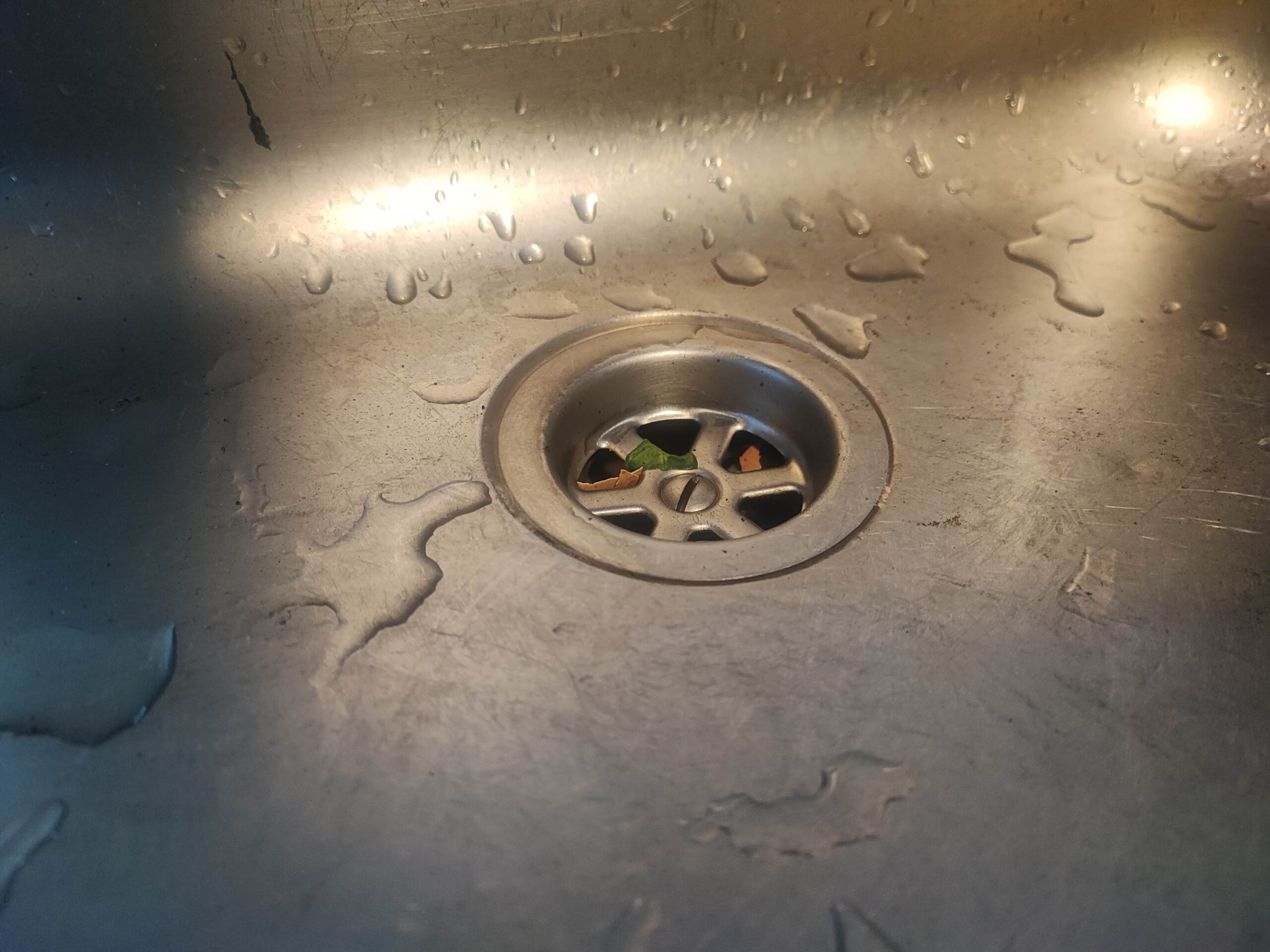
Cleaning a kitchen sink drain means removing grease, food particles, and bacteria buildup from the pipes beneath your sink to restore proper water flow and eliminate odors. Whether you’re dealing with a slow drain after washing dishes or a musty smell that won’t go away, the right approach depends on identifying your specific problem first.
This guide covers six methods — from a simple hot water flush to manually cleaning the P-trap. We’ll help you match your symptoms to the right solution and know when DIY fixes aren’t enough.
About this guide: Written by Sophie Harper, who covers cleaning and household maintenance at HomeNerdy. This article was last reviewed in February 2026 and follows our editorial standards: we prioritize safety, reference manufacturer guidance and standard household practices, and clearly state limitations.
How we develop our guides: We base our steps on common manufacturer recommendations, plumbing industry best practices, and established household safety guidelines. We do not claim to have personally tested every method — instead, we compile guidance from authoritative sources and common user experiences.
Scope: This guide covers cleaning kitchen sink drains in typical residential settings. It does not cover main sewer line issues, garbage disposal repairs, or commercial kitchen systems. For those situations, consult a licensed plumber.
Quick Summary (TL;DR)
Step 1 (60 seconds): Identify your problem
Use the 60-Second Diagnostic or Quick Decision Table to match your symptoms to the right method.
Step 2: Start with the gentlest method
- Slow drain after greasy dishes: Hot water flush, then dish soap method. Note: use very hot (not boiling) water if you have PVC pipes.
- Bad smell, no clog: Baking soda + vinegar, let sit 30 minutes.
- Water won’t drain at all: Try plunger first, then check P-trap.
Step 3: Escalate only if needed
- If gentle methods don’t work after 2-3 attempts, move to the next level.
- For complete blockages, manual P-trap cleaning is often necessary.
Step 4: Know when to stop
- Stop and call a plumber if: multiple drains are affected, water backs up from other fixtures, you smell sewage, or the problem returns within days.
Safety First: Read Before You Start
Chemical Safety
If you’ve recently used a commercial drain cleaner, wait at least 24 hours before trying any other method. Mixing chemicals can produce dangerous fumes.
Do Not Mix:
- Bleach + Vinegar = Chlorine gas (toxic)
- Bleach + Ammonia = Chloramine gas (toxic)
- Different drain cleaners = Unpredictable reactions
If you accidentally mix chemicals and notice fumes:
- Leave the area immediately.
- Open windows and doors for ventilation.
- Get fresh air.
- If you experience difficulty breathing, seek medical attention.
Hot Water Safety
- PVC pipes (white or light gray plastic): Use very hot tap water, not boiling. Boiling water can soften PVC joints over time.
- Metal pipes: Boiling water is generally safe.
- If unsure: Use the hottest tap water available — it’s effective and safe for all pipe types.
When Working Under the Sink
- Place a bucket underneath before removing the P-trap.
- Wear rubber gloves — drain residue contains bacteria.
- Have towels ready for spills.
Stop and Reassess If:
- You see water leaking from pipes or connections.
- Pipes feel loose or damaged.
- You’re uncomfortable with any step.
60-Second Diagnostic
Answer these three questions to find your best starting point:
Step 1: What do you see?
- ☐ Water drains slowly after washing greasy dishes or cooking with oil → Start with Method 4 (Dish Soap + Hot Water) — most effective for grease
- ☐ Water drains slowly (general, not grease-related) → Start with Method 1 (Hot Water)
- ☐ Bad smell, but water drains fine → Try Method 1 (Hot Water) or skip to Method 6 (P-trap cleaning) for persistent odors
- ☐ Water won’t drain at all → Start with Method 5 (Plunger)
- ☐ Moderate buildup and you can wait overnight → Try Method 3 (Salt + Baking Soda)
- ☐ Gurgling sounds → Check Decision Table (may indicate venting issue)
- ☐ Multiple symptoms → Start with gentlest relevant method, then reassess
Step 2: How severe?
- ☐ Mild (minor slowdown, faint smell) → DIY methods typically effective
- ☐ Moderate (noticeable delay, persistent smell) → May need 2-3 methods
- ☐ Severe (standing water, sewage smell, multiple drains) → Consider calling a professional
Step 3: What have you already tried?
- ☐ Nothing yet → Start with the gentlest method for your symptom
- ☐ Gentle method didn’t work → Move to the next level
- ☐ Multiple methods failed → Try P-trap cleaning, then call a professional if needed
Quick Decision Table
| What you’re experiencing | Likely cause | Safest first step | Next step if it doesn’t work | Stop & call a pro if… |
|---|---|---|---|---|
| Slow drain after washing greasy dishes or cooking with oil | Grease solidifying in pipes | Dish soap + hot water | Hot water flush (repeat), then Salt + baking soda overnight | Still slow after 3 treatments over a week |
| Slow drain (general, not grease-related) | Partial food or debris buildup | Hot water flush | Salt + baking soda overnight or Plunger if worsening | Still slow after multiple methods |
| Bad smell, water drains normally | Bacteria in P-trap or dry trap | Baking soda + vinegar (limited effectiveness, see note) or Hot water flush | Clean P-trap manually | Sewage smell that persists after P-trap cleaning |
| Water won’t drain at all | Full blockage | Plunger | Remove and clean P-trap | P-trap is clear but water still won’t drain |
| Drain gurgles or bubbles | Venting issue or deeper clog | Hot water flush | Check if other drains affected | Multiple drains gurgle = likely main line issue |
| Water backs up when dishwasher runs | Shared drain clogged | Run disposal + hot water | Dish soap + hot water, then Clean P-trap | Backup continues after cleaning both |
Materials Compatibility Guide
Different sink materials have different sensitivities. Check what you have before starting — especially if any cleaning solution might contact the sink surface.
| Sink Material | Safe Methods | Use with Caution | Avoid |
|---|---|---|---|
| Stainless Steel | All methods in this guide | Abrasive scrubbing (can scratch) | Bleach left sitting (can stain) |
| Porcelain / Ceramic | Hot water, baking soda, vinegar, dish soap | Plunger (use gently) | Harsh abrasives, metal tools |
| Composite / Granite | Hot water, mild dish soap, baking soda | Vinegar (dilute, rinse quickly) | Harsh chemicals, bleach |
| Copper | Hot water, mild dish soap | Baking soda (rinse thoroughly) | Vinegar, acidic cleaners (damages patina) |
| Cast Iron (Enameled) | Hot water, baking soda, dish soap | Vinegar (brief contact only) | Abrasives, harsh chemicals |
For pipes:
- PVC (white/gray plastic): Avoid boiling water; very hot tap water is safe.
- Metal pipes (copper, galvanized, cast iron): All methods safe.
- If unsure: Use hot tap water instead of boiling — effective and safe for all types.
Common Mistakes to Avoid
- Pouring boiling water down PVC pipes – Repeated exposure to boiling water can soften PVC joints and cause leaks. Use very hot tap water instead if you have plastic pipes.
- Mixing different drain cleaners or chemicals – Combining products (especially bleach with acids or ammonia) can produce toxic gases. If you’ve used a commercial cleaner, wait 24 hours before trying anything else.
- Using the plunger too aggressively – Excessive force can damage pipe connections or push clogs deeper. Use steady, moderate pressure.
- Ignoring slow drains until they’re completely blocked – A slow drain is your early warning. Addressing it with a simple hot water flush takes 2 minutes; a full blockage may require P-trap disassembly.
- Forgetting to run water after using the garbage disposal – Always run cold water for 15-20 seconds after grinding to flush debris fully into the drain line.
Method 1: Hot Water Flush
A hot water flush is the gentlest approach and often effective for minor grease buildup. If your drain has been slowing down gradually — especially after washing greasy pans — this is your starting point.
Time needed: 2-3 minutes
Materials: Kettle or pot, water
Best for: Light grease buildup, routine maintenance, first attempt at any slow drain
Instructions
- Boil water in a kettle or pot (or run tap at hottest setting for PVC pipes).
- Remove any visible debris from the drain opening.
- Slowly pour the hot water directly down the drain in 2-3 stages, waiting a few seconds between each pour.
- Run the tap for 30 seconds to flush the line.
PVC pipe note: If you have PVC pipes (white or light gray plastic), use the hottest tap water instead of boiling. Boiling water can soften PVC joints over time, potentially causing leaks.
Why this works: Hot water melts and loosens grease that has solidified on pipe walls, allowing it to flow through the system.
Limitations: This method typically helps with fresh grease buildup. It generally won’t clear established blockages, hair clogs, or mineral deposits.
If this doesn’t work: Move to Method 2 (Baking Soda + Vinegar) for additional cleaning power.
Method 2: Baking Soda + Vinegar
This is one of the most popular household drain cleaning methods — you’ve probably seen it recommended countless times. However, it’s important to understand what actually happens when you mix these two ingredients, because the science reveals why this method’s effectiveness is limited.
Time needed: 35-40 minutes (including wait time)
Materials: ½ cup120 ml baking soda, ½ cup120 ml white vinegar, hot water
Best for: Light odor reduction, minor debris agitation (but see “Why effectiveness is limited” below)
Instructions
- Remove any standing water from the sink (bail out if necessary).
- Pour ½ cup120 ml of baking soda directly into the drain.
- Follow with ½ cup120 ml of white vinegar.
- Cover the drain opening immediately (a wet cloth or drain stopper works) to direct the fizzing action downward.
- Wait 30 minutes.
- Flush with hot water for 1-2 minutes.
Why effectiveness is limited (the science): When baking soda (a base) and vinegar (an acid) mix, they neutralize each other. The result is water, carbon dioxide gas (the fizzing you see), and sodium acetate — which is pH neutral and has minimal cleaning power.
Here’s what you lose by mixing them:
- Baking soda’s deodorizing ability — works best as a base, not when neutralized
- Vinegar’s mild acid cleaning power — also neutralized in the reaction
What you’re left with is primarily the brief mechanical agitation from CO₂ bubbles, which has limited force and only lasts a few minutes.
More effective alternative: Use baking soda and vinegar separately. Apply baking soda, let it sit for 30 minutes to deodorize, flush with hot water, then (if needed) apply diluted vinegar for light acid cleaning on a different occasion. Or skip this method entirely and move to Method 4 (Dish Soap + Hot Water), which is more effective for grease-based slowdowns.
Why this method persists: The dramatic fizzing reaction looks effective, and the method is widely shared. For light debris, the brief bubbling action may provide minor agitation, and the hot water flush at the end can help. But the chemical neutralization means you’re not getting the cleaning benefits of either ingredient.
Limitations: Neutralization reduces effectiveness. Won’t clear grease buildup (try Method 4 instead), hair clogs, or solid obstructions. If you want to try this method, manage expectations — it’s more about the physical flush than the chemical reaction.
If this doesn’t work: Move to Method 4 (Dish Soap + Hot Water) for grease or Method 5 (Plunger) for blockages.
Method 3: Salt + Baking Soda
This method adds mild abrasive action to help scrub pipe walls. The salt provides texture that baking soda alone lacks.
Time needed: 8-12 hours (overnight is ideal)
Materials: ½ cup120 ml salt, ½ cup120 ml baking soda, boiling water
Best for: Overnight treatment for moderate buildup
Instructions
- Mix ½ cup120 ml salt with ½ cup120 ml baking soda.
- Pour the mixture down the drain.
- Let sit for several hours or overnight — the longer the better for this method.
- Flush with boiling water (or very hot tap water for PVC).
- Run tap water for 1 minute.
Why this works: The salt adds abrasive texture, while the extended contact time allows the mixture to work on buildup. The hot water flush at the end helps move loosened debris through.
Limitations: Requires advance planning due to long wait time. Not effective for complete blockages.
Method 4: Dish Soap + Hot Water
Dish soap is formulated to cut through grease — that’s its job. This method is particularly useful if you suspect grease is the primary culprit.
Time needed: 5-10 minutes
Materials: 2 tablespoons30 ml dish soap, pot of hot water
Best for: Grease-based slowdowns, especially after cooking with oils
Instructions
- Squirt 2 tablespoons30 ml of dish soap directly into the drain.
- Boil a pot of water (or heat to very hot for PVC pipes).
- Slowly pour the hot water down the drain.
- Wait 5 minutes.
- Run hot tap water for 1-2 minutes.
Why this works: Dish soap emulsifies grease, breaking it into smaller particles that hot water can flush away. This is essentially the same process that cleans your greasy dishes.
Limitations: Works best on grease-based clogs. Less effective for food particle buildup, hair, or mineral deposits.
Method 5: Plunger
A plunger creates pressure changes that can dislodge blockages. For kitchen sinks, a flat-bottomed cup plunger works better than the flanged type designed for toilets.
Time needed: 5-10 minutes
Materials: Cup plunger, water, rag or stopper
Best for: Complete or near-complete blockages where water won’t drain
Instructions
- If you have a double sink, block the other drain with a wet rag to maintain pressure.
- Fill the sink with 3-4 inches8-10 cm of water (enough to cover the plunger cup).
- Place the plunger firmly over the drain, ensuring a complete seal.
- Plunge with steady, moderate pressure — 15-20 strokes.
- Pull up sharply on the last stroke to help dislodge the clog.
- Test by running water.
- Repeat if needed, but stop after 3-4 attempts if there’s no improvement.
Pressure tip: You want consistent, moderate pressure rather than aggressive force. Excessive pressure can damage pipe connections or push the clog deeper into the system.
Why this works: The plunger creates alternating pressure and suction that can shift or break apart blockages.
Limitations: Requires a good seal to be effective. Won’t help with buildup coating pipe walls — only physical blockages. If the clog is beyond the P-trap, plunging typically won’t reach it.
Method 6: Clean the P-Trap
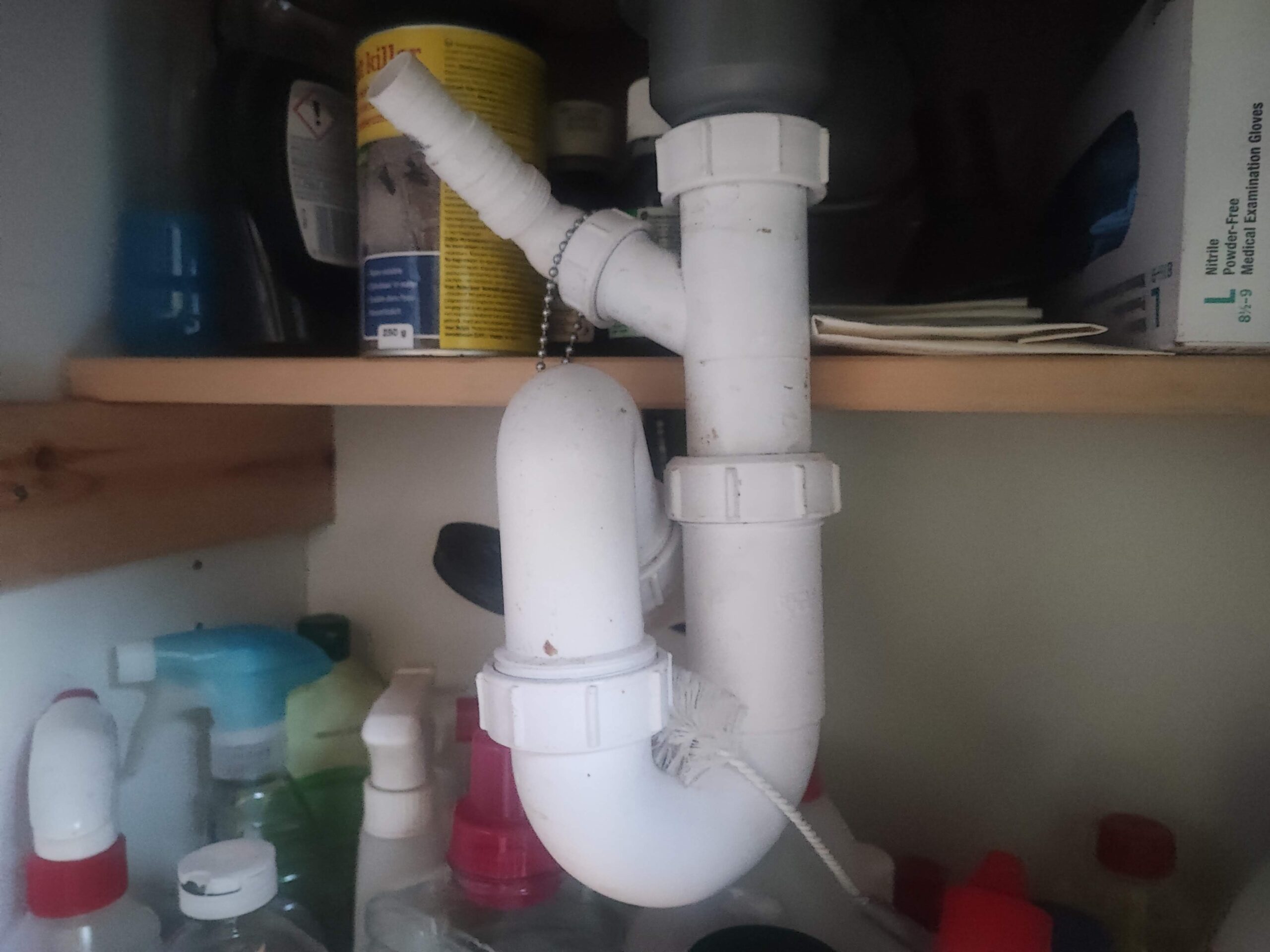
The P-trap is the curved pipe section under your sink. It holds water to block sewer gases, but it’s also where debris commonly accumulates. If other methods haven’t worked, this is often where you’ll find the problem.
Time needed: 15-20 minutes
Materials: Bucket, rubber gloves, adjustable pliers or wrench, old toothbrush, flashlight
Best for: Persistent clogs that don’t respond to other methods, removing physical obstructions
Instructions
- Place a bucket directly under the P-trap to catch water and debris.
- Put on rubber gloves.
- Loosen the slip nuts on both ends of the P-trap (usually hand-tight; use pliers if needed, but gently).
- Carefully remove the P-trap, keeping it level to minimize spillage.
- Dump contents into the bucket.
- Use a flashlight to inspect both the trap and the pipes it connects to.
- Clean the P-trap thoroughly with an old toothbrush and hot water.
- Check for cracks, corrosion, or damage while it’s out.
- Reinstall the P-trap, tightening slip nuts firmly but not excessively.
- Run water to test for leaks.
What to look for: When inspecting the exposed pipes with a flashlight, you’re checking for additional clogs deeper in the wall pipe. If you see buildup or an obstruction past the P-trap connection, that’s beyond typical DIY territory.
Why this works: This gives you direct access to the most common clog location and lets you physically remove whatever is blocking the drain.
Limitations: Requires getting under the sink and working with plumbing connections. If the clog is deeper in the wall pipes, P-trap cleaning won’t resolve it.
If this doesn’t work: The blockage is likely beyond the P-trap in your wall pipes. At this point, it’s time to call a professional.
If You Have a Garbage Disposal
Garbage disposals add complexity to kitchen drain maintenance. They’re helpful for grinding food waste, but they can also contribute to clogs if not used properly.
Before Trying Any Drain Cleaning Method
- Turn off the disposal and unplug it (or flip the circuit breaker) before putting anything down the drain or reaching near it.
- Check if the disposal is the problem: If you hear humming but no grinding, the disposal may be jammed (not a drain clog).
- Run the disposal with water first: Sometimes what seems like a drain clog is actually food stuck in the disposal. Run cold water and turn on the disposal for 30 seconds.
Disposal-Safe Cleaning
- Hot water flush: Safe and recommended. Run hot water for 30 seconds after each use.
- Baking soda + vinegar: Safe. Pour down the disposal side, let sit, then run the disposal with water to flush.
- Ice + salt: Running ice cubes with coarse salt through the disposal can help clean the grinding components (not the drain itself).
If Water Backs Up When the Dishwasher Runs
This typically indicates a clog in the shared drain section. The dishwasher often drains through the garbage disposal connection.
- First, run the disposal with water to clear any buildup.
- If that doesn’t help, the clog is likely in the drain line beyond the disposal.
- Check and clean the P-trap.
- If the problem persists, the clog may be in the dishwasher drain hose connection or further in the system — consider calling a professional.
What NOT to Put in a Garbage Disposal
- Grease, oil, or fat (solidifies in pipes)
- Fibrous vegetables (celery, asparagus, corn husks)
- Starchy foods in large amounts (pasta, rice, potato peels)
- Coffee grounds (accumulate in pipes)
- Bones, fruit pits, or shells
- Non-food items
Preventing Future Drain Problems
Most kitchen drain clogs are preventable with basic habits. A few minutes of regular maintenance can save you from dealing with standing water and unpleasant odors.
Daily Habits
- Use a drain strainer. A simple mesh strainer catches food particles before they enter the drain — the single most effective prevention measure.
- Run hot water after washing dishes. 15-20 seconds of hot water helps flush grease through the system before it solidifies.
- Scrape plates into the trash first. Even with a disposal, large food pieces should go in the trash or compost.
Weekly Maintenance
- Hot water flush. Once a week, pour a kettle of hot water down the drain (very hot tap water for PVC) to melt any accumulating grease.
- Run the garbage disposal with water. If you have one, run it for 30 seconds with cold water weekly, even if you haven’t used it.
Monthly Maintenance
- Baking soda + vinegar treatment. Once a month, use the baking soda + vinegar method as preventive maintenance, even if the drain seems fine.
- Clean the drain strainer thoroughly. Remove buildup from the strainer itself.
What to NEVER Pour Down the Drain
- Cooking grease, oil, or fat – Solidifies in pipes; dispose in trash instead.
- Coffee grounds – Accumulate and form clogs; compost or trash them.
- Flour or starchy water – Creates a paste-like buildup.
- Eggshells – Despite myths, they don’t sharpen disposal blades and can contribute to clogs.
- Paint, chemicals, or medications – Environmental hazard; dispose properly.
When to Call a Professional
DIY methods handle most kitchen drain issues, but some situations require professional equipment and expertise. Knowing when to stop saves you from making problems worse — or causing water damage.
Call a plumber if:
- Multiple drains are affected simultaneously. If your kitchen sink, bathroom sink, and shower are all draining slowly, the problem is likely in your main drain line — not something you can fix with household methods.
- Water backs up from other fixtures. If water comes up in the bathtub when you drain the kitchen sink, you have a main line issue.
- You smell sewage. A persistent sewage smell (not just musty drain odor) may indicate a venting problem or sewer line issue.
- The problem returns within days. If your drain clogs again shortly after clearing it, there’s likely a deeper issue — root intrusion, pipe damage, or buildup far down the line.
- You see signs of water damage. Staining under the sink cabinet, warped wood, or mold growth suggests a leak that needs professional attention.
- The P-trap is clear but water still won’t drain. The clog is deeper in your wall pipes, which typically requires a drain snake or hydro-jetting.
- You’re uncomfortable with any step. There’s no shame in calling a professional. They can often resolve issues in 30 minutes that might take you hours of frustration.
For guidance on finding a reliable plumber, the Better Business Bureau and your local licensing board can help verify credentials.
Frequently Asked Questions
Does baking soda and vinegar actually clear drains?
The short answer: it has limited effectiveness, and the science explains why. When you mix baking soda (a base) with vinegar (an acid), they immediately neutralize each other, producing water, carbon dioxide gas (the fizzing), and sodium acetate — which is pH neutral and has minimal cleaning power.
What you lose by mixing them:
- Baking soda’s deodorizing ability (works best as a base, not when neutralized)
- Vinegar’s mild acid cleaning power (also neutralized)
What remains is primarily the brief mechanical action from CO₂ bubbles, which lasts only a few minutes and has limited force. The method looks effective because of the dramatic fizzing, but the chemical neutralization undermines the cleaning benefits of both ingredients.
Better approach: Use them separately (baking soda for odor control, diluted vinegar for light acid cleaning on different occasions), or skip this method and use dish soap + hot water for grease-based clogs or a plunger for blockages. For more detail, see Method 2.
Is it safe to pour boiling water down the drain?
It depends on your pipes. Metal pipes (copper, galvanized, cast iron) handle boiling water fine. PVC pipes (white or light gray plastic) can be softened by repeated boiling water exposure, potentially weakening joints over time. If you have PVC or aren’t sure what you have, use the hottest tap water instead — it’s effective for grease and safe for all pipe types.
How often should I clean my kitchen sink drain?
For most households, a weekly hot water flush and monthly baking soda treatment is sufficient for prevention. If you cook with a lot of oil or fat, you may benefit from more frequent hot water flushes — even daily. The key is consistency: small regular maintenance prevents big problems.
Why does my drain smell bad even though it’s not clogged?
Several possibilities: bacteria buildup in the P-trap (try the baking soda + vinegar method), a dry P-trap (if the sink isn’t used often, the water seal evaporates — just run water for 30 seconds), or food debris stuck in the garbage disposal. If the smell is specifically sewage-like and persists after these fixes, you may have a venting issue that needs professional assessment.
Can I use commercial drain cleaners?
You can, but proceed with caution. Chemical drain cleaners can be effective for certain clogs, but they’re harsh on pipes (especially older ones), dangerous if they splash or if fumes are inhaled, and can make future clogs harder to clear manually. If you choose to use them, follow label directions exactly, never mix with other products, and ensure good ventilation. Many plumbers recommend against them for regular use.
Why does my drain clog so frequently?
Recurring clogs usually indicate one of three things: habits that contribute to buildup (like pouring grease down the drain), a partial blockage deeper in the system that you’re temporarily clearing but not removing, or a pipe issue like root intrusion, bellied pipe, or corrosion buildup. If clogs return within a week or two of clearing, it’s worth having a plumber inspect with a camera to identify the underlying cause.
Should I remove the garbage disposal to clean the drain?
In most cases, no — you can clean the drain effectively by working through the disposal or cleaning the P-trap. However, if you suspect the clog is specifically where the disposal connects to the drain pipe, that connection may need attention. Removing a garbage disposal is more involved than P-trap cleaning, so if you suspect the disposal connection is the issue, you may want professional help.
Conclusion
Kitchen sink drain clogs are common, but most are manageable with the right approach. The key is matching your method to your specific problem — and knowing when to escalate.
We covered six methods, from gentlest to most involved:
- Hot water flush – For light grease, routine maintenance
- Baking soda + vinegar – For odors and light buildup
- Salt + baking soda – For overnight treatment of moderate buildup
- Dish soap + hot water – For grease-specific issues
- Plunger – For complete blockages
- P-trap cleaning – When other methods don’t work
Start with the gentlest method appropriate for your symptoms, and escalate only if needed. Prioritize safety — especially regarding chemical mixing and hot water on PVC pipes. And remember: if the problem affects multiple drains, returns quickly, or you’re uncomfortable with any step, calling a professional is the smart choice.
Prevention is easier than cure. A drain strainer, regular hot water flushes, and keeping grease out of the drain will prevent most clogs before they start.
Have a drain cleaning tip that works for you? Questions we didn’t cover? Share in the comments below.

