
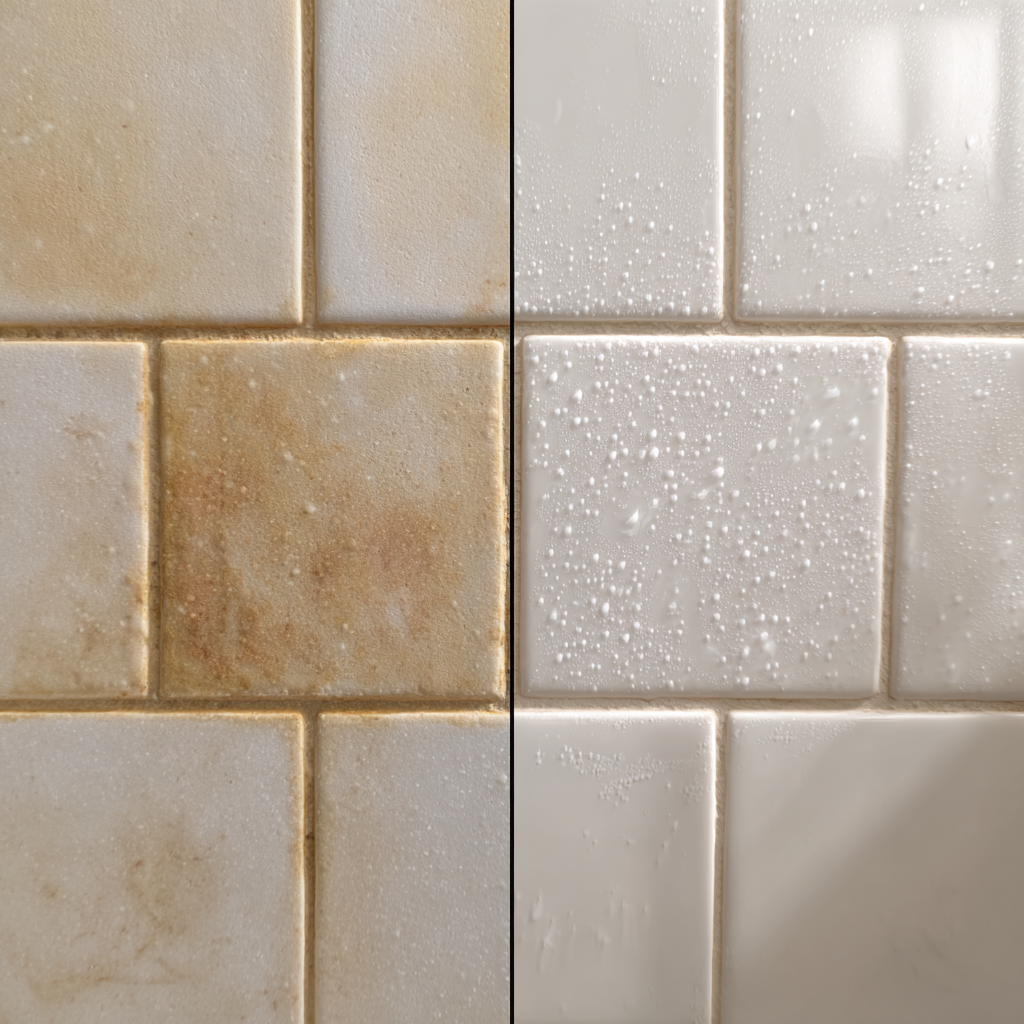
This guide covers five methods, from a simple baking soda scrub to oxygen bleach for heavy staining. We’ll help you identify what type of stain you’re dealing with, match it to the right cleaning approach, and avoid the mistakes that can damage your grout or tile.
About this guide: Written by Sophie Harper, who covers cleaning and household maintenance at HomeNerdy. This article was last reviewed in February 2026 and follows our editorial standards: we prioritize safety, reference manufacturer care instructions and industry standards, and clearly state limitations.
How we develop our guides: We base our steps on tile and grout care guidelines from manufacturers, industry best practices, and established safety standards. We do not claim to have personally tested every method — instead, we compile guidance from authoritative sources and common user experiences.
Scope: This guide covers cleaning grout in residential showers with standard ceramic, porcelain, or stone tile. It does not cover regrouting, structural tile repair, or commercial shower systems. If your grout is crumbling or missing chunks, consult a tile professional.
Quick Summary (TL;DR)
Step 1 (60 seconds): Identify your stain type
Use the 60-Second Diagnostic or Quick Decision Table to match your grout problem to the right method.
Step 2: Start gentle, escalate if needed
- Light surface grime: Baking soda paste + toothbrush. Usually enough for routine cleaning.
- Soap scum buildup: Vinegar spray (NOT on natural stone tile) or dish soap scrub.
- Yellowing or discoloration: Hydrogen peroxide — let it sit 10-15 minutes.
- Mold or heavy staining: Oxygen bleach (like OxiClean) — strongest DIY option.
Step 3: Know when to stop
- If stains don’t improve after two applications of your strongest safe method, the discoloration may be permanent, or may indicate underlying structural issues.
- If you see mold returning within a week, the moisture source needs to be addressed — cleaning alone won’t solve it.
- If grout is crumbling, cracking, or missing, stop cleaning and consult a tile professional about regrouting.
Safety First: Read Before You Start
Chemical Safety
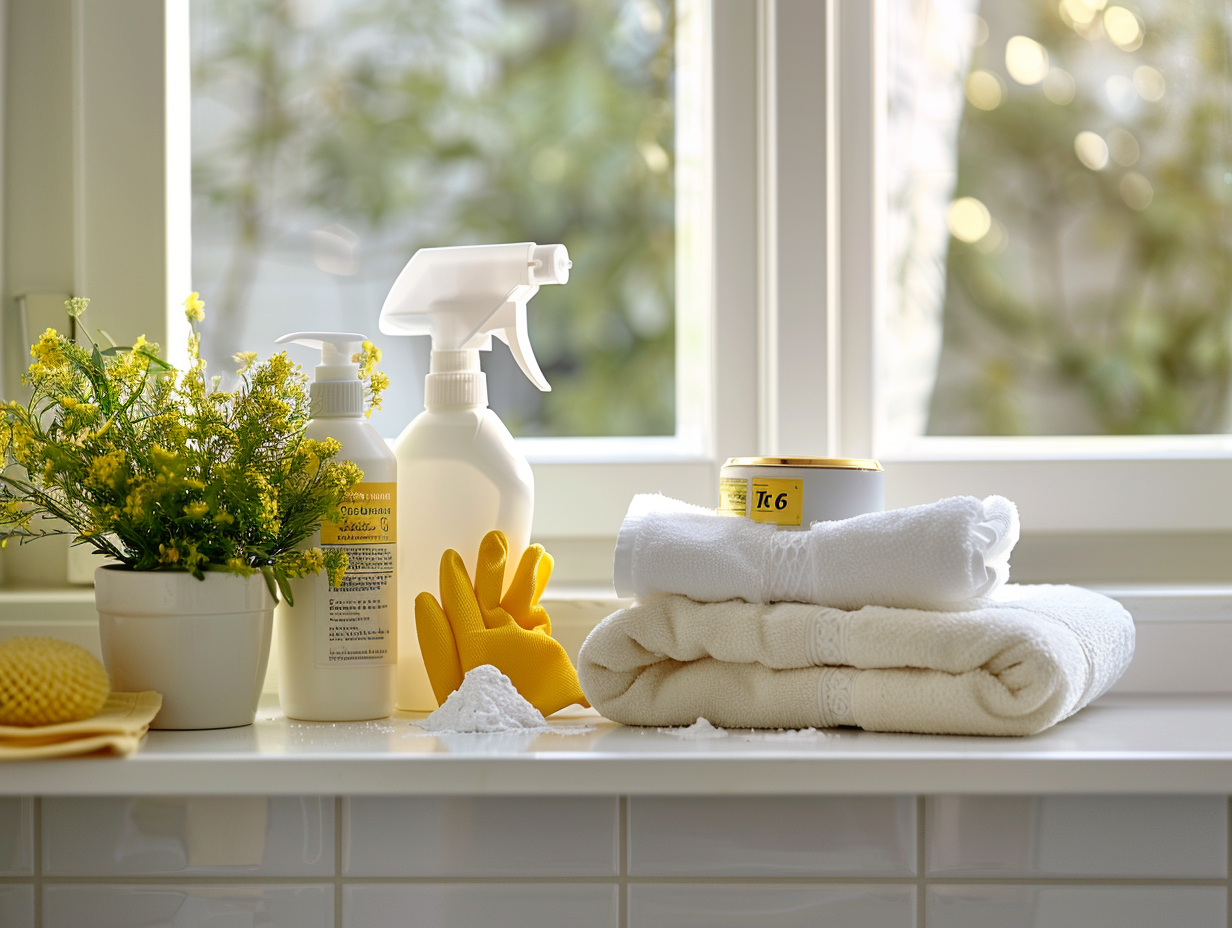
Bathrooms are enclosed spaces. Chemical fumes build up faster than in kitchens or open areas. Always ventilate before you start.
Do Not Mix:
- Bleach + Vinegar = Chlorine gas (toxic)
- Bleach + Ammonia = Chloramine gas (toxic)
- Bleach + Hydrogen Peroxide = Can cause a violent reaction
- Different commercial cleaners = Unpredictable reactions
One product at a time. If you switch methods, rinse the area thoroughly with plain water and wait at least 15 minutes before applying something different.
Ventilation
- Open the bathroom window if you have one.
- Turn on the exhaust fan.
- If neither is available, place a portable fan blowing air out of the bathroom doorway.
- Never close the door while using chemical cleaners.
Personal Protection
- Rubber or nitrile gloves — Cleaning agents dry out skin and can cause irritation.
- Eye protection — Recommended when using hydrogen peroxide or bleach-based products, especially when scrubbing overhead surfaces.
- Old clothes — Bleach and peroxide can permanently stain fabric.
Stop and Reassess If:
- You feel dizzy, lightheaded, or notice a strong chemical smell — leave the area immediately.
- Your skin or eyes start burning or itching.
- Grout is crumbling or coming loose as you scrub — you may need regrouting, not cleaning.
60-Second Diagnostic
Look at your grout and answer these three questions:
Step 1: What does the grout look like?
- ☐ Dull gray or slightly dirty → Start with Method 1 (Baking Soda Paste)
- ☐ White film or haze on grout/tile → Start with Method 2 (Vinegar Spray)
- ☐ Yellow or brown discoloration → Start with Method 4 (Hydrogen Peroxide)
- ☐ Black or dark spots (mold/mildew) → Start with Method 5 (Oxygen Bleach)
- ☐ Pink or orange stains → Start with Method 1 — this is typically bacteria (Serratia marcescens), not mold
Step 2: What type of tile do you have?
- ☐ Ceramic or porcelain → All methods in this guide are safe
- ☐ Natural stone (marble, travertine, slate) → Skip vinegar — acid damages natural stone. Use pH-neutral methods only
- ☐ Glass tile → All methods safe, but avoid abrasive scrubbing on the tile surface
- ☐ Not sure → Treat as natural stone (safest approach)
Step 3: What type of grout?
- ☐ Sanded or unsanded cement grout (most common — rough or slightly textured) → All methods safe
- ☐ Epoxy grout (smooth, plastic-like feel, often in newer builds) → Most stains wipe off easily; avoid harsh abrasives
- ☐ Not sure → Assume cement grout (most likely in residential showers)
Quick Decision Table
| What you see | Likely cause | Best first step | If that doesn’t work | Stop & call a pro if… |
|---|---|---|---|---|
| General dinginess, grout looks darker than it should | Dirt, body oil, soap residue buildup | Baking soda paste | Hydrogen peroxide | Grout still dark after two peroxide treatments |
| White haze or chalky film | Hard water / mineral deposits | Vinegar spray (not on stone) | Dish soap scrub | Deposits are thick/crusty and won’t dissolve |
| Yellow or brown stains | Iron in water, tannins, age-related discoloration | Hydrogen peroxide | Oxygen bleach | Stains are deep within grout and won’t lighten |
| Black or dark green spots | Mold or mildew | Oxygen bleach | Repeat after 48 hours | Mold returns within a week — moisture source needs fixing |
| Pink or orange film | Bacteria (Serratia marcescens) | Baking soda paste | Hydrogen peroxide | Pink returns daily despite cleaning and ventilating |
Materials Compatibility Guide
Not every cleaning agent is safe for every surface. Check your tile type before choosing a method — especially if you have natural stone.
| Cleaning Agent | Ceramic / Porcelain | Natural Stone | Glass Tile | Epoxy Grout |
|---|---|---|---|---|
| Baking soda paste | Safe | Safe | Safe (gentle scrub only) | Safe |
| White vinegar | Safe | AVOID — acid etches stone | Safe | Safe |
| Dish soap | Safe | Safe (pH-neutral preferred) | Safe | Safe |
| Hydrogen peroxide (3%) | Safe | Use with caution — test first | Safe | Safe |
| Oxygen bleach | Safe | Use with caution — test first | Safe | Safe |
| Chlorine bleach | Use sparingly | AVOID | Use with caution | AVOID — can discolor |
If you have natural stone tile: If your shower has marble, travertine, limestone, or slate tiles, stick to baking soda and pH-neutral dish soap only. Acidic cleaners (vinegar, lemon juice) can etch and permanently dull the stone surface. When in doubt, check with your tile supplier or installer.
Common Mistakes to Avoid
- Using vinegar on natural stone tile — Vinegar is acidic and can etch marble, travertine, and limestone, leaving permanent dull spots. If you have natural stone, use only pH-neutral cleaners.
- Scrubbing with metal brushes or steel wool — These can gouge grout lines and scratch tile glazing. Use a stiff nylon brush or an old toothbrush instead.
- Mixing cleaning products — Combining bleach with vinegar, ammonia, or other cleaners can produce toxic gases. Rinse thoroughly with plain water between methods.
- Skipping ventilation in the bathroom — Bathrooms are small, enclosed spaces. Chemical fumes concentrate quickly. Always open a window or run the exhaust fan before you start.
- Expecting cleaning to fix crumbling grout — If grout is cracking, crumbling, or missing in sections, no cleaning product will fix it. That’s a regrouting job, not a cleaning job.
Method 1: Baking Soda Paste
This is the gentlest and safest starting point for any shower grout. Baking soda is mildly abrasive and alkaline, which helps lift surface grime without damaging grout or tile — including natural stone.
Time needed: 15-20 minutes
Materials: ½ cup120 ml baking soda, water, old toothbrush or stiff nylon brush
Best for: Light surface dirt, routine maintenance, pink bacteria stains, safe starting point for any grout type
Instructions
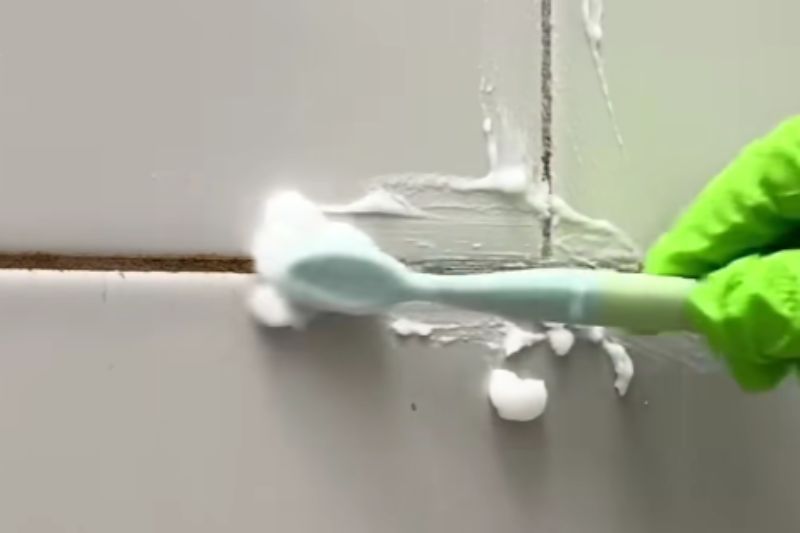
- Mix ½ cup120 ml baking soda with enough water to form a thick paste (roughly the consistency of toothpaste).
- Apply the paste directly onto the grout lines. Use your finger or a brush to press it into the grout.
- Let it sit for 5-10 minutes.
- Scrub the grout lines with an old toothbrush or nylon grout brush using small circular motions.
- Rinse thoroughly with warm water.
- Wipe the area dry with a clean cloth or squeegee.
Why this works: Baking soda is a mild abrasive that physically scrubs away surface buildup. Its alkaline pH also helps break down greasy residues like body oil and soap scum.
Limitations: This method typically handles surface-level dirt and light staining. It generally won’t remove deep-set discoloration, mold that has penetrated grout, or mineral deposits from hard water.
If this doesn’t work: Move to Method 2 (Vinegar Spray) for mineral deposits, or Method 4 (Hydrogen Peroxide) for discoloration.
Method 2: Vinegar Spray
White vinegar is effective at dissolving mineral deposits and soap scum — the chalky white buildup that hard water leaves behind. However, it’s acidic, which means it has important material restrictions.
Do NOT use on natural stone. Vinegar will etch marble, travertine, limestone, and slate. If you have natural stone tile, skip this method entirely and use Method 3 (Dish Soap) or Method 1 (Baking Soda) instead.
Time needed: 20-25 minutes (including wait time)
Materials: White vinegar, spray bottle, water, nylon brush
Best for: Hard water deposits, soap scum, white mineral haze on ceramic or porcelain tile
Instructions
- Mix equal parts white vinegar and warm water in a spray bottle.
- Spray generously onto the grout lines.
- Let it sit for 10-15 minutes. You may see mild fizzing on mineral deposits — that’s normal.
- Scrub the grout with a nylon brush.
- Rinse thoroughly with warm water.
- Squeegee or dry the area.
Why this works: The acetic acid in vinegar dissolves calcium and mineral deposits that build up from hard water. It also breaks down soap scum — the combination of soap and hard water minerals.
Limitations: Not effective on mold, biological stains, or deep discoloration. The vinegar smell dissipates within an hour, but ventilate the bathroom during application.
Method 3: Dish Soap Scrub
A straightforward option that’s safe for every tile and grout type, including natural stone. Dish soap cuts through body oils and soap residue without any acidity or harsh chemicals.
Time needed: 15-20 minutes
Materials: 1 tablespoon15 ml dish soap, warm water, spray bottle or bowl, nylon brush
Best for: General maintenance, natural stone showers, soap and oil residue
Instructions
- Mix 1 tablespoon15 ml dish soap into 2 cups500 ml warm water in a spray bottle or bowl.
- Apply to grout lines generously.
- Let it sit for 5 minutes.
- Scrub with a nylon brush, working in small sections.
- Rinse thoroughly — dish soap is slippery, so rinse until the surface no longer feels slick.
- Dry the area.
Why this works: Dish soap is formulated to emulsify oils and fats. This makes it effective against body oils and the greasy components of soap scum buildup. It’s effective for regular maintenance without any risk to sensitive surfaces.
Limitations: Won’t tackle mineral deposits, mold, or heavy discoloration. This is a maintenance method, not a deep cleaning solution.
Method 4: Hydrogen Peroxide
Hydrogen peroxide (3% solution — the one from the pharmacy) is a mild bleaching agent and disinfectant. It’s the go-to option when grout has yellowed or developed light mold stains that baking soda can’t reach.
Time needed: 20-30 minutes (including wait time)
Materials: 3% hydrogen peroxide, spray bottle, nylon brush, rubber gloves
Best for: Yellowed grout, light mold or mildew stains, discoloration
Instructions
- Put on rubber gloves. Open the bathroom window or turn on the exhaust fan.
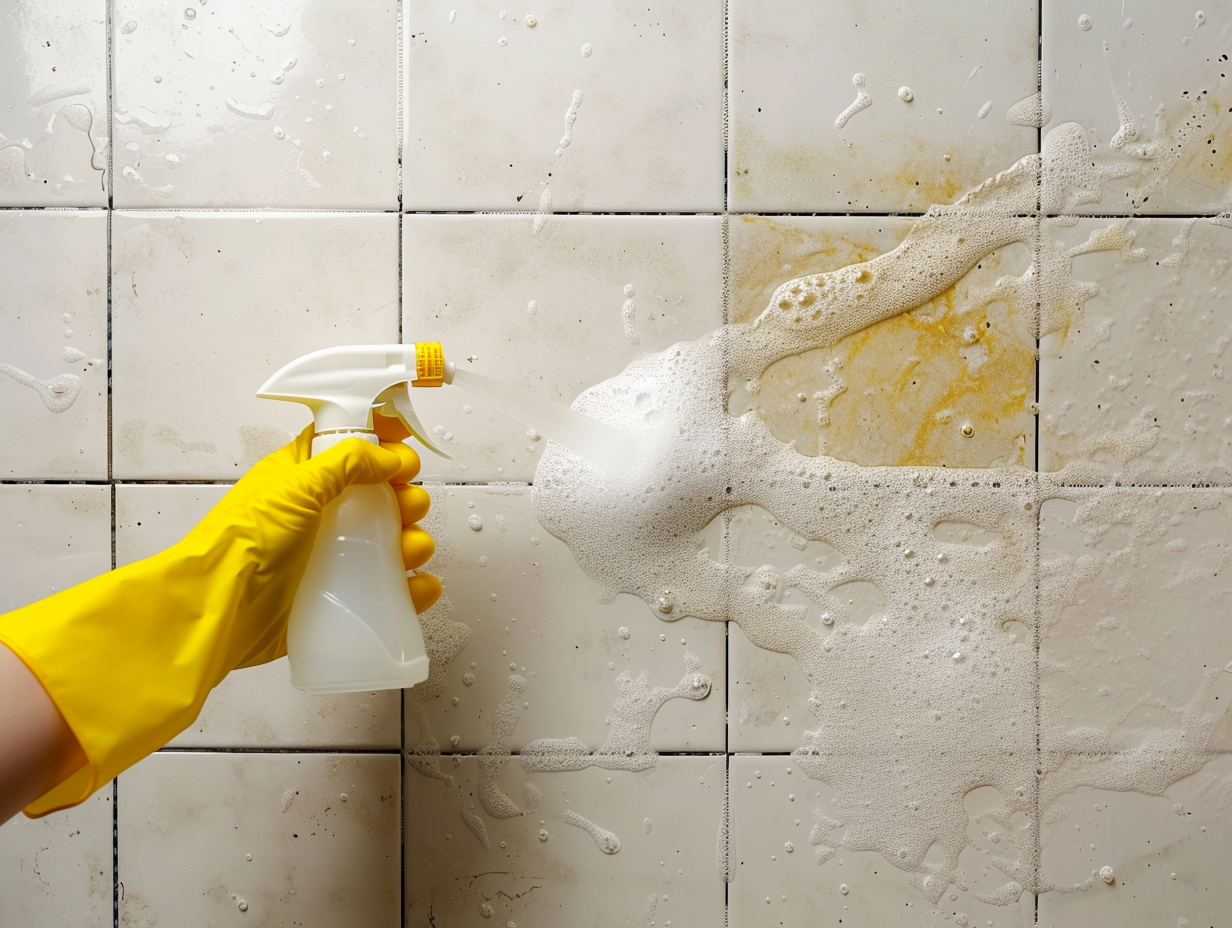
- Pour or spray 3% hydrogen peroxide directly onto the grout lines.
- Let it sit for 10-15 minutes. You may see gentle fizzing — this is normal and indicates it’s reacting with organic material.
- Scrub with a nylon brush.
- Rinse thoroughly with warm water.
- Dry the area.
- For stubborn stains, repeat after 24 hours.
Boosted paste option: For extra cleaning power, mix ½ cup120 ml baking soda with enough hydrogen peroxide to form a paste. Apply to grout, let sit 10 minutes, then scrub. The combination provides both mild abrasion and bleaching action.
Why this works: Hydrogen peroxide is an oxidizing agent — it breaks down organic compounds — including mold, bacteria, and body oil residue — that cause discoloration. At 3% concentration, it’s effective enough for grout cleaning while being much milder than chlorine bleach.
Limitations: May not fully remove deep-set mold that has penetrated porous grout. Less effective on mineral deposits (use vinegar for those). Can lighten colored grout — test in an inconspicuous area first if you have non-white grout.
Method 5: Oxygen Bleach
Oxygen bleach (sodium percarbonate — sold as OxiClean, Biokleen, or similar products) is the strongest DIY grout cleaning option. It’s significantly milder than chlorine bleach but more effective than hydrogen peroxide for heavy staining and established mold.
Time needed: 30-60 minutes (including soak time)
Materials: Oxygen bleach powder, warm water, bucket, nylon brush, rubber gloves, eye protection
Best for: Heavy mold or mildew, deep discoloration, grout that hasn’t been cleaned in a long time
Instructions
- Put on rubber gloves and eye protection. Ensure the bathroom is well-ventilated.
- Mix oxygen bleach powder with warm water according to package directions (typically 1-2 tablespoons15-30 ml per 1 gallon4 liter of water).
- Apply the solution generously to grout lines. You can use a spray bottle, sponge, or pour it directly.
- Let it soak for 15-30 minutes. For severe staining, you can leave it up to an hour.
- Scrub with a stiff nylon brush.
- Rinse thoroughly with clean water.
- Dry the area completely.
Oxygen bleach vs. chlorine bleach: Oxygen bleach (sodium percarbonate) breaks down into water and oxygen — it’s safer for grout, colored tile, and you. Chlorine bleach (sodium hypochlorite) is harsher: it can break down grout over time, damage colored grout, and produces stronger fumes. For shower grout, oxygen bleach is generally the better choice.
Why this works: Oxygen bleach releases hydrogen peroxide and sodium carbonate when dissolved. The extended soak time allows it to penetrate porous grout and break down deep-set organic stains that surface treatments miss.
Limitations: Requires more time than other methods. May not fully restore grout that’s been discolored for years — some staining becomes permanent. Not effective on mineral deposits.
If this doesn’t work: The grout may need professional cleaning (steam cleaning), or the staining may be permanent. At this point, consider consulting a professional about regrouting or grout staining/coloring as alternatives.
If You Have Colored Grout
Not all grout is white or light gray. If your grout is intentionally colored (tan, brown, black, or another shade), cleaning requires extra caution.
- Baking soda and dish soap are safe for colored grout.
- Vinegar is generally safe for colored grout (on ceramic/porcelain tile only), but test in a hidden area first.
- Hydrogen peroxide and oxygen bleach can lighten colored grout. Always test in an inconspicuous spot and check after 10 minutes before treating the full area.
- Chlorine bleach will likely strip color from grout. Avoid entirely.
When in doubt: Start with the gentlest method (baking soda paste) and test any new product in a small, hidden area first.
Preventing Grout From Getting Dirty Again
Clean grout doesn’t stay clean on its own — but a few simple habits can dramatically extend the time between deep cleanings.
After Every Shower
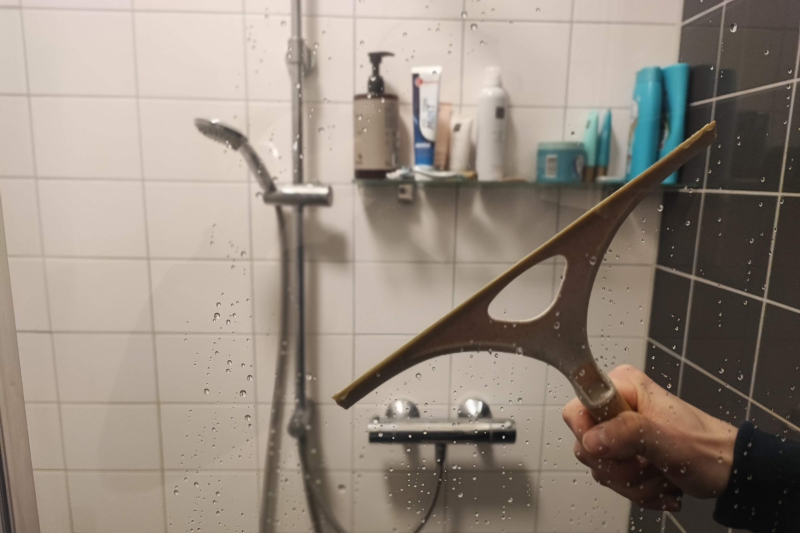
- Squeegee the walls and floor. This takes 30 seconds and removes the water that feeds mold, mildew, and mineral deposits. It’s the single most effective prevention measure.
- Leave the shower door or curtain open. Air circulation helps surfaces dry faster, which discourages mold growth.
Weekly
- Quick spray-down. Spray the grout and tile with a mix of water and a few drops of dish soap after your last shower of the week. No scrubbing needed — just let it sit and rinse next time you shower.
- Run the exhaust fan for 15-20 minutes after showering. Many people turn it off too soon. Moisture needs time to clear completely.
Every 6-12 Months
- Consider sealing the grout. Cement-based grout is porous and absorbs moisture and stains. A penetrating grout sealer creates a barrier that makes cleaning easier and prevents stain absorption. Follow the sealer manufacturer’s instructions for application and reapplication intervals.
- Inspect for cracks or crumbling. Damaged grout lets water behind tiles, which can cause mold in places you can’t see or clean.
What to Avoid
- Bar soap — Leaves more residue (soap scum) than liquid body wash. If you use bar soap, squeegee more diligently.
- Leaving bottles on the shower floor — Product residue collects under bottles and feeds mold. Use a shower caddy or shelf instead.
- Ignoring the exhaust fan — If your fan is weak, noisy, or not working, get it serviced. Proper ventilation is the foundation of mold prevention.
When to Call a Professional
DIY methods handle most shower grout cleaning, but some situations need professional tools or expertise.
Call a tile or cleaning professional if:
- Mold returns within a week after thorough cleaning. This typically means there’s a moisture problem behind the tile — water intrusion, inadequate waterproofing, or a plumbing leak. Cleaning the surface won’t solve the root cause.
- Grout is crumbling, cracking, or missing. This is a regrouting job, not a cleaning job. Missing grout allows water behind the tiles, which causes structural damage over time.
- Stains won’t respond to any method after multiple attempts. Professional-grade steam cleaning or grout staining/coloring may be options worth exploring.
- You have large areas of natural stone tile. Natural stone requires specific care, and mistakes can be expensive to fix. A professional familiar with your stone type can advise on the safest approach.
- You suspect water damage behind the tiles. Signs include loose tiles, spongy drywall behind tiles, water stains on the ceiling below, or a musty smell that persists even after cleaning visible mold.
- You’re uncomfortable working with chemical cleaners in an enclosed space. Professional cleaners have proper equipment and ventilation setups for bathroom work.
For finding a reliable tile professional, the Tile Council of North America provides resources for locating qualified installers and repair specialists in your area.
Frequently Asked Questions
Does baking soda and vinegar work on shower grout?
They work on different problems, but using them together is less effective than using each one separately. The fizzing reaction between baking soda (base) and vinegar (acid) is visually satisfying but mostly neutralizes both ingredients. You’re better off using baking soda paste for scrubbing dirt, or vinegar spray for mineral deposits — not both at the same time. And remember: never use vinegar on natural stone tile.
Can I use bleach on shower grout?
You can, but oxygen bleach (like OxiClean) is generally a better choice than chlorine bleach for grout. Chlorine bleach is harsh — repeated use can weaken cement-based grout, damage colored grout, and produce strong fumes in an enclosed bathroom. Oxygen bleach provides effective cleaning with fewer downsides. If you do use chlorine bleach, dilute it, ensure strong ventilation, and don’t use it regularly.
How often should I deep clean shower grout?
For most showers, a deep clean every 2-3 months is sufficient if you practice basic prevention (squeegeeing, ventilation). If your shower sees heavy use, has hard water, or you notice grout darkening sooner, monthly cleaning may be warranted. The key is consistency — a quick weekly spray-down prevents most buildup.
Why does my shower grout keep getting moldy?
Mold needs moisture, warmth, and organic material (soap residue, body oils) to grow — and showers provide all three. The most common reasons for persistent mold: inadequate ventilation (weak or absent exhaust fan), not drying surfaces after use, unsealed grout absorbing moisture, or a hidden water leak behind the tiles. If mold returns quickly after thorough cleaning, address the moisture source first.
Should I seal my shower grout?
If you have cement-based grout (the most common type in residential showers), sealing is generally recommended. A penetrating grout sealer fills the pores in cement grout, making it more resistant to moisture, stains, and mold. Epoxy grout doesn’t need sealing — it’s already non-porous. Follow the sealer manufacturer’s instructions for how often to reapply, typically every 1-2 years depending on use.
Can I use a steam cleaner on grout?
Steam cleaning can be effective for grout, but with caveats. The heat kills mold and loosens dirt without chemicals, which is a significant advantage. However, steam shouldn’t be used on damaged or loose grout (it can push water behind tiles), and prolonged steam exposure on natural stone may cause issues. If you own a steam cleaner, test in a small area first. Professional steam cleaning services are also an option for heavily stained grout.
Conclusion
Dirty shower grout is one of those things that bothers you every morning until you finally deal with it. The good news is that most grout cleaning is straightforward and doesn’t require expensive products or professional help.
We covered five methods, from gentlest to strongest:
- Baking soda paste — For light dirt and routine maintenance
- Vinegar spray — For mineral deposits and soap scum (not on natural stone)
- Dish soap scrub — Safe for everything, including natural stone
- Hydrogen peroxide — For yellowing and light mold stains
- Oxygen bleach — For heavy staining and established mold
Start gentle and escalate only if needed. Check your tile type before choosing a method. Ventilate the bathroom. And remember: if grout is crumbling rather than just dirty, you need a tile professional, not a cleaning product.
Prevention is the best strategy. Thirty seconds with a squeegee after each shower will do more for your grout than any deep cleaning method.
Have a grout cleaning method that works for you? Questions we didn’t cover? Share in the comments below.